

Yesterday, I wrote about the distinction between the Insurgent Left and the Progressive Establishment. Today, I want to continue trying to enrich people’s understanding of the Democratic Party factional landscape by drawing a distinction on the moderate side between Tactical Moderates and True Believers.
It can be a little hard to tell the difference because if you’re moderate for tactical reasons, you’re of course going to say that you’re a True Believer. And True Believers still believe in the tactical case for moderation and will make that case in an effort to gain support.
The distinction is often revealed only in the moment.
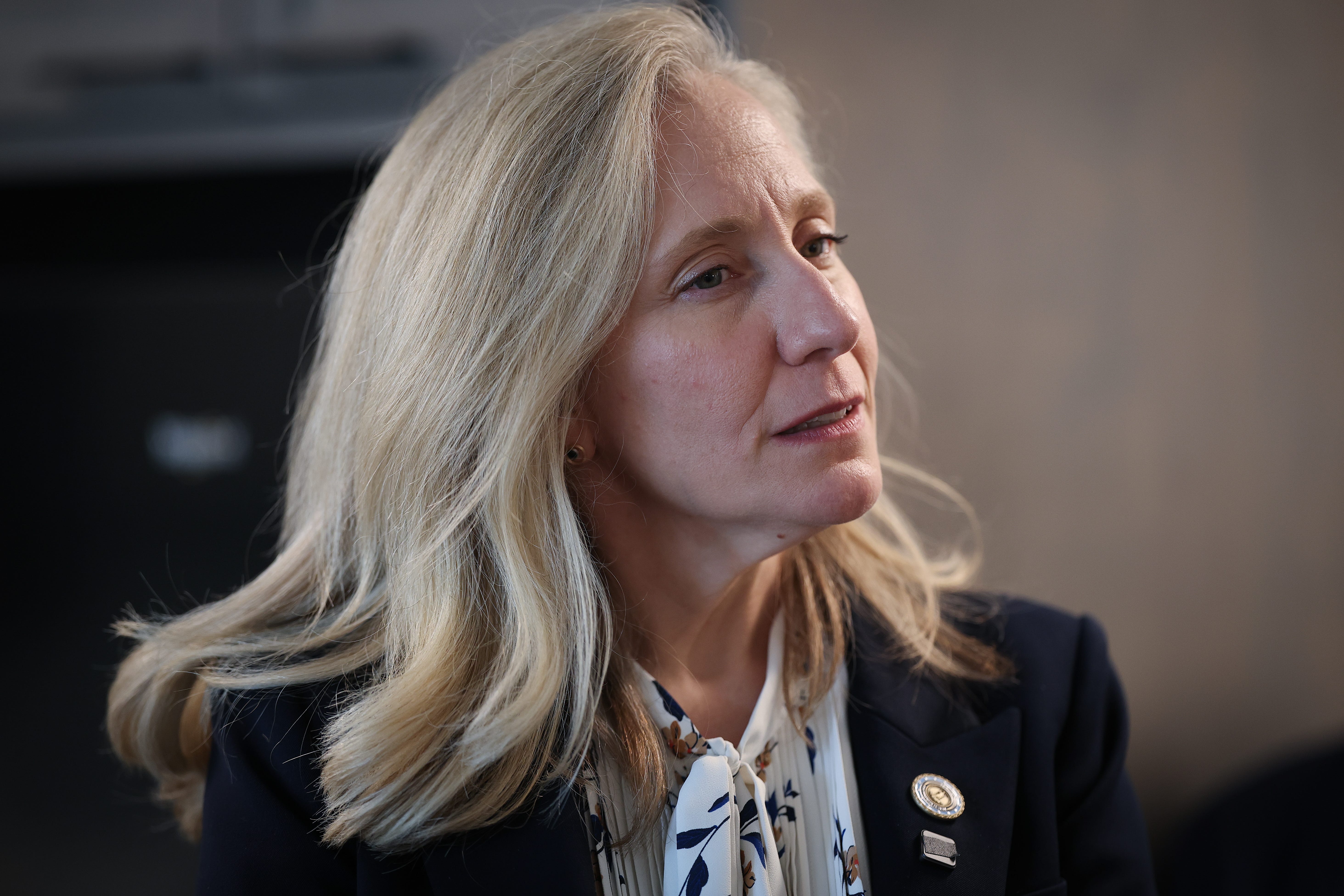
Abigail Spanberger had a somewhat moderate-ish profile as a House member from a blue-leaning purple district, and she ran for governor of Virginia on that profile and won. Virginia only allows governors to serve one term and is a solidly blue state on the federal level, so to whatever extent Spanberger has ambitions to become a senator or serve on a national ticket or in a cabinet, her incentive is to cater to the Progressive Establishment.
The fact that she is instead operating as a force of restraint against the Democratic legislature is thus a source of real frustration to a lot of Virginia Democrats. But I think she’s correct on the merits to raise doubts about mandating collective bargaining for local government employees.
When Sarah McBride went on “The Ezra Klein Show,” it seemed to me that she was trying to create space for a tactical retreat from an electorally indefensible line on trans women’s participation in competitive women’s sports. Martina Navratilova, by contrast, is trying to persuade Democrats that the left’s line on this is genuinely wrong.
I think that within reasonable bounds, tactical moderation is smart.
I do not agree with John Bel Edwards’s positions on guns or abortion, but it’s obviously the case that no candidate espousing progressive views on those topics would have won a gubernatorial election in Louisiana. It would’ve been great if he’d been persuaded to run for Senate. In general, I’d love to see Democrats nominate more politicians like that in the Deep South because it would create a chance to make progress on Medicaid expansion. Both parties’ decision to just write off huge swaths of the country as unwinnable is bad for America, and a renewed spirit of tactical moderation would bring real substantive benefits.
But I also think moderate Democrats are running on fumes in terms of what tactical moderation can accomplish. Expanding the tent in terms of red state recruiting is a totally reasonable agenda that I think even very left-wing people should see the merits of.
At the end of the day, though, if you want to capture the heart of the party, you need to make arguments that are grounded in conviction, and that means arguing on the merits.
The Joe Manchin paradox
Consider former Senator Joe Manchin of West Virginia. Everyone who wasn’t completely addled understood that Democrats were wildly lucky to have a West Virginia Senate seat and that there was no way a conventional progressive could have won the 2012 and 2018 Senate races there.
But I think most progressives felt that Manchin was clearly drawing dead in terms of re-election in 2024 and what they wanted him to do in 2021–22 was YOLO it and vote for filibuster abolition and a sweeping progressive agenda.
And that really is the logic of tactical moderation.
Harry Reid had an old joke about Susan Collins, saying she’ll always be with us except when we need her vote. And there’s clearly something to this. Collins cast a totally inconsequential but highly salient “no” vote on Amy Coney Barrett right before her 2020 re-election, but she cast a consequential vote in favor of Brett Kavanaugh and many lower court judges earlier. She’s criticized or broken with Trump on a number of issues but never really collaborated with Democrats to meaningfully restrain him and clearly maintains a sufficiently cordial relationship with the White House that unlike John Cornyn, she never faced a serious MAGA challenger.
But it’s also true that Collins provided decisive votes in favor of the American Recovery and Reinvestment Act in 2009, the Dodd-Frank Act in 2010, and against Affordable Care Act repeal in 2017.
There’s probably just no such thing as a politician who at heart agrees with the base about everything but is also good enough at faking moderation to repeatedly win races in tough states like West Virginia and Maine.
So while it’s certainly coherent to appreciate a Manchin-style figure on a purely tactical level without agreeing with him on anything, I think it’s unrealistic to expect that actual politicians are just totally faking it.
Among other things, once you start playing the role of “guy who champions the interests of coal communities against the demands of green groups,” you’ll come to realize that the green groups are genuinely wrong about some things. At the end of the day, I think environmentalists are basically right about coal. But no advocacy community is right about everything, and there’s plenty the climate movement gets wrong. Most elected officials are not incentivized to delve too deeply into the merits of policy or to really scrutinize their coalition partners’ demands. But a Democrat from West Virginia is incentivized to find things the Progressive Establishment is wrong about, so over and above anything tactical, he’s likely to find genuine points of disagreement.
Personally, I think Manchin was wrong on the merits about some important stuff (notably the filibuster) but also substantially correct that the Build Back Better legislation that congressional leadership was pushing for was inflationary. His push to make Democratic climate efforts more focused on innovation and clean energy deployment and less focused on blocking pipelines was right on the merits. The country would be better off today if Democrats had embraced his permitting legislation more fulsomely.
The True Believers
All the way at the other end of the spectrum, you have Representative Ed Case of Hawaii.
Case is a formidable electoral over-performer. In the Split Ticket database, he overperformed by 17 points in 2018, 14 points in 2020, 18 points in 2022, and 17 points in 2024. He’s been in and out of the Blue Dog caucus over some internecine disputes that I don’t really understand, but he generally has a moderate Blue Dog-ish record. He faced a primary challenge this cycle that, for example, slammed him for supporting the SAVE America Act.
The thing about this is that while Case’s vote-getting skills are impressive, there is genuinely no tactical case for having a moderate in this seat.
Kamala Harris won his district 62 to 37. Elizabeth Warren is, as Slow Boring readers know, an absolutely terrible electoral underperformer. It just doesn’t matter because she represents Massachusetts. But Harris did slightly worse in Massachusetts statewide than she did in Case’s district.
Case is moderate because it’s what he believes, not because it’s what he needs to believe to win his district. He’s also lost several statewide primaries — once for governor, twice for Senate — in part because the Democratic Party primary voters of Hawaii generally prefer someone more progressive. In that light, it’s actually pretty impressive that he fended off an insurgent challenger this cycle, and it’s notable that he had to do so based purely on arguing the merits with no real electability case to be made.
Case is truly a one of one in this regard.
But I have absolutely talked to members of Congress who’ve told me they secretly wish they had purple seats so they could mod-out a bit more and then plead electability when the groups give them shit for it. I think this is mostly a mix of lying and self-deception, but it contains a grain of truth. Most people — even people who would describe themselves as quite progressive — have an issue or two where they break from the pack. But vanishingly few safe-seat members are like this. You don’t see many guys in a D+7 seat who espouse an idiosyncratic moderate position on something unless it’s closely related to home state or district politics.
But plenty of people have a heterodoxy or two they’re quietly stifling. There are also plenty of members who like to engage in what I’ve termed “dog-whistle moderation” or maybe meta-moderation, where they’ll speak in abstract terms about the need to meet voters where they are and change the Democratic Party’s brand and not be held hostage to extremists.
These types tend to complain a lot about the Insurgent Left in a way that doesn’t totally make sense. Iowa didn’t flip from being an Obama-Obama state to a Trump-Trump-Trump state because of Bernie Sanders (who, after all, was in the caucus the whole time). It flipped because mainstream Democrats got more left-wing.
But if you want to change that, you need less obfuscation and more Ed Case energy.
Beyond “the establishment”
Mike Zapler wrote a piece for Axios this week titled “The Democratic Establishment’s Ideas Deficit” in which he argues that “centrists” know what they’re against but have a harder time defining what they’re for.
I think he made some good points but also repeats a fundamental conceptual confusion about this.
If by “the Democratic establishment” you mean something like “the party’s congressional leaders and its past few presidential nominees,” then the reason they have a hard time defining what centrist agenda they favor is that they do not favor a centrist agenda.
It’s actually not even slightly difficult to specify the policy priorities of the Biden-Harris administration as advanced in Congress by Chuck Schumer and Hakeem Jeffries. The Biden-Harris administration wanted to increase the tax revenue share of G.D.P. while making the tax code more progressive and to use the vast majority of that new revenue to increase spending on clean energy and social services. They believed in abortion rights and affirmative action in college admissions and a fairly crude approach to elite representational politics. On their watch, domestic oil-and-gas production reached new record levels but only after efforts to halt new leases were blocked in court. They believed in the neo-Brandeisian antitrust agenda and appointed its key leaders to top regulatory jobs.
The reason this agenda appears to be just “stuff progressives want, minus some of the stuff that progressives want” is because literally that’s what it is.
The establishment’s enthusiasm for progressive policy is tempered by electoral prudence, court losses, and leadership’s need to set priorities, but their agenda is genuinely a subset of the progressive agenda.
At the same time, an alternative centrist agenda is not hard to find or hard to understand. It would emphasize deficit reduction to put downward pressure on inflation and interest rates and prioritize clean energy abundance while championing domestic fossil-fuel production as superior to foreign production as long as demand for oil and gas exists. It would center ideas, like performance pay for teachers, that aim to increase the productivity of the public sector. It would be an agenda that balances the need for an inclusive economy with a healthy respect for the virtues of free markets and that takes seriously supply-side regulatory constraints on things like housing and health care. Add in the notions that crime control and border security are genuinely important state functions, not things to be engaged in reluctantly as a rearguard effort to avoid political harm.
These are not unfamiliar or secret ideas. They represent substantive moderation, a belief that the progressive NGO blob’s analysis of the major policy problems in American life is not really correct or adequate to the scale of the challenges the country is facing.
I understand why many moderate True Believers don’t want to be more assertive about these kinds of issues. They’re afraid of losing primaries to candidates to their left, and they think that articulating some loud and proud moderate positions is risky compared with minimizing the substantive differences and making a tactical case for moderation.
That analysis makes sense, to an extent, but I think that after 10 years of factional warfare, we can see that it’s a losing strategy for the long term. Nobody wins elections based on a pure politics of from-the-heart conviction. But opportunism and practicality can’t be your whole argument. Actually picking fights about important public-policy questions — not fights with the far left but fights with the establishment and the status quo — makes you seem more authentic and interesting. Picking these fights could also help push back against the sense that moderates practice an inherently dreary politics of limits and “no, you can’t do that.” I think there’s something genuinely inspiring about an agenda that uses abundant housing, rapid economic growth in blue states, and low crime to unlock new avenues of opportunity. It’s really shameful for New York and California to be worse at teaching kids to read than Mississippi, and it would be really amazing if the results achieved by their public school systems were commensurate with the resources invested.
The collective action problem around taking on the groups is real, but a presidential campaign could provide a good context for doing so.
Since moderates are better at winning votes, they’ll always have a tactical argument at their disposal. But I think there are a lot of closeted True Believers out there who right now are so afraid of losing to leftists that they forget to actually be different from the leftists they’re afraid of. That needs to change.
> Both parties’ decision to just write off huge swaths of the country as unwinnable is bad for America
Not that I would expect Matt to disagree, but a real 50 state strategy needs to be even more radical than simple moderation. It would require building a genuinely conservative wing of the party, and a moderate wing that is willing to collaborate with and defend those conservatives for the good of the party (and by extension country).
I hope your efforts to encourage and support "moderate True Believers" as you describe is successful. I want those policies.
Florida had our primary last night. For the Senate, a DSA candidate (Angie Nixon) defeated Alex Vindman (yes, THAT Alex Vindman), which says less about her strength than his ineffectiveness. So count that seat as a hold for Republicans in the fall.
David Jolly won the Democratic primary for Governor and I think he will have a good chance against Byron Donalds. Florida Republicans cleared the lowest of all low bars by rejecting James Fishback (think Nick Fuentes level racist) and nominating Donalds. But Donalds is still a MAGA whack job. I hope Jolly mounts a good campaign.