

I did a panel with Adam Gray and Tom Suozzi at WelcomeFest where they outlined their Promise to America, an effort to put some meat on the bones of the general idea of moderation. One of the things they say is “we are capitalist, not socialist,” which is definitely a sentiment that I agree with.
Suozzi said on the panel, very correctly, that market economies have dramatically outperformed the competition and delivered, while not perfect societies, certainly the greatest levels of material prosperity that we see anywhere on Earth.
This is all totally correct, but I think that people who know that it’s correct need to think more about why, despite its correctness, it has become so unfashionable for young people to embrace capitalism.
I think one really important reason is that if you look at what people spend money on, you know housing and health care are the two most important sectors by far. Young people consume far below-average amounts of health care, though, meaning that their consumption is really dominated by housing. A large share of the population consumes housing in the form of renting a home from themselves, so they are somewhat insulated from the ups and downs of the housing market.
But those people are mostly old.
If you’re young, your experience of the economy is dominated by the housing situation. And the housing situation in the United States is not very good. So I think for most young people “capitalism” means something like “the status quo system,” and they perceive the status quo system to be pretty bad because they are super exposed to the single most dysfunctional element of the status quo economic system.
Now, in my capacity as a lawyer for capitalism, I am happy to point out that not only is housing the most dysfunctional element of the status quo economy, but it’s also the element that is run in the least capitalistic way.
Far and away the number one thing that could improve young people’s living standards in America would be to embrace more market-oriented housing policies. But for anyone to understand that, those inclined to tout the virtues of capitalism need to embrace that idea. As a political pragmatist, I don’t really blame Suozzi for blasting efforts to foist zoning reform on his constituents on Long Island a few years ago since his district is a wretched hive of NIMBYism. But younger people’s lived experience of “capitalism” is of central planning and massive shortages of the single most important item they consume. So of course if people tell them the alternative to the status quo is “socialism,” a lot of them are going to want that.
America’s slow-motion housing crisis
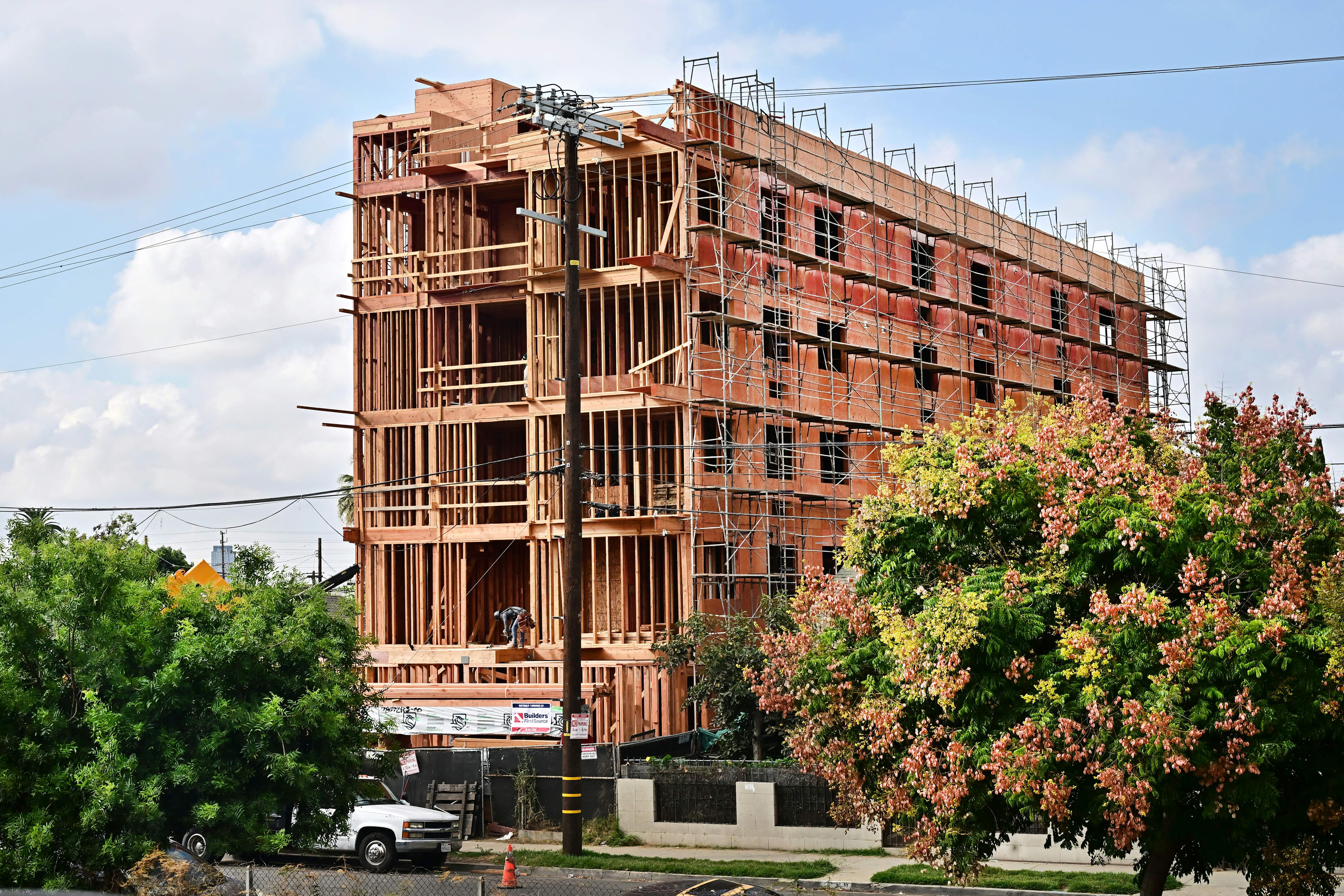
Of course, on one level, housing in the United States is very capitalistic. The overwhelming majority of it is constructed with private capital and sold or rented for profit. Most homes are also privately owned — mostly by owner-occupants but with a significant sector of small-time landlords and a handful of large-scale ones, too. Public and nonprofit housing do exist in the United States, but they are a relatively small niche. The result is a housing sector awash in private capital and profit-seeking.
What it lacks is much in the way of free markets.
And these anti-market policies have grown up, over time, in insidious ways and merged to create a situation where, by 2026, we are dealing with systemic housing shortages almost everywhere in the country.
This mess all goes back 100 years to the Supreme Court’s Village of Euclid v. Ambler Realty decision, which determined that it is perfectly legitimate to make apartment buildings illegal on certain swaths of land. This is just a huge contravention of the basic logic of free enterprise. It’s not that everyone — or even most people, or even a particularly large minority of people — ought to live in multi-family dwellings. But a small apartment on cheap land is an obvious method of housing low-income people, and low-income people need places to live. And where land is expensive, stacking dwellings vertically is the most normal and obvious way to ensure that supply and demand curves can balance out.
But widespread midcentury apartment bans did not produce an acute crisis, because of the widespread adoption of the automobile. The fact that it was newly feasible to build much more suburban housing was a huge positive shock to supply in the postwar generation, and that development more than outweighed the impact of bad policy. By the late 1960s, much of this new suburban housing was manufactured homes built in factories. In the 1970s, however, new rules went into effect that greatly restricted manufactured housing. The late 1970s and the 1980s then saw the rise of the “growth control” movement in the Northeast and California, which sought to halt suburban sprawl in the name of preserving open space. So by the 1990s, you couldn’t build apartments or manufactured homes on most land, and you couldn’t build suburban sprawl around San Francisco or Los Angeles or New York or Boston. But in most of America, a metro area could grow outward and housing remained relatively affordable.
Then, after 2008, a consensus developed that too many people were getting mortgages, so we made it harder to finance new suburban starter homes on top of everything else.
For a little while the impact of this wasn’t so notable, but for the past decade or so — since the labor market normalized — we’ve been living in a kind of Everywhere Shortage.
My account of the phases of this crisis follows the work of Kevin Erdmann, who calculates that we’re about 15 million total units short. Erdmann was also the first to observe the importance of incorporating events such as the 1970s crackdown on manufactured homes into our understanding of the lead-up to the Great Recession.
But the upshot is that we’re in a really bad situation in this country.
Ideas versus vibes
Notably, the people who constructed America’s system of widespread comprehensive central planning of the housing market did not typically think of themselves as socialists. And certainly, the typical suburban homeowner regards it as his God-given right to block new development and change in his neighborhood.
If you’re an older, reasonably prosperous homeowner, this bad situation probably doesn’t have a negative impact on you. And you almost certainly don’t think of yourself as a communist who strongly favors central planning and believes free markets are nonsense.
If you’re a young person facing higher rents and despairing about getting on the path to homeownership, you probably don’t think of yourself as a victim of a failed socialist economic experiment the way a refugee fleeing Cuba or Venezuela would. The victims of bad housing policy hear people talking about how America is a great free-market success story, so if they feel that the success story is not working for them personally, they conclude that capitalism and free markets are in fact a big failure.
I would also note that the 21st Century ROAD to Housing Act passed with overwhelming bipartisan support, but all of the “no” votes came from Republicans. And what those Republicans were objecting to was not the NEPA waivers, manufactured-home deregulation, or regulatory favors for community banks — it was some fairly small incentives to try to get localities to change their zoning. One of the main reasons that statewide zoning reforms keep failing in the Northeast is that Acela Corridor Republicans oppose them.
In Maine and New Hampshire and California, Republicans have seen YIMBYism as a form of deregulation and backed it, so big bills have passed. But in New York and Maryland and New Jersey and Connecticut, they’ve seen it as trampling on the sanctity of local control, and it’s been very hard to get anything done.
These are the most invisible people in the discourse relative to their practical significance in American politics. Not just because they directly block housing (though they do block housing), but because politically cautious moderate Democrats fear a backlash from the right if they embrace housing deregulation.
Obviously, I do not agree with right-NIMBYs on the merits. But they are important, and I think there is remarkably little engagement with their views. What you tend to get is either name-calling leftists asserting these types are racist, or else Manhattan Institute types rationalizing away the bad behavior of northeastern Republicans.
It seems to me, though, that if you want to understand youth socialism, you need to understand why middle-aged and elderly conservatives see opposition to new housing as consistent with their support for capitalism. In their view when you buy a home in a single-family neighborhood, part of what you are buying is the single-familyness of the entire neighborhood. Left-NIMBYs see zoning reform as free-market deregulation, so they are against it. But right-NIMBYs see zoning reform as contravening their property rights, so they are against it.
The truth is, this kind of dispute speaks to issues that long predate the whole idea of socialism. It’s an older one about what property rights even are.
The war for simple property rights
If you go back to the emergence of what we understand as capitalism, the prior system was, of course, not socialism but feudalism. And a key aspect of pre-capitalist property rights is that they tended to be very complicated.
In Jane Austen’s Regency-era novels, the characters are constantly grappling with parcels of land that are encumbered by complicated entailments. By our modern lights, the idea that Mr. Bennet could be prohibited from leaving his estate to his daughters is bizarre. It’s either his estate or it’s not. But the traditional mode of thinking was that if an estate is someone’s property, then he has the right to attach whatever kind of stipulation to his property that he wants. When the property is then inherited by someone new, that person inherits the stipulations. To say everyone can do whatever they want with the property that they own would be a major violation of property rights because property rights include the right to impose these irrevocable stipulations.
Thinking about it logically, if entailments can attach to a piece of property but can never be removed, then over the long term all property will be encumbered — and over time it will be encumbered by an increasing number of stipulations. Eventually, all commerce will be strangled by the whims of various long-dead previous owners.
What happened instead was that over the course of the 19th century, various acts of Parliament restricted entailments. And the whole process of creating capitalism was full of measures like this. Pre-modern property rights were very complicated. People had joint shares in communally owned fields. There were all kinds of complicated partial-use rights to various parcels of land that couldn’t be bought or sold. Simplifying these rights made it much easier to undertake various kinds of transactions and engage in modern commerce and growth. Because the British political system of the time was elite-dominated, this was often done on inequitable terms. But it unleashed a ton of growth and made the vast majority of people better off on average.
In the modern world, we have recreated a system of complicated property rights. The conventional understanding is that owning a parcel of residential land gives you extensive authority to veto things that your neighbors might want to do, such as redevelop their parcel as townhouses or a small apartment building. In exchange for getting those rights vis-a-vis your neighbors, you lose the right to do what you want with your own land. The people who like the status quo mostly don’t conceive of it as a statist imposition on their personal property rights; they see it as property rights functioning naturally. And the young renters who are locked out of economic opportunity by the status quo also see this as property rights functioning naturally, and thus they become socialists. But the thing that would solve this problem is not a giant, economically wasteful program of public housing construction. It’s shifting to a regime of simplified property rights where everyone has much less authority over their neighbors’ land and much more authority over their own.
Capitalism needs boldness and vision
On the left, there’s a longstanding view that “abundance” and “YIMBYs” are just sock puppets for billionaires trying to bolster the legitimacy of capitalism.
To this I say — if only!
It’s genuinely true that it would do enormous good for the interests of America’s billionaires and C.E.O.s to see radical housing reform sweep the country. That’s in part because faster economic growth is good for everyone, including billionaires and C.E.O.s. But it’s mostly because, exactly as the leftists fear, housing abundance (and its natural complements like abundance of transportation and electricity transmission infrastructure) would bolster the legitimacy of capitalism. If “capitalism” meant “a system where demand for housing is met by rising quantities of housing rather than rising prices of housing,” then a lot more people would enjoy capitalism. But in a world where “capitalism” means “policy defers to the most risk-averse incumbent homeowners around,” a lot of people naturally feel that capitalism is not working for them.
But YIMBYism is dramatically worse-funded than the various NIMBY community groups that are propped up by mainstream foundations. Businesses lobby furiously on picayune regulations and tax policy matters, but the collective action problem in lobbying for housing reform is hard to overcome. And politically engaged venture capitalists and C.E.O.s are much more inclined to whine on Twitter about anti-capitalism than to cut large checks to the people trying to make capitalism actually work. I can’t think of any examples of someone pumping money into a primary that features a YIMBY Republican state legislator trying to give the boot to a NIMBY incumbent. For all the discussion of these issues over the past few years, there is still remarkably little money going into the relevant advocacy.
And this creates a dilemma for moderate Democrats.
Part of the point of moderation is to be politically savvy and politically cautious, and obviously calling for large-scale land-use reforms is risky. But another part of the point of moderation is to solve actual problems rather than being trapped by ideological dogmas. It just happens to both be true that capitalism + a welfare state is a much better system than socialism, and also that the economic status quo is not working well for young people.
The good news for markets is that the specific thing that’s not working well is housing — and housing is a problem where the solution is more markets. But this is only going to be persuasive if people are willing to say it and really push to do something about it. There is risk in pushing for big change, but there are also clearly a lot of people who are sick of the status quo and eager to see big change.
Should that change be socialism? Or should it be solving the problem at hand? I know what I think.
I like Matthew Lewis's point that the contemporary United States isn't so much a case of "end-stage capitalism" as of "end-stage car culture", with the housing crisis being the result of NIMBYism by people who feel that are already too many people in their area -- even though the real problem isn't in fact too many people but too many cars (and the resulting noise, traffic jams and competition over parking spaces that worsen the quality of life).
It's mostly about status quo bias, and minimally about larger econ issues, or pro/con regulation, or local control.
I agree with much of the YIMBY agenda, but disagree with much of a diagnosis of why we are here, and this statement by Matt is typical of what I think is wrong. While he mentions the singlefamilyness of the whole neighborhood, there are statements like this: "Left-NIMBYs see zoning reform as free-market deregulation, so they are against it. But right-NIMBYs see zoning reform as contravening their property rights, so they are against it." I also read people like J Demsas say there something economically intentional about diminishing supply to increase valued.
I disagree these are major factors. I believe it is minimally about larger econ issues, or pro/con regulation, or local control -- it's almost all about status quo bias, fear of change, risk aversion, and in some cases, a feeling of exclusivity. When change is proposed, people look for potential problems with the new and require justification.
I have been involved in many online discussions and was active in developing a modest zoning revision, getting it passed, and seeing a referendum overturn it. No one ever mentioned home values -- it was the character of our suburban community (esp from the right and older people), and the schools being overwhelmed, and teacher-student ratios. Unsaid was that our wealthy community gives people a feeling of exclusivity -- it's like when the people with airport lounge access see the riff-raff getting access because of their credit cards. And you always have to throw in irrational fear of traffic. And while the right is more associated with opposition to change, there are plenty of left-wing people with nostalgia too, especially the ones who grew up in the community.
In my area of suburban Boston, I have seen opposition to and fears of a new gas main, a new high voltage electric line, narrowing a street, widening a street, adding a bike lane, cannabis stores, the possibility of a class 3 bio lab, a new day care (the traffic!), removing a dam, etc. And it's not just suburbia -- in Boston, consider anything that encroaches on Chinatown, or how a new dorm was stalled near a more Black community for 10 years until Northeastern kept adding things like community space and "$10 million over the next 10 years to the city to be used to advance housing stabilization and wealth creation in the immediately adjacent neighborhoods of the project."
Enought rant for now.