

I feel, sincerely, very sorry for American communities whose economies were built around coal mining and who have suffered since the coal industry went into structural decline and will continue to suffer if (as seems likely) coal use continues to decline.
As recently as 2010, there were quite a few Coal Country Democrats in office, which meant there used to be a lot of intra-progressive discussion about a fair and politically viable economic transition for coal communities.
My read is that very few of these policy ideas were convincing substantively and that they performed even worse politically in the target region, which has continued to shift further to the right in its voting behavior.
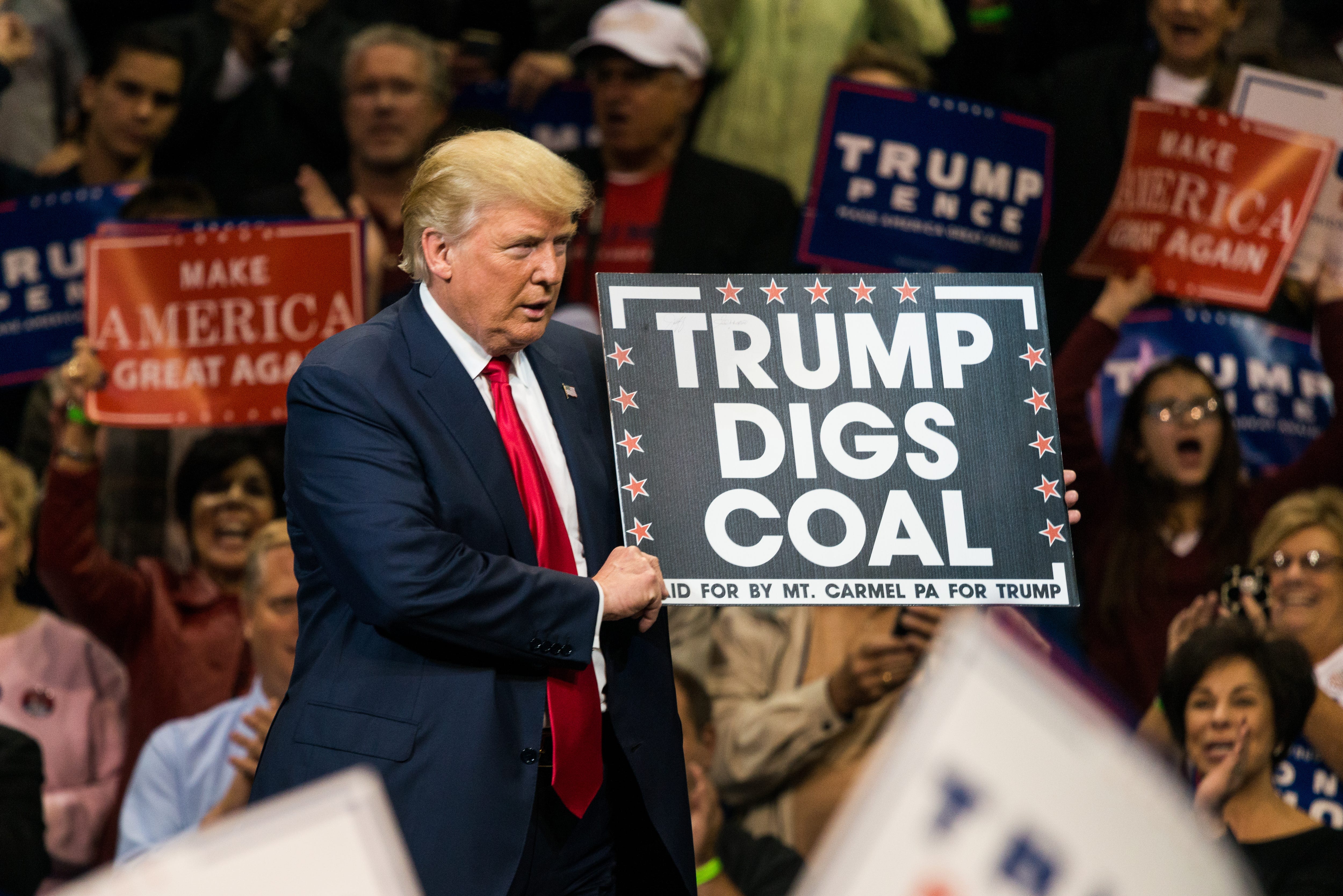
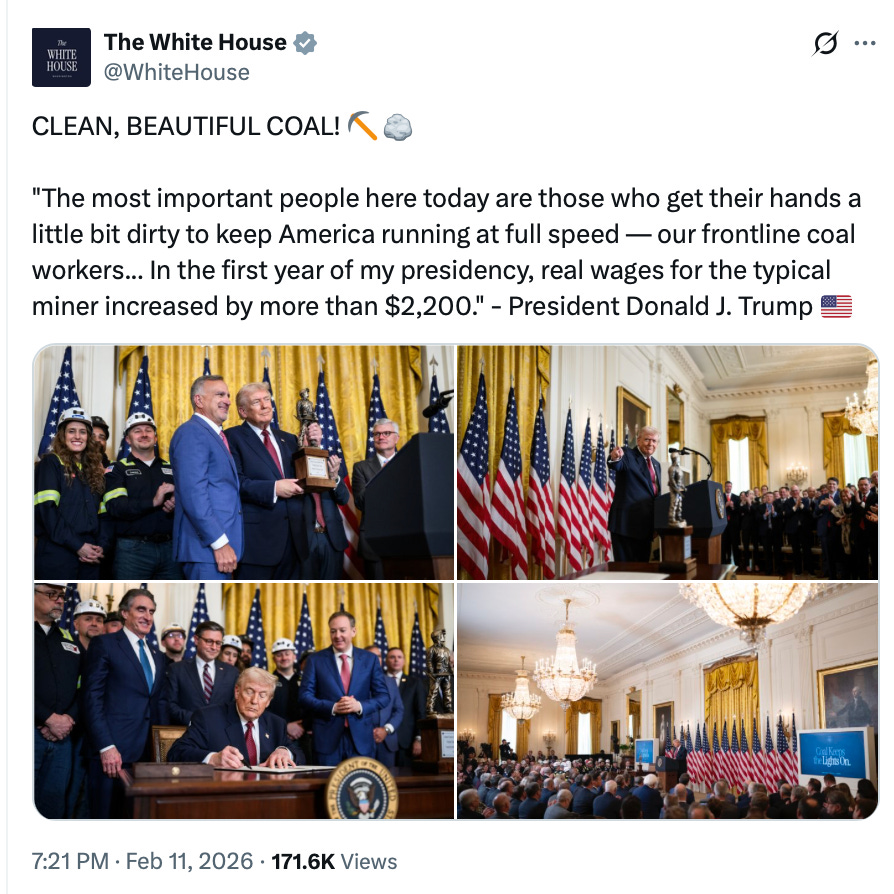
Now that Coal Country is core G.O.P. terrain, the question of how to address coal’s economic decline is basically just a problem for Republicans. And what Donald Trump’s come up with is unapologetic boosterism. As a political gambit, saying loudly that coal is good and ordering the Pentagon to buy coal-fired electricity and designating coal as a critical mineral makes a lot of sense. This is what Coal Country wants to hear. He’s even handing out millions in direct subsidies to upgrade obsolete coal plants (rather than simply retiring them) and forcing utilities to keep uneconomical plants in operation in a way that drives up costs.
But from a public policy standpoint, this is really bad.
As you know, I am soft on oil and gas production and think the American green movement has overshot the mark in its belief that these are technologies of the past that can be kicked aside in favor of renewable purism.
One of the biggest problems with this approach is that it involves environmentalists downplaying the ongoing environmental harms of coal and the really large environmental benefits of displacing coal with a gas/renewables mix, even if that mix is heavily tilted toward gas. Trump is making the same error backwards.
All fossil fuels generate some pollution, and that’s unfortunate. But having energy is also really good. At the present state of technology, you really wouldn’t want to live in a world without fossil fuels.
But the present state of technology does not require very much use of coal in the United States, and that is good because coal is extremely dirty relative to other sources of power.
Trying to prop coal up even as it’s pushed aside by the economic fundamentals is bad economics and awful for the world.
The ladder of energy
As I mentioned briefly in a recent post about the rise and fall of the American whaling industry, in the early days of European settlement, Americans consumed voracious amounts of firewood. I have been known to enjoy a campfire or the warm glow of a fireplace myself, but this kind of biomass burning is quite ecologically destructive.
A hobbyist, obviously, can (and should!) just collect deadwood rather than cut down live trees for fuel. But if you’re imagining life in New England in the early 19th century with people relying on firewood for all their cooking and winter heating needs, they are burning a lot of trees. Cutting all that wood down is destructive. What’s more, even if it’s properly dried and seasoned (which it often isn’t) wood does not burn that efficiently and creates all kinds of smoke.
For recreation, this can be part of the fun. But in much of the poor world, biomass is still used as a workhorse fuel for cooking, which leads to hundreds of thousands of avoidable deaths due to indoor air pollution. There is unfortunately some controversy among environmentalists over whether it’s better to give people propane cookstoves as a cleaner alternative or instead make all of Africa wait for electrification before they upgrade their cooking technology.
What’s more, in the past people often wanted to do things that required temperatures that were higher than you could achieve by burning wood. To accomplish this, you need charcoal. When I hear “charcoal,” I think those Kingsford briquettes, which are made out of wood scraps and sawdust, but that’s not what people were using historically.