

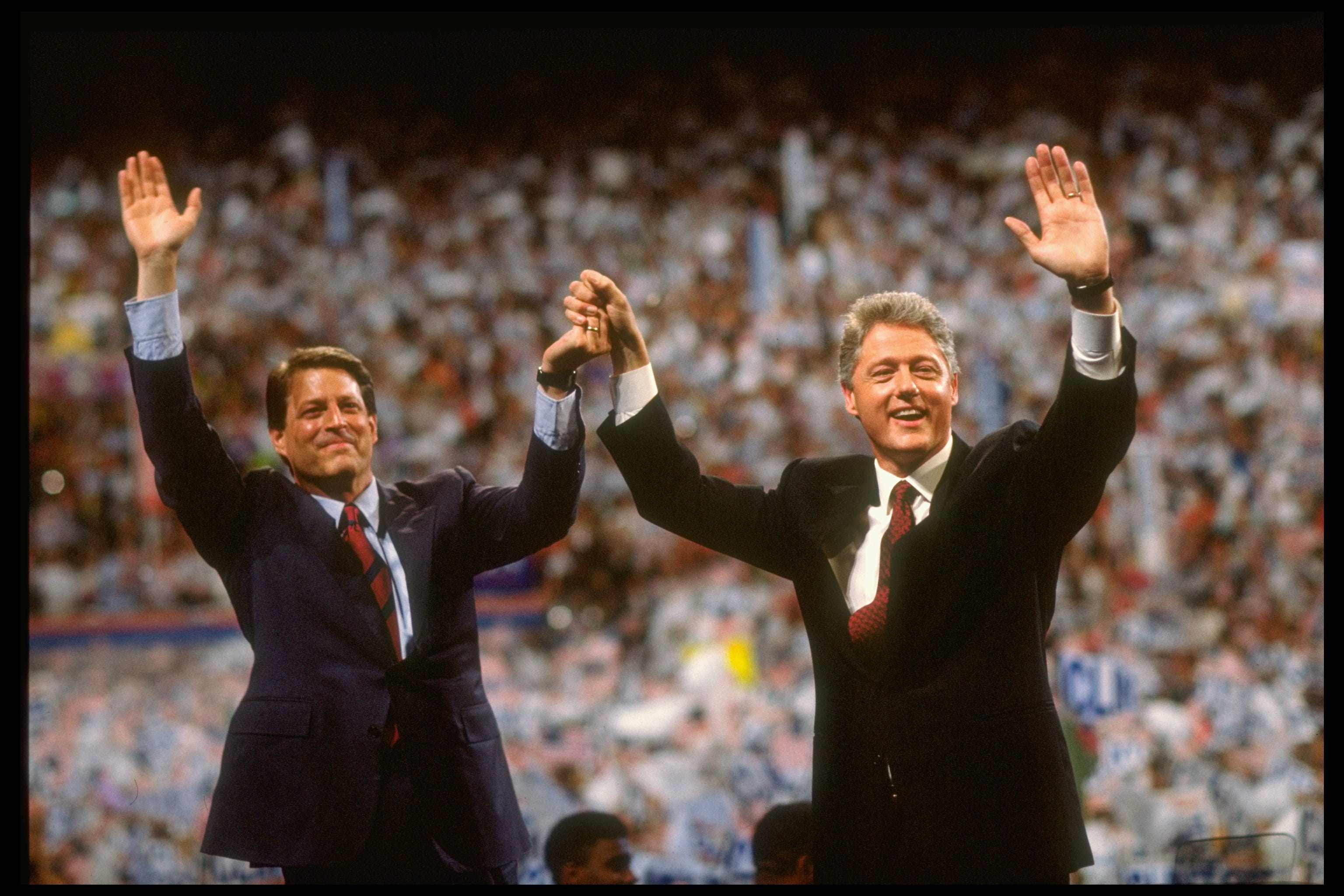
A recent Nate Silver post posed “12 questions for the center-left.”
It’s one of the best pieces I’ve read on the factional politics of the Democratic Party, in part because it raises great questions, but in large part because unlike most commentary, it actually acknowledges a difference between the center-left factional project and the ongoing efforts of “the establishment” to fend off the left-wing insurgency.
In other words, the faction in question is (by definition) the faction that is trying to mount a centrist critique of the Clinton-Biden-Harris-Schumer status quo, not the faction trying to defend that status quo.
Rather than try to answer all 12 questions individually, though, I’m going to say that I think the answer to all these questions and dilemmas is pretty clear: The center-left faction needs a 2028 presidential primary campaign that articulates something that resembles our critique of the status quo.
Ideally, of course, that campaign would win.
But it’s hard to win a presidential primary, and the odds of any given person or strategy prevailing are low. You can nonetheless accomplish important things by running a good campaign, things that help the movement gain traction and attract support.
One of the most important is bending the larger arc of the primary toward your ideas.
Elizabeth Warren’s 2020 campaign didn’t win — she ultimately didn’t even come close. But her ideas attracted a lot of attention, and other candidates (including more moderate ones and Bernie Sanders) seemed to feel they had to play catch-up on a number of issues. And the personnel associated with her campaign eventually played a large role in the Biden administration.
Another is what Sanders did in 2016, laying the groundwork for future campaigns by seeing who rallies to your standard.
This is why I emphasize the idea that this campaign should articulate something that resembles our critique of the status quo. I get a lot of questions about specific names or personalities, and there is a known universe of statewide elected officials from frontline states. A couple of them seem unsuitable (Tony Evers is too old, Katie Hobbs is too press-shy, John Fetterman has marginalized himself), but it’s a big universe of reasonable possibilities.
Precisely the thing we don’t need, though, is a quest to attach a somewhat more appealing personality to the face of the same-old same-old.
We also, I think, clearly don’t need something doomed, like a Josh Shapiro campaign that emphasizes Israel and antisemitism as a factional topic. A lot of different candidates could run the kind of campaign that we need.
But the campaign needs to meet two criteria: