

I have become, in some areas, more appreciative of free markets over the years, but in others I have bigger doubts than ever.
For example, there’s a new paper from some British economists looking at the economic geography of gambling establishments in the United Kingdom. They show that “living closer to and in high densities of gambling shops increases the likelihood of gambling and being a problematic gambler” and use this to call for targeted interventions to address the spatial distribution of gambling venues.
This strikes me as an unusual case of scholars understating the significance of their research.
The current spatial distribution of gambling venues, after all, is that the gambling venue is your phone, which is in your pocket at all times. I was recently seated at a dinner with a bunch of guys who were mostly a bit older than I am and who had kids in high school or college. The ones with sons reported feeling intense anxiety about the amount of time and money their boys were spending on sports gambling, and the ones with daughters reported their girls’ annoyance at how much time the young men they were acquainted with spent on sports gambling.
This fall, I’ve been watching Knicks games (and the Washington Spirit playoff run) with my 10-year-old, and it’s appalling what a large share of the broadcasting content is gambling-related. It seems like America fell ass-backwards into the idea that we should have ubiquitous, super-convenient gambling opportunities in a way that is totally contrary to how Western society has traditionally been organized.
I don’t feel particularly morally scandalized by gambling, but just imagine if a person said to you, “My plan for next year is to spend a lot more time focused on my sports gambling.” I guess if Nate Silver told me that, I’d feel fine. But generally speaking, it’s a bad idea! Don’t do that! So we shouldn’t be organizing our society around getting more people to spend more time gambling.
And now some questions.
Logan: There’s been debate online about the price of hotels in NYC and the reason they are so expensive. Is there a solution to this besides building more hotels? And what are your thoughts on the Airbnb ban?
The way this debate got going was that someone tweeted an offhand observation about high New York City hotel prices, other people chimed in with observations about the Airbnb ban and regulatory restrictions on new hotel construction, and then the antitrust brigade marched in with various conspiracy theories and lots of nitpicking about what exactly the supply side restrictions are.
And it’s certainly worth rolling back and looking at what the policy framework in New York City actually is.
In January of 2020, the New York Times reported that, having obtained regulatory restrictions on Airbnb, the new policy goal of the hotel workers’ union was to make it harder to open new hotels. In April of 2021, as Bill de Blasio was getting close to enacting the policy that the workers wanted, he told the N.Y.T. that it’s a good idea to make it harder to open new hotels:
The mayor wants to require City Council approval for any new hotel, anywhere in the city — a layer of scrutiny otherwise reserved for neighborhood-altering projects such as airports, helipads, racetracks, large stadiums, and drive-in movie theaters. He has said hotels create more traffic and activity than ordinary buildings, and he has defended the policy as good for both organized labor and community residents.
The de Blasio policy built on a more limited policy adopted under Michael Bloomberg that applied similar rules to specific neighborhoods in the city. Under the Bloomberg rules, literally no hotels were constructed in any of the areas where the more difficult process applied. This led some people to characterize de Blasio’s more expansive approach as banning new hotels citywide. In practice, construction has not dropped to zero. It’s also true that supply restrictions are not the only reason that hotel rooms in New York are expensive. On some level, they are expensive because there is a lot of demand for hotel rooms in New York City. Land prices there are very high, as are construction costs. Even if you completely repealed this de Blasio policy, hotels would still be expensive.
The question to ask, though, is why, given how expensive hotel rooms are, you don’t see more people making money by building new hotels.
And one reason you don’t see that is that the city has deliberately made building new hotels hard to do.
Is that a good idea? It seems to me that it is not. Making it easier to build new hotels would generate new construction jobs, would generate new long-term employment opportunities working at the hotels, and would generate tax revenue through New York’s 5.875 percent hotel-room-occupancy tax plus the general retail sales tax that is also applied to hotels plus a few special fees. More hotel rooms would also mean more visitors to the city with ancillary benefits for the city’s restaurants (more tax revenue) and other businesses. More tourists in particular might help pull New York’s Broadway theaters out of their current economic funk, which I believe would have downstream benefits for Off Broadway and the larger theatrical ecosystem.
And, of course, many of the same benefits could be obtained by making it easier to operate an Airbnb.
That said, legalizing Airbnb would in fact put upward pressure on housing demand and exacerbate the housing affordability crisis in the city.
On some level, though, there isn’t some “one weird trick” for fixing New York or any other complicated urban area. Wherever you look, there are stationary bandits at work, and most of the bad actors are not billionaires or even necessarily villainous people. Lots of ordinary, sympathetic New Yorkers are getting somewhat sweetheart deals on the rent thanks to rent stabilization — sweetheart deals that make housing less affordable for everyone else.

What the city needs to do is roll everything back. It needs to be easier to build new market-rate apartments. A larger share of units needs to be charged market rents. It should be easier to build hotels and easier to compete with hotels via short-term rentals. All this will lead to more traffic congestion, so the congestion fee needs to be higher in the core zone and probably applied at a lower-but-nonzero rate across a wider range of the city. All those market reforms would generate a ton of new tax revenue, which would allow for lower taxes. There shouldn’t be dumb sidewalk shed rules. There shouldn’t be featherbedding for subway conductors. The M.T.A. should do sweeping reforms to reduce construction costs and build hundreds of kilometers of new subway and commuter rail lines, which would facilitate even more housing.
That’s all just to say that looking at the situation and asking “What’s really going on with hotels?” and then getting obsessed with the minutiae of hotel pricing is the wrong way to think about things.
The city deliberately chose to restrain the growth of its tourist industry, in part to reduce traffic and in part thanks to rent-seeking by hotel owners and hotel unions. The way to have a growing and dynamic city is to stop deliberately stifling growth. That means in part saying “no” to rent-seekers, but also actually solving issues related to congestion using better transportation policy. But if you succeed in transforming New York into a high-growth city with broad opportunities, you’re also going to find yourself needing to build more schools and parks and all kinds of other things and you’ll probably find more nests of waste and rent-seeking there. I don’t happen to know anything about the details of those policy areas but I’m sure someone does.
My broad point here is just that you don’t want to obsess over any particular corner of the problem.
Some American cities are in really dire straits, dealing with decades of population loss, low demand for housing or private sector investment, and really dire public safety problems. Other cities — New York, San Francisco, Los Angeles, D.C. — are in low-growth equilibria despite high demand. They have lots of specific dysfunctions and weird problems, but the core solution isn’t to get really hung up on hotel prices; it’s to reject the underlying economic model of extraction and shift into a growth paradigm.
Radical Centrism Advocate: Imagine a tech billionaire who privately shares your moderate worldview but believes his own industry has contributed to polarization. He gives you $1B per year through 2028 to run an independent, nonpartisan effort to strengthen the political information ecosystem and make U.S. politics more functional. Your plan needs clear goals and measurable results by 2028. How would you structure the strategy? Where would you allocate resources — including supporting media or research organizations, strengthening civic or community institutions, improving political campaign infrastructure or candidate pipelines, supporting electoral reforms, and hiring staff or talent for any platforms or initiatives you’d launch? And what specific outcomes would you aim to achieve by 2028?
If you really have a budget that large and a timeline that short, then I think the boring answer is that a very large share of your money should go into a super PAC that has the goal to get a moderate Democrat elected president in 2028. Who is that? I’m not sure. The most obvious options, though, are probably Andy Beshear, Ruben Gallego, and Josh Shapiro, so you’d want to meet with them and a few others and see who you like best and who is most aligned with you and then back them hard. Of course, there are various down-ballot Slow Boring candidates who are good too. I would also cut unrestricted checks to a few think tanks and nonprofits that I like. Any actual billionaires who want my frank takes on this landscape should feel free to reach out.
A more long-term issue is that I think media content is a really underrated opportunity. A person with money to spend could build a reasonably large, overwhelmingly non-political media enterprise, and then just seed it gently with smart centrist takes. Imagine if The Argument had not just more money to do more of what it’s doing, but was also embedded in a much larger ecosystem that’s mostly about fashion, pop culture, sports, health, exercise, and other non-political topics that all exist as a mechanism to gently funnel audience to smart political takes.
Last but not least, though, I would really encourage any politically moderate billionaires out there to talk to their billionaire friends and encourage them to be more thoughtful with the money they are already spending. Mark Zuckerberg put a lot of money into pretty far-left stuff around crime, immigration, and racial justice before taking a rightward pivot in his politics. People like Eric Schmidt and Michael Bloomberg and Jeff Bezos fund some surprisingly left-wing entities whose politics I am pretty sure they do not share. Nicole Shanahan is a bit of a nut job, but what she describes here captures some important truths.
Beyond truly wacky organizations, there are a lot of wealthy center-left business people who care about climate change but, being center-left business people, are not degrowth anti-capitalists. And yet when it comes time to write checks, a lot of them are writing checks to name-brand green groups, all of which have somewhere between three and nine toes in the waters of degrowth anti-capitalism.
If you cut those groups off and invest in better groups, you’ll lose the brand halo but you’ll actually accomplish what you want to accomplish.
Joseph: What if, for whatever reason, Trump had not run in 2024? Does Kamala Harris beat Ron DeSantis? And if Ron DeSantis beats Kamala Harris, what does the present day look like? I don’t know that DeSantis’s heart is in it for the anti-immigration stuff, seeing as he has always needed Hispanic votes to win in Florida. Is his administration then a more stereotypically Republican economic orthodoxy but with the crank stuff (antivax, death to woke, war on higher education) dialed up to 800 percent?
I think if Trump just stands aside after losing in 2020, the whole situation ends up looking really different. He’s probably not heavily intervening in the 2022 primaries and as a result Republicans probably do better in the Senate races. Without John Fetterman’s very fluky win against Dr. Oz, you don’t get this myth that Democrats are actually in solid political shape. Early matchup polling shows DeSantis, Tim Scott, Nikki Haley, and other contenders all beating Biden. You get more panic in Dem-land and the incumbent draws some kind of real primary challenge. I think this ends up forcing him out earlier, and Kamala Harris still ends up as the nominee except she needs to tack left to win the nomination.
Ultimately whoever the G.O.P. nominee is ends up doing better than Trump did — and doing so without moderating as much as Trump did on abortion. This then sets up a rather different 2025 with fewer insane trade-policy moves and less aggression on interior enforcement. But whoever the new president is would still have the same basic problem of having promised to bring prices down without any real plan to achieve that.
Lost Future: Retro question- if you could unilaterally set state marijuana policy, what would it be? Medical marijuana only? I think the whole ‘medical’ angle has been proven to be pretty fake, no? Actual fullscale legalization with retail stores, as many states do today? Or, would you just do decriminalization (i.e. you can possess it but can’t buy it in a legal storefront)? Or, nothing at all- preserve the old status quo of making it an arrestable offense? Or just a fine?
I think people should be allowed to buy and use marijuana, but that legalization has ended up going awry because it was promoted as part of a push against mass incarceration. This was doubly misguided because on the one hand it’s simply never been the case that large numbers of people were in prison for non-violent marijuana charges and on the other hand any reasonable system of recreational marijuana still needs lots of regulations and the rules need to be enforced.
But marijuana should be handled more or less like beer or wine or liquor — it should be freely sold in licensed stores, it should be taxed, and people who are selling it illegally should be punished. We don’t let people stroll down the street with an open container of beer and we shouldn’t let them smoke a joint there either. But also alcohol taxes should be higher and there should be more restrictions on booze advertising. Last but not least, we tend to be reluctant to severely punish low-level drunk-driving offenses because losing your ability to drive a car is so socially and economically crippling in most places. What ought to happen if you’re caught driving under the influence (whether of beer or pot) is that your license to drink or smoke gets suspended.
Alexa: Who should run for DC mayor? Any takes on the upcoming race?
I would love to see Randy Clarke, Brooke Pinto, or Christina Henderson get in the race, but as far as I can tell none of them want to. Kenyan McDuffie is likely who I will end up supporting. But I think there’s a real opportunity here for an outsider-type who wouldn’t necessarily be on my radar to get in the race and make some noise.
My broad take is that Muriel Bowser has been generally correct in most of her policy disputes with the Council, but at the same time, the performance of her administration has been flawed on a technocratic and implementation level. The city could use a technocrat, an administrator, a “make it work better” kind of person, and it definitely does not need a left-wing ideologue, which is who I am afraid we are going to get.
City of Trees: You are given a handsome commission to consult on designing a TV show similar to a reboot of All In The Family, with the goal of developing a series that can both accurately describe the current political atmosphere of this decade, and hope to build a wide audience that can help bridge the divides that we currently face. What would your advice be? This can include the types of characters you would recommend, and with what kind of traits and backgrounds, or any other details you’d like.
I would aim for a multigenerational portrait of an extended Mexican-American family living in San Antonio. You have a middle-aged, U.S.-born bilingual dad who’s achieved a modicum of economic success in a blue-collar field.
He’s an Obama / Clinton / Biden / Trump voter. His wife, also Hispanic, works in a medical office and is more liberal and angry about that Trump vote. They’ve got school-aged kids. He’s got a younger sister who went to college, works a professional job, and is super progressive — always lecturing her parents about intersectionality. They also have a younger brother who’s become evangelical, married a white woman he met in church, and they’re full-on MAGA. The four grandparents all live in town but have different family stories: one immigrated illegally as a young kid and benefited from the Reagan amnesty, one is from a longstanding Tejano family, one immigrated as an adult, and one was U.S.-born to immigrant parents. The grandparents all tend strongly toward being Democrats on a partisan level, but have all kinds of retrograde old-person views.
The broad theme here would be the contrasting dissonances between the more ideological siblings.
On one level, this whole family is very much a portrait of the kind of thing that conservatives like to hold up, except they’re Mexican-Americans and the current conservative movement is full of people ranting against the supposed evils of “third world migration to the West” and doing racial profiling. On another level, you have the educated progressive who likes to present herself in her circles as an avatar of the “Latinx community,” but who knows perfectly well that her parents and in-laws and siblings are constantly saying and doing things that would get them kicked out of the progressive N.G.O. complex in an instant.
Adam: What’s your take on Your Party, the new left wing party that just imploded in the UK? They broke down because the Gaza wing did not fully support the left view on trans rights. I can see parallels with the Democrats having an opening with Hispanics and Muslims but struggling with those demographics more socially conservative views.
There are certain parallels to the American situation but fundamentally our partisan institutions are very different. Where you really see this playing out, though, is the Netherlands, where for a long time the Muslim community voted for the traditional social-democratic party but more recently has been gravitating to a niche party called Denk, which has conservative views on L.G.B.T. topics.
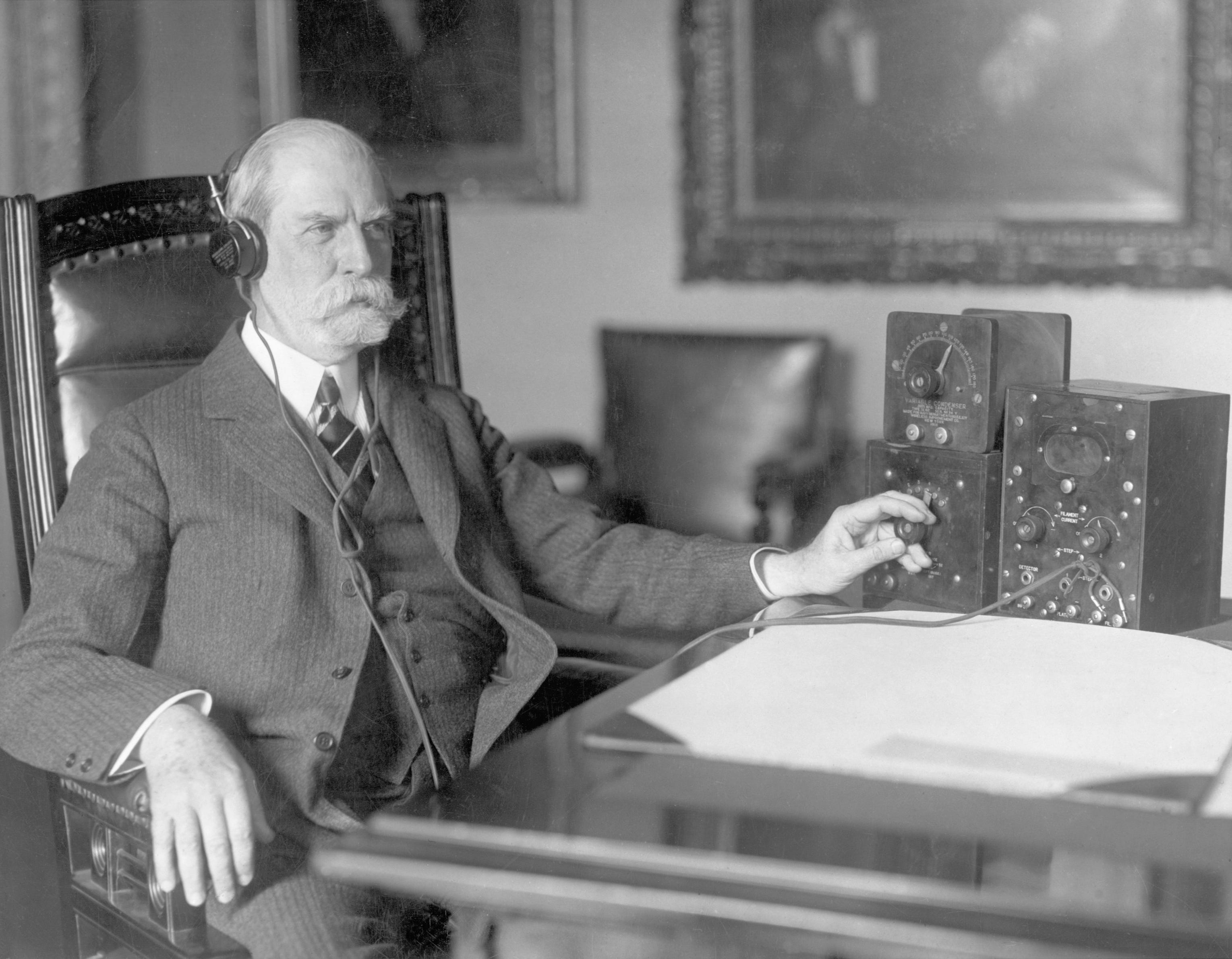
DWD: Alternate history question: What if Charles Evans Hughes got a few thousand more votes in California and got elected president in 1916?
Hughes didn’t disagree much with Wilson on the foreign policy that would dominate the next 4 years but would he be more effective? and what would the knock-off effects be?
This is an interesting one. Hughes was a fairly progressive Republican, and there was not a strong policy contrast in the campaign. Wilson ran hard on the slogan “he kept us out of war,” while Hughes accused Wilson of doing too little to prepare for an eventual war. Wilson won in November of 1916 and of course entered the war in April of 1917. Hughes would presumably have done the same and there’s no reason to think his domestic policies would have been all that different either. He presumably would not have been incapacitated by stroke at the end of his term the way Wilson was and also wouldn’t have made the big (and ultimately unpopular) push around the League of Nations.
But what happens in 1920?
One possibility is that the Hughes administration stumbles into a recession similar to the one that happened in real world 1920, is just about as unpopular as Wilson was by the end, and that Democrats sweep back into office. This leaves Democrats to govern through the Roaring Twenties and then lead the country into the Great Depression. That could have left some very different history for the United States.
Another possibility is that Hughes navigates the demobilization more effectively than Wilson did, emerges popular from wartime triumph, and coasts to re-election in 1924. In that case, you don’t necessarily see the progressive wing of the Republican Party die off with Theodore Roosevelt. Hughes was also a bit of a civil-rights champion. In the real world, after losing the election, he delivered the keynote address at the 1919 National Conference on Lynching. Later in life, as a Supreme Court justice, he also wrote the majority opinion in State of Missouri ex rel. Gaines v. Canada, which was a very important early civil-rights case. Put that together with wartime business-labor collaboration and successful macroeconomic management, and you possibly have a scenario in which the racial realignment doesn’t happen and Republicans end up being the center-left party while Democrats become a southern-dominated center-right one.
As a Floridian, my state benefits from the New York City dysfunction you describe. More tourists, more people locating and relocating in Florida, more growth overall.
As an American, my nation suffers when our largest city (and largest State, California) choose degrowth policies that make us poorer. Agglomeration effects and unrivaled natural beauty (CA, not NYC) are being wasted. I hope those places take your advice.
Was going to read this, but decided to lay down a few three-game parlays instead.