

Before we get to today’s post, I wanted to share a quick update on our GiveDirectly fundraiser. It should come as no surprise that Slow Boring readers have once again risen to the occasion. Our goal was to raise $1,000,000 in the month of December, and in just three days, we’re almost 90% there. Some stats for you: Slow Boring readers have given $522,015 (the highest by far for any Substack participating in the fundraiser), and of the 1,134 of you who have donated, 506 are new GiveDirectly donors. Your donations have unlocked $212,118 in match funds for a grand total of $734,133!
This is incredible, and we’re grateful to have such a generous audience. If you haven’t had a chance to donate yet and are so inclined, we’d love to make it all the way to $1,000,000 by the end of the week!
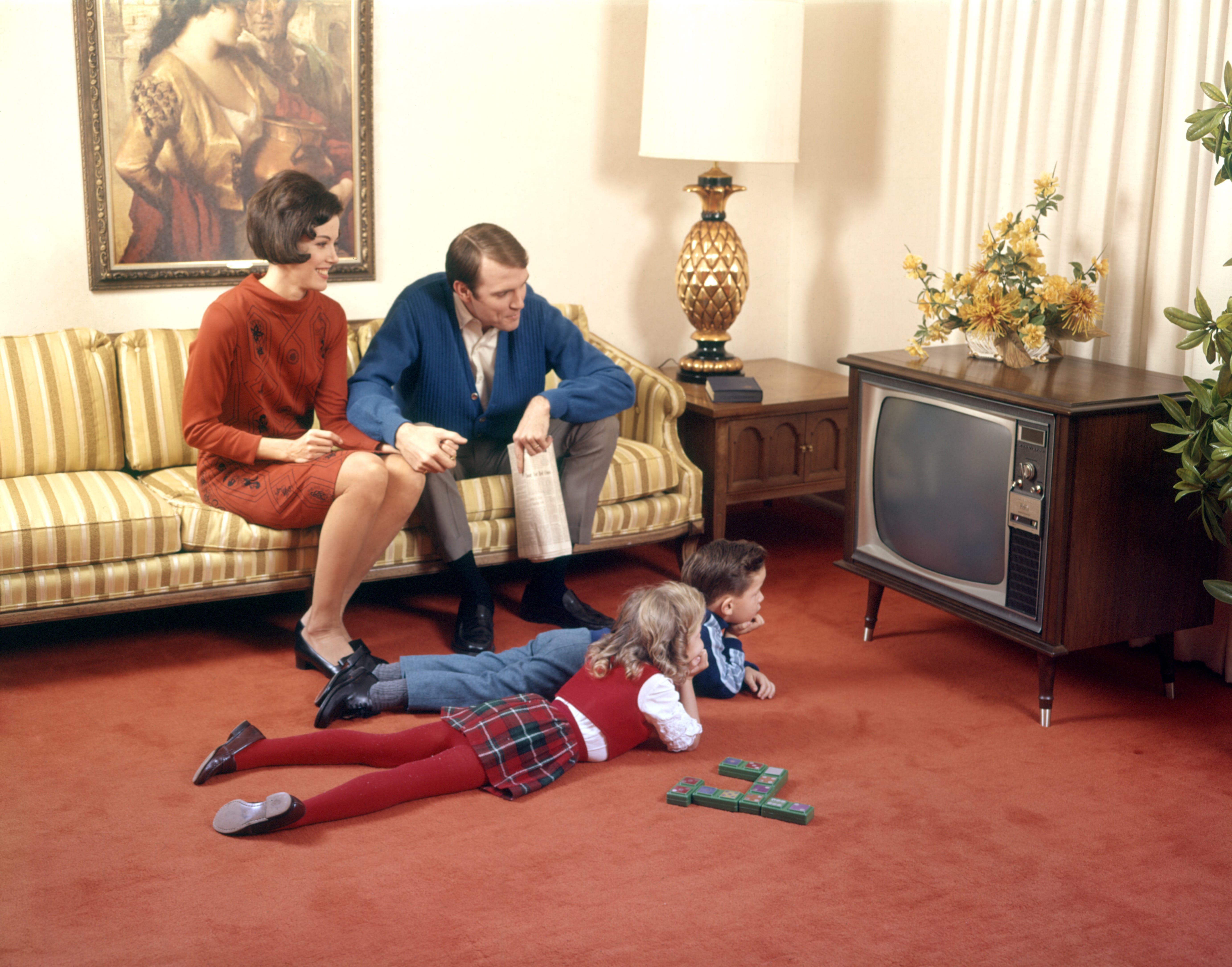
One of the most persistent confusions about the economy, one that ricochets through the internet over and over again, is the notion that the decline of the two-parent, one-income household represents a decline in American living standards.
The claim pops up in various forms, and it’s central to Michael Green’s recent viral article contending that the “real” poverty line in the United States is in some sense $140,000. Green’s piece is full of errors, which its fans seem to have largely conceded, but they feel that he’s right on the level of vibes, and I think this bit about dual-earner families is the core of that.
He writes that between 1963 and 2024 “everything changed” and that today a family needs two incomes to maintain the standard of living that used to be provided by one:
The labor model shifted. A second income became mandatory to maintain the standard of living that one income formerly provided. But a second income meant child care became mandatory, which meant two cars became mandatory. Or maybe you’d simply be “asking for a lot generationally speaking” because living near your parents helps to defray those child care costs.
I think that this is more important than any specific factual claim Green makes about economic data, because it is unquestionably true that this type of household has gone into decline.
The ideological claim that this decline is bad is a fair topic for debate. And I think that the people who wouldn’t claim that it’s bad haven’t always done a great job of fully reckoning with the downstream social consequences. That being said, if you frame your policy proposal as, “I want to severely curtail women’s professional and economic opportunities,” you’re going to get a lot of pushback.
That’s why Helen Andrews, after positing that the existence of women judges is an existential threat to Western civilization, chickens out and just calls for a slightly different legal standard for hostile workplace lawsuits — a remedy that plainly would not address her stated concern.
Green offers a more palatable take.
“People should be more prosperous” is pretty uncontroversial, so if the decline of the one-income, two-parent household is due to American workers becoming poorer, then you have a broadly appealing policy fix: Make people richer.
And certainly I favor people becoming richer. But Green’s analysis is wrong. This model of household has declined not because people have gotten poorer but because they’ve become less poor. What’s gone up is not the cost of living relative to a single earner’s wages, but the opportunity cost of the second adult not working. Nothing is stopping a typical married American couple from accepting 1960s material conditions in exchange for one parent being a full-time homemaker. It’s just that most people don’t want that.
Social media is full of people who are performing trad lifestyles to make money as influencers. But those tradwives aren’t actual housewives incurring an opportunity to be full-time homemakers any more than Kenji López-Alt is a guy who cooks a lot or Luke Nichols is a camping enthusiast. They are media professionals earning a living by producing content.
To actually not work and instead spend more time on non-market production, you’d need to accept a lower income. But two-adult, middle-class American households are incredibly affluent by global and historical standards, and most of them absolutely could do this if they wanted to.
Running the numbers
According to the Bureau of Labor Statistics, the highest-earning people in America continue to be middle-aged men.