

From Massachusetts, here’s a fun example of why housing reform is hard:
Back in 2021, then-Governor Charlie Baker signed a law requiring many of the state’s towns to permit missing-middle housing by right in at least one transit-oriented area within their jurisdiction. The town of Marblehead this week finally got around to passing an ordinance to bring themselves into compliance with this law.
But their approach was to rezone an area that’s just an upscale private country club they are quite confident will not actually be redeveloped.

One town breaking the spirit of the rules doesn’t vitiate the law, of course. But if every town takes this approach, then nothing will change. And there’s probably no single preemption statute that will ever pass that’s entirely free of exploitable loopholes. What you’re going to need, whether in the Bay State or anywhere else, isn’t a single magical piece of legislation but a durable political consensus that can drive multiple rounds of legislation. It requires elected officials at every level of government who actually want to see the state grow.
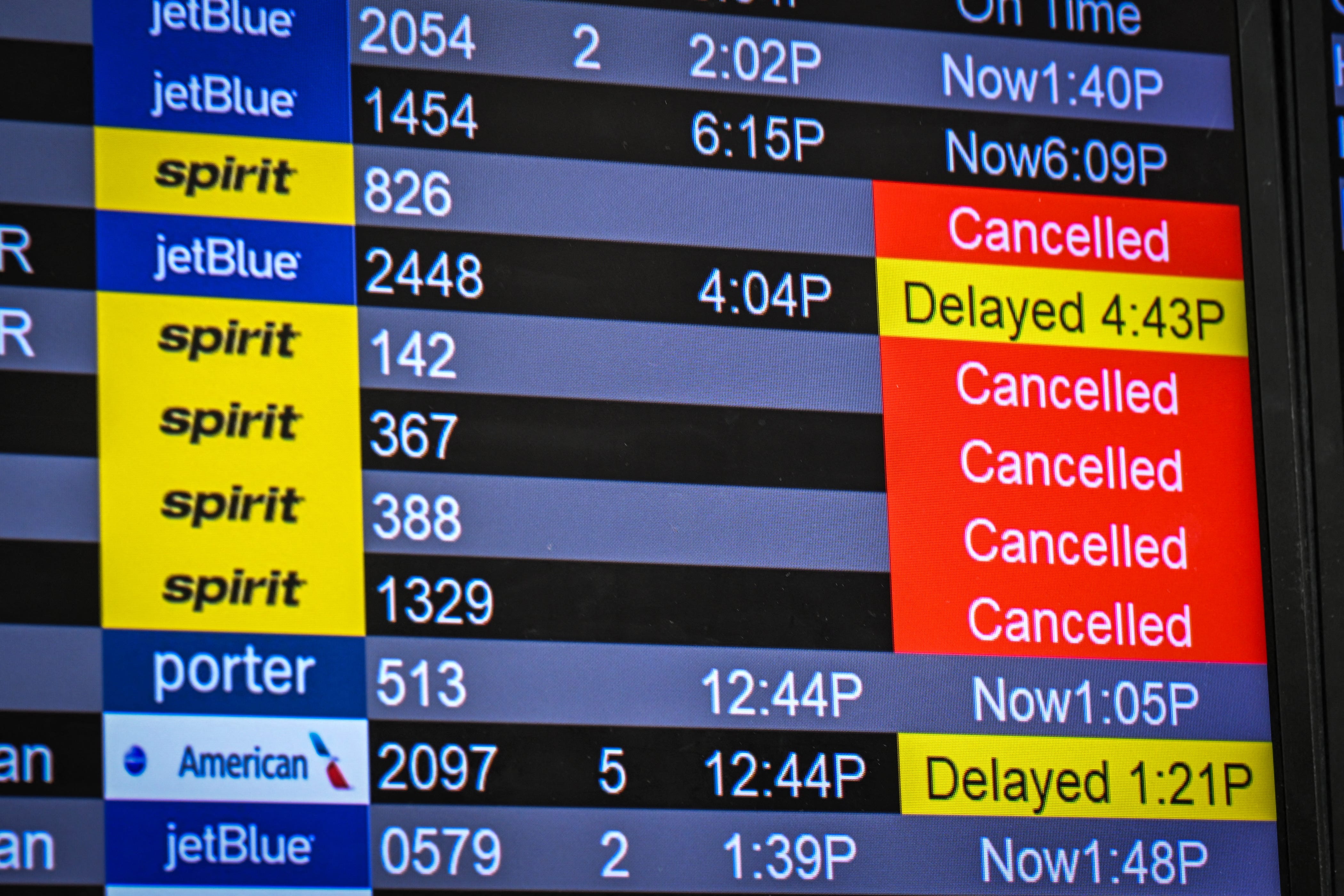
Walker P: What are your thoughts on the Spirit bankruptcy and what (if anything) the government should do about it? I have been frustrated that the conversation seems to be dominated by the same anti-trust Left types that advocated so strongly to block their merger with JetBlue and now want a bailout, but as a pretty pro-state intervention person generally I also see the argument for bailing it out. I’ve also seen some compelling arguments that competition does very little to affect airline fares and that most of the gains are almost entirely explained by fuel prices and efficiency. It’s just a very confusing jumble, and I would love a more center-left take on it.
This whole thing got off on a bad foot with conservatives arguing that the Biden administration’s antitrust actions were the reason Spirit went bankrupt.
That doesn’t make sense, just as a question of chronology and causal logic. The correct point to make is that Spirit’s tenuous financial conditions (which were evident before the war in Iran pushed things beyond any hope of salvation) should have called into question the idea that blocking an acquisition had important pro-competition impacts. Promoting competition is an important policy goal, but it’s just not the case that “block as much M&A activity as you possibly can” or “try to keep markets small and fragmented” is the way to do that.
All that being said, what’s done is done in terms of the possibility of JetBlue buying Spirit. By the time of Spirit’s final liquidation, nobody would have wanted to buy it regardless of regulatory scrutiny. And I think it’s just a mistake to see the liquidation as a “problem” that needs to be solved.
There are lots of businesses that really can’t be liquidated without enormous destruction of value. But airlines aren’t like that. The assets of Spirit (or any other airline) are overwhelmingly tangible physical capital — airplanes, slots, gates — that are poorly differentiated. Other airlines will take over the slots and the gates. The planes that Spirit owns will be sold to other airlines. The ones that they lease will be leased out to someone else. Airlines that newly have extra planes and slots and gates will need to hire pilots to fly them. The wrinkle that may impede re-employment of laid-off Spirit workers is that the entire global aviation industry is in a massive downturn because Trump has spiked the global price of jet fuel. But a huge shock to jet fuel prices would cause fewer flights whether or not Spirit was liquidated. The reality is just that the airline industry is highly competitive and works pretty well, and in a competitive industry companies sometimes fail.
The idea that the fall in airfares is explained by “efficiency” rather than competition after the Carter administration restructured the market strikes me as a cope.
After all, what would happen in an uncompetitive market if costs fell? You’d get monopoly profits rather than pass-through to customers. The take would have to be that the Civil Aeronautics Board would have forced airlines to pass their cost reductions down to customers through administrative fiat. But of course one big part of the argument for deregulation was precisely that, in practice, competitive markets are better at forcing this kind of pass-through than centralized planning systems that are vulnerable to capture.
But beyond that, where do we think these efficiencies came from? It’s true that the basic price of commodities such as oil plays a role here. But jet engines have gotten a lot more fuel-efficient. That isn’t something that Airbus and Boeing and their suppliers just did for fun — they believed it would give them a big advantage in the marketplace, because airlines felt that they needed more efficient planes. That’s what happens in a competitive market: Players seek out efficiencies to get an edge, but then competition ensures the gains get passed on to customers.
City of Trees: On Saturday, you wrote a longform tweet that stated that the business model for low cost airlines is less workable in the United States than in Europe. With this consideration, given the richness of the United States, could this be a sign that the case for the revealed preferences of American flyers being to seek low costs as their top priority could be crumbling? And if so, what consequences could this have of the future of flying in America? Could poorer Americans get priced out of flying if the supply of airspace isn’t able to sufficiently expand? And if so, what does that mean for the case for alternate travel like high speed rail, or autonomous vehicles for long road travel?
No, I want to be clear, I don’t think the reason the low-cost airline market is structurally weaker in the United States is that we in this country don’t have price-sensitive fliers.
The issue is that thanks to the advent of the “basic economy” fare class, the Big Three legacy carriers now know how to serve price-sensitive fliers well as long as it’s on a route that those carriers want to fly. Today’s legacy-airline business model benefits a lot from diversity of demand. You try to find routes with adequate amounts of premium fares to make it worth flying, and then you fill up the rest of the plane with cheaper price-sensitive customers doing leisure travel or visiting family. Even if you don’t make meaningful money off those basic economy fliers, the fact that they are there to pad out your revenue makes it viable to offer a rich schedule that is appealing to more schedule-sensitive business travelers paying higher fares.
What America lacks relative to Europe is not price-sensitive leisure travelers but routes where almost everyone is a price-sensitive leisure traveler.
Europe has lots of great leisure destinations (there’s a reason rich Americans like to go there on vacation) and it also has lots of small cities (Europe has a much larger overall population than the United States, but our biggest metro areas are larger than theirs). So you have flights from Liverpool, Dortmund, and Eindhoven to Palma de Mallorca. Or looked at the other way, from Eindhoven you can fly to Palma de Mallorca, Antalya, or Venice. Europe is just chock full of random city pairs like this that are dominated by leisure demand. This is a great market for low-cost airlines offering point-to-point service.
The United States has some routes like this, but they’re mostly just Las Vegas and the non-Miami airports in Florida. And this is where you do see low-cost carriers doing well in the United States. You can fly direct to Vegas from all kinds of random cities without routing through a legacy hub. Orlando, Fort Lauderdale, and Tampa all have tons of low-cost carrier flights. There just aren’t that many destinations like this in the United States. And because Americans have more money and fewer vacation days than Europeans, price-sensitive leisure travel is a smaller share of the overall market.
Lost Future: What’s it going to take for the Republican Party to become a healthy center right party again? If that’s even possible. A lot of this blog is about how Democrats can win more elections- but obviously, the Democratic Party cannot win 100% of all elections going forward. Eventually another Republican will be in office again. Is there a path to making that less..... catastrophic? In particular I’m looking at Republican primary voters here. They seem to love selecting the craziest SOB in the primary — look at Mark Robinson winning the North Carolina primary with a gigantic plurality of the vote a couple years ago. Why do Republican primary voters do this, what’s their motivation? What’s the path out for them? Just getting rid of primaries entirely?
I think for Republicans the path to sanity starts with contemplating how genuinely annoyed they are by the success of far-left politics in places like New York City and how sincerely frustrated they are with some of the governance failures in California and elsewhere. I’ve often said that John Bel Edwards should be more of a hero in center-left circles for taking the positions on cultural issues that are necessary to win in Louisiana, thus allowing him to deliver health care to hundreds of thousands of low-income Louisianans while greatly improving public education.
The flip side is that you look at something like this profile of Manhattan Institute President Reihan Salam that frames him as “the opposite of Mamdani.”
As a center-left person, I think it’s genuinely true that Salam and his colleagues have good points to make about New York and could contribute meaningfully to making it and the rest of the urban Northeast a better place. But conservatives who agree with that analysis would have to decide if they want to win elections in the Northeast and improve governance or if they want to remain politically toxic and marginalized and complain. Some of that is coming to terms with the cultural views of the relevant voters. Some of that is obtaining distance from the Trump administration, which is widely hated in these areas. And some of that is disciplining elements of their own blue-state base, which is full of NIMBYs and anti-urbanists who impede the kind of regulatory reforms that could help unleash a more pro-growth economic environment.
A lot of what is disturbing and illiberal about the MAGA movement is downstream of just kind of giving up on democratic politics in this regard.
There’s a view that the coastal left has to be in some sense “crushed” — wreck scientific research as part of a crackdown on academic freedom, deny disaster aid to blue states, wield the Federal Communications Commission to censor late-night television — rather than simply defeated through democratic politics. I’ve found Rudy Giuliani’s post-mayoral career to be despicable, but he had significant policy achievements as mayor when I was a teenager. Charlie Baker more recently was a popular and successful governor of Massachusetts. But rather than the Massachusetts G.O.P. cultivating a “bench” of Baker-like figures to run for the legislature and as his heir, what happened was that he lost control of the state party to people who wanted to run in the commonwealth as orthodox pro-Trump MAGA heads.
When you deliberately turn yourself into an unelectable movement that can’t wield power, it encourages this cycle of crashing out and radicalization that further alienates people.
Which is all just to say that I wish someone was doing “Slow Boring for the right.”
What you’ll read on this newsletter all the time is that Democrats who are alarmed by the authoritarianism, corruption, and criminality of the MAGA movement owe it to themselves to take that diagnosis more seriously. We Dems need a national party that takes positions on the issues that a majority of the public agrees with, and we need national party leaders who actively recruit and support candidates who are more conservative than the national party so we can meaningfully contest elections throughout the entire geography of the country.
By the same token, Republicans appear to me to be obsessed with the political power of the far left. If that’s your big concern about America, you have an obligation to do what every other major center-right political party on Earth has done and reconcile yourself to a universal-health-care system. And you have to try to actually win elections in the places where the far left is most plausibly going to win political power. Ideas like “crime is bad” and “it would be nice to pay lower taxes” have extremely broad appeal, but Republicans are preventing themselves from running on those ideas in a huge swath of states by pairing them with politically toxic baggage.
A big culprit is the growing tendency toward expressive politics. You can see a version of this playing out in California right now: San Jose Mayor Matt Mahan is currently articulating a reformist critique of California’s policy status quo that I think would resonate with many conservatives while still being progressive enough to appeal to the median voter in a state where Donald Trump won only 38 percent of the vote.

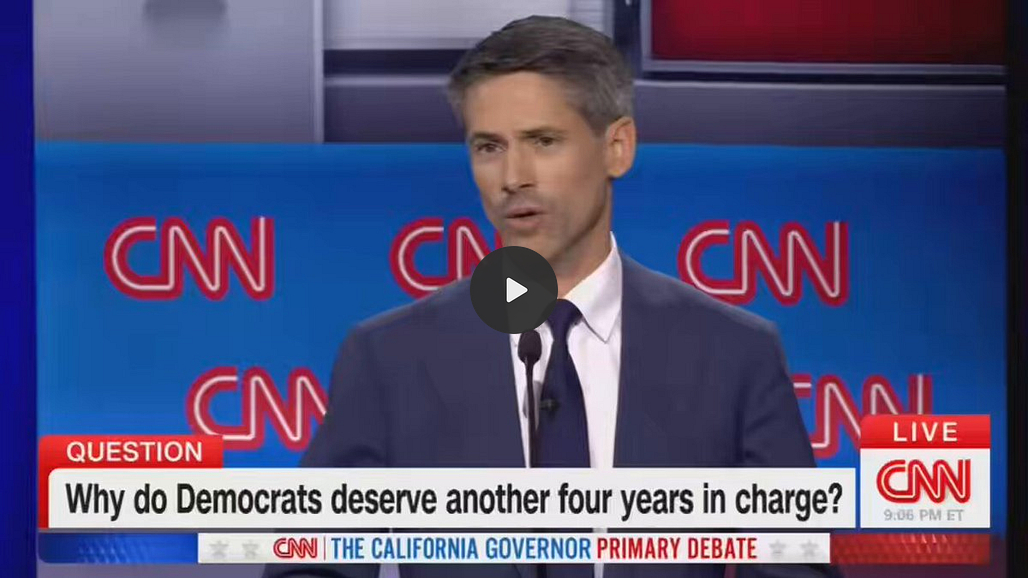
But Sergey Brin and lots of other influential Californians who are upset about the direction of the state are putting their money and influence behind Trump-endorsee Steve Hilton. It’s just obviously the case that if the top-two primary system gives us a second round featuring Hilton and a Democrat, then that Democrat will win, whether it’s Xavier Becerra (currently favored) or Tom Steyer (close behind him) or anyone else. There are also easily enough people currently supporting Hilton or the other Republican, Chad Bianco, that if they moved their support, they could put Mahan into the runoff and give California a real chance for a meaningful course correction.
I don’t even see anyone disputing this analysis and suggesting that Hilton could win. Maybe if there were an incumbent Democratic president in office who was flailing and unpopular, people could deceive themselves into that. But there isn’t. There’s Trump, who has an approval rating below 40 percent nationally. So you have a bunch of right-of-center Californians prepared to try something that will obviously fail, and then get angry when it fails and maybe pick up their toys and move to another state.
Oliver: I think this Tweet from Matt is interesting, there needs to be some kind of synthesis.

My view is that calling your opponents crazy and dumb, is easy and lazy, but also frequently true. Lots of activists and politicians don’t understand basic things, like the concepts of insurance, tradeoffs, demand curves etc
I think it is probably something you have to provide evidence for and is much healthier if you at criticising your own side. But liberals have to accept there are some leftwingers who are crazy enough to be fundamentally pro-crime or pro-fraud on government funded programmes, there are conservatives who don’t believe in medicine and people on both sides who want to spend all their time screaming about Jews and those groups are quite big.
Here’s what I would say: There are a ton of idiots in the world. Half of people are of below-average intelligence. Limit yourself just to the people who are smarter than average, and you’ll still find that they regularly exercise their right to free speech on topics that they haven’t actually looked into. And then even if you look at the relatively small minority of people who are intelligent and also talking about something they actually know about, there’s still just plenty of opportunities to let their emotions get the better of them and say something flippant or ill-considered.
Which is just to say that I think the right way to think about the prevalence of really stupid takes among your political enemies is that you are looking at an aspect of the human condition, not at a specific pathology of your enemies.
It is fine and appropriate to note and critique stupid arguments and bad tendencies. But the specific thing I am trying to critique here is the tendency to focus exclusively on pathologizing opponents rather than acknowledging the profound truth that one’s own side is also full of morons and that many smart, principled people simply disagree in good faith.
Andy: What is at the top of your list of places you haven’t visited but want to visit and why?
I’d love to go to Japan, both just because it has some appealing tourist attractions and also because I want to get in on the Japanese urbanism takes. Travel from the East Coast to Asia is rough, though, so I’m deferring actually doing this (or Australia, etc.) until some hypothetical time in the future when I can take a long trip.
John: Given Matt’s interest in housing, I am wondering if he has any thoughts about what has been happening in Ann Arbor, Michigan. They seem to be experiencing an incredibly rapid buildout of high density housing. Do you know what the story behind this is and is it a good or not so good model of development? Thanks.
My understanding is that a lot of this downtown apartment construction was always allowed by the zoning code.
It’s getting built now because University of Michigan enrollment keeps setting new records and generally higher housing costs have made it economically attractive to build new student-oriented high-rises rather than continue renting single-family homes to groups of roommates. A more interesting policy story is that Ann Arbor has done a substantial rezoning along what they call Transit Corridor 1, basically allowing “strip mall to apartment” redevelopment along some commercial streets that have frequent bus service. The city had previously experimented with density bonuses for developers who built subsidized units. But that generated very little housing, so they went for a plain bagel with TC1 and it seems to be working.
I don’t think any of this revolutionizes our understanding of anything, but it does confirm the general trend that it is much easier to get people to tolerate dense new construction if it’s not in existing single-family neighborhoods. Ann Arbor is wringing significant development out of its downtown area and its commercial streets, and that’s low-hanging fruit every city should try to seize.
Andy D: In defending Obama you often reference his popularity. But Bill Clinton was popular and a more direct cultural moderate. Clinton’s enduring prog accomplishments include EITC expansion, CHIP, FMLA, the CTC, and an underrated foreign policy record. His pro-tech regulatory approach helped fuel U.S. growth. Why are you a pre-2014 Obama Dem rather than a Bill Clinton Dem? Vibes, character, and generational experience? Is Slow Boring’s heart with Obama but head secretly with Bubba?
I could say a lot of positive things about Bill Clinton, but the significance of Barack Obama is that there is a persistent argument among the left wing of the party that “Obama led to Trump” in a way that specifically validates the idea that Democrats should be more left-wing.
I think that’s a bad argument and it’s important to remind people that Obama was much more popular than Trump on Election Day 2016 and that Hillary Clinton, over and above her idiosyncratic weaknesses, ran to Obama’s left on a range of issues.
Ciaran Santiago: To what extent are the problems with the NBA draft and tanking downstream of the fact that there’s basically no adverse selection risk compared to, say, baseball, where top picks regularly turn out to be busts?
I don’t think the issue is a lack of draft busts. It’s that there are only five guys on the floor in an NBA game, so a single great player has incredible impact on the overall success of your team. If you draft Victor Wembanyama, then you have a playoff team as long as you can surround him with average players, and you have a contender if you can do a bit better than that.
On the other hand, I do think that fans and the media sometimes overstate the extent of the superstar effect because superstardom ends up getting defined in part in terms of team success. Jalen Brunson is the Knicks’s star and the Knicks are a borderline contender, but he only has about the 20th-best DARKO score in the league. He’s a huge star because he plays on a good Knicks team, but this is not a case of “you need a top-10 player to compete.” Meanwhile, guys like Kawhi Leonard and Giannis Antetokounmpo whose prominence has fallen off a bit due to a lack of team success continue to be top-five players by the numbers.
This is a point that I keep wanting to emphasize about tanking. There is objectively a big advantage to getting a high draft pick. And it is objectively true that single star players have outsized impact on basketball success. But it’s also true that teams fall prey to self-serving cognitive illusions. It’s more comforting to think “my team would be better if I’d had a higher draft pick” than “I could have drafted Jokic but I didn’t because my talent analysis was flawed” or to overrate the guys who happen to be on the best teams and then attribute team success to dumb luck rather than to assembling quality role players.
I keep hearing this weird, I guess, defense of the Biden administration on Spirit along the lines of "airline mergers are hard and the Spirit - JetBlue merger probably would have gone badly."
Who cares? This is Howl's Moving Goalposts?
We went from Spirit - JetBlue is going to be bad for consumers because of the power of the merged duo to "good thing JetBlue ended up not making a terrible mistake."
It's incoherently trying to defend a shoddy policy decision.
In fact, as I argued in my question on this subject, the FTC should have cared MORE about JetBlue when they were making their decision. If they care about competition in the airline industry, making sure JetBlue is a viable competitor to the legacy airlines and Southwest was more important than whether Spirit lowered consumer prices for another year or two, as it was already clear that things were going quite badly for them as a low cost carrier. The fact the FTC didn't care about this and negged the merger might have saved JetBlue a lot of pain, but it was purely accidental and not a result of good policy decisions.
The Ann Arbor story continues to radicalize me that a YIMBY tactic that should get utilized and advocated for more is to do what Boise did, and abolish commercial zoning and replace it with mixed use zoning, allowing housing to be built within retail and office if the landowners want to.