

Nate Cohn did an interesting piece about how, personal life aside, Graham Platner was not perceived by voters as especially left-wing — “Fewer Maine voters thought he was ‘too far to the left’ than said the same of the Democratic Party in general.”
This is an important data point, but I also worry that it might get misread. For starters, everything in life is relative. The main point here is that even in a blue state that Kamala Harris won comfortably, the Democratic Party as a whole is seen as too left-wing. At the same time, the party is beset by a leftist insurgency. If people develop the view that elected leftist insurgents will stop Democrats from being viewed as too left-wing, disastrous things could happen. The correct analysis here, I think, is that Platner was well to the left of public opinion on lots of issues — notably trans issues — but so are basically all Democrats. But Platner really did articulate a forceful opposition to assault weapons bans that would put him on the rightward edge of the party. He didn’t do land acknowledgments. He didn’t talk about “birthing people” or BIPOC or Latinx. I don’t think there’s really any evidence that being a white man with tattoos was helping him massively, but these low-effort linguistic cues probably do matter. He did not speak like a person who was constantly worried about aligning himself with the views of left-wing campus activists, and on at least one noteworthy cultural issue — guns — he staked out a moderate position.
So I think the moral of the story here is that if you want to be perceived as more moderate, you should adopt some moderate issue positions and talk like a moderate.
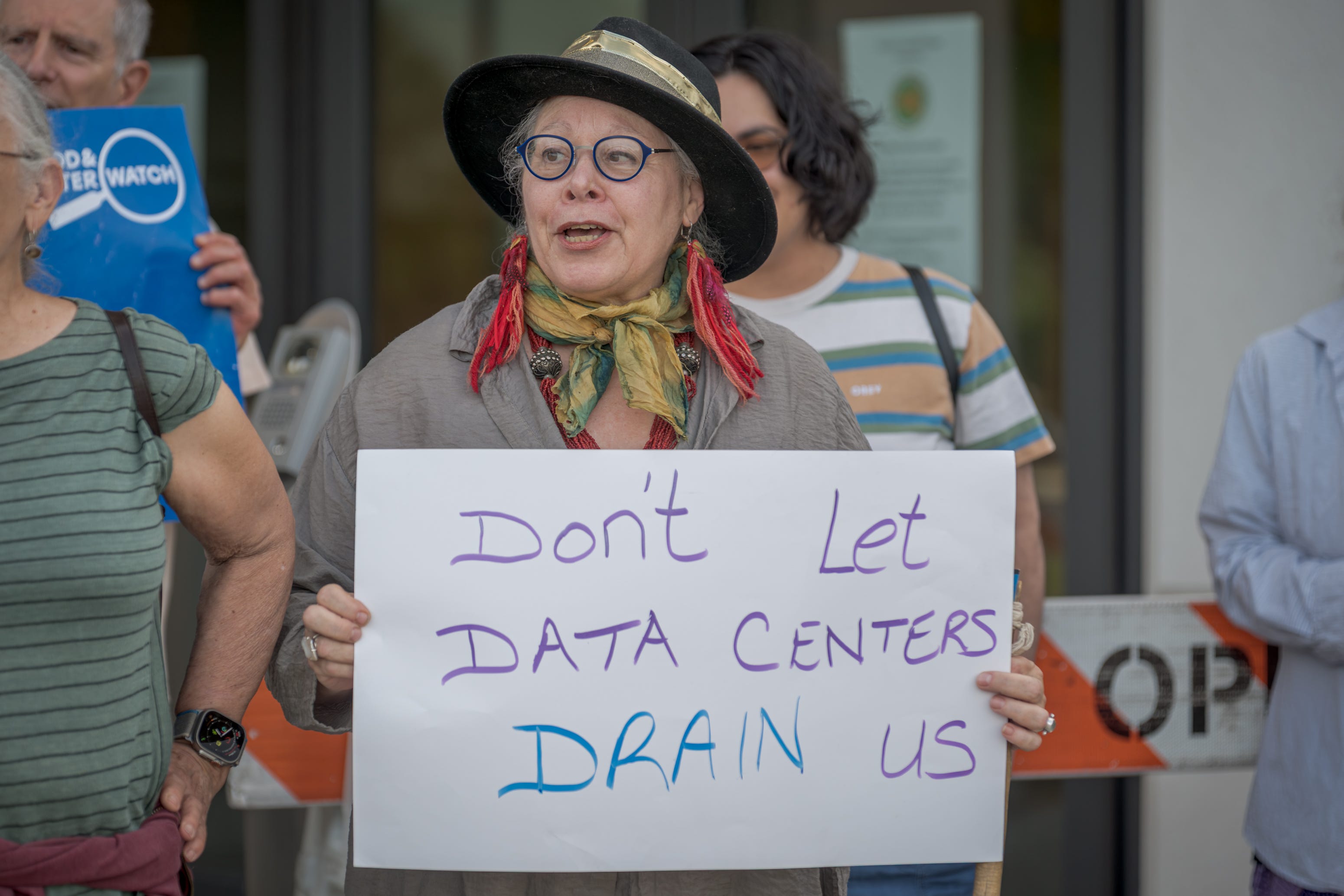
Mike: I’ve seen a lot of articles framing data center opposition as evidence of strong anti-AI sentiment, but to my eyes, it looks about the same as every other bit of NIMBYism — you regularly see community opposition to solar panels, to utility-scale batteries, to apartment buildings. Do you think there’s really a uniquely anti-AI element to this, or is that just how it’s being read by journalists who are unfamiliar with the broader NIMBY context and also hate AI?
It’s a little of both. I don’t think anyone who is familiar with the broad NIMBY context of American life is all that shocked to discover that it is frequently possible to mobilize local opposition to large-scale construction projects.
But part of the deal with NIMBYism is that people generally don’t have some kind of big concerns about apartment buildings going up on the other side of the state. That is not in your backyard. My initial read on the whole data center situation was that developers would indeed find that lots of places don’t want these projects, but also that it wouldn’t be a very big deal. There are lots of places in America, and the data centers will just go where people on net decide the tax revenue is worth the hassle. What we’re seeing in terms of political momentum for statewide bans on data centers suggests something broader than a strict backyard-based concern. Most states are pretty big. Why should you care if data centers are going up a four-hour drive from your house?
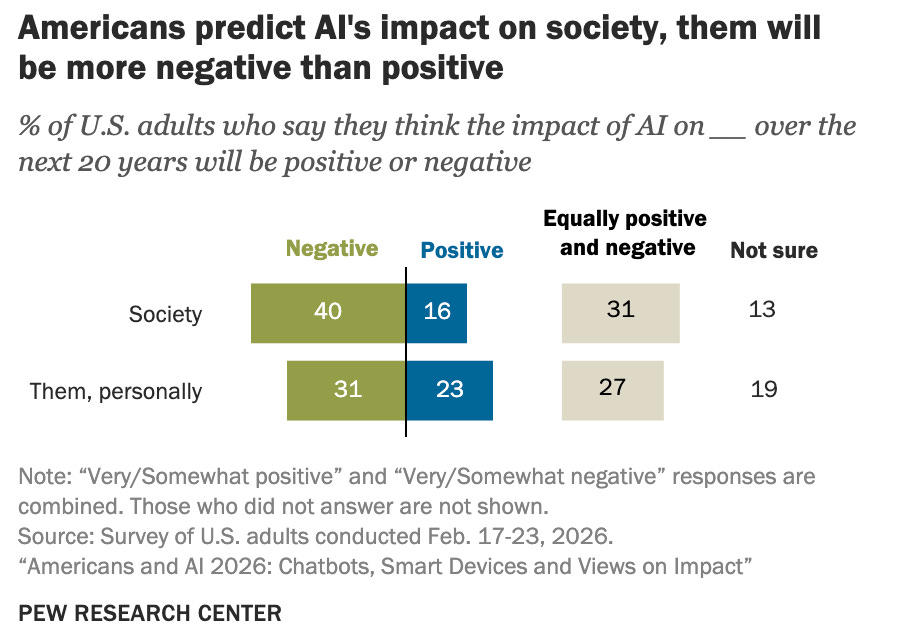
Some of that reflects concerns about electricity prices, which can have less localized impacts. Still, the obvious solution to concerns about electricity prices is just to tighten up the terms on which the permits are issued. Looked at just economically, the obvious rule should be “you can build the data center only if you agree to terms that make it net beneficial to ratepayers.” That may mean a lot of proposed projects don’t get built, or it may mean they get built on terms that are beneficial to ratepayers. A ban doesn’t make sense. So I think you need to bring in the context that people are moderately skeptical of A.I.’s impact on their lives and more skeptical of its impact on society.
That really is pretty different from housing.
Even real grouchy NIMBY types generally agree that, in principle, it’s good for people to have places to live. So you get a real push and pull of policy. Almost everyone kind of likes the idea of making it easier for young people to afford to buy a place or move into a bigger one and raise a family. Everyone understands why housing is desirable. There is a weird culture of hostility toward “developers” that I think creates a lot of downstream political problems. But even though I’m sure I have tagged people I disagree with as “anti-housing” in the past, I don’t think anyone would characterize their own views in that way.
With data centers, though, you have real skepticism that advancing the technology is a good idea. Most people don’t find the “race with China” concept particularly compelling. People worry about technological change costing them or their friends and family a job, and importantly they are not enthusiastic about utopian visions of a post-work future.
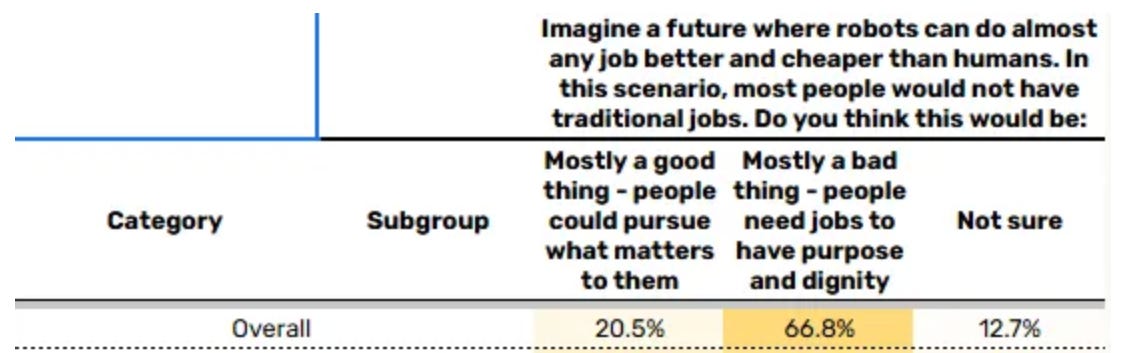
Now, in response to this polling, A.I. companies have mostly pivoted away from the utopian rhetoric they used to use about this in favor of being more cuddly and reassuring. They now want you to believe that their models will be incredibly useful and productivity-enhancing but in ways that don’t disrupt the labor market, and I’m not sure how coherent that even is. Obviously, there has been a lot of technological innovation over the past 200 years that has not eliminated human labor. But it definitely has eliminated specific jobs or even whole fields or transformed them into barely recognizable versions of themselves or shrunk them.
So my broad take is that different kinds of worries are mutually reinforcing.
It is hard to build anything in the modern world. A lot of contemporary Westerners have a basically incoherent view by which they are nostalgic for a past era of more rapid change in the physical landscape, and this makes them want to make it illegal to alter the physical landscape, which leads to stagnation outcomes they don’t like, which makes them more nostalgic. But you can find ways to overcome this kind of knee-jerk skepticism about building new stuff. Doing that, though, requires some kind of baseline view that it would be good to have the stuff. With A.I., clearly people have a reasonably strong revealed preference for using it. But their stated views of the technology are pretty skeptical, and they are not especially worried about its progress slowing down as a result of physical construction impediments.
The big problem, it seems to me, is that altering the physical location of data centers is actually a very weak lever for making A.I. policy. Even if no data center is ever constructed in Portugal, or wherever, the lives of Portuguese people could be very disrupted by A.I. progress. As such, you need rules addressing both the economic consequences of A.I. and A.I. governance, and neither area can be addressed just with rules about data centers.
Andy: You’ve had at least two staff members from the great state of Colorado, and there are several regulars in the comment section (including me) from Colorado. This isn’t scientific, but it seems to me we are over-represented at SB — why do you think that is?
I don’t know if this is a coincidence or not, but the high representation of Coloradans on the team is something I’ve noticed. I would also say that in Jared Polis, John Hickenlooper, Michael Bennet, Joe Neguse, Jason Crow, and Brittany Pettersen the state has a lot of elected officials who are broadly aligned with Slow Boring policy. I think this in part reflects the fact that Blue Colorado is a very recent historical phenomenon.
Back in 2004, Colorado was redder than Nevada, Ohio, or Iowa, which is just to say that the current crop of prominent elected officials is mostly people who got elected winning tough races, who take politics seriously, and who’ve advanced progressive priorities in a judicious and considered way. It’s possible that the state is now so blue that this won’t be the case in the future and it’ll become a quagmire like New York, where tedious machine politicians duke it out with far-left ideologues.
On the other hand, I like Manny Rutinel. He just won a House primary and will hopefully beat his Republican opponent by a lot. So hope springs eternal. Maybe it’s the altitude?
All that being said, while I’ve been to Colorado four times in my life, they were all short trips — three for conferences and one for a wedding. I’ve never spent much time in the state and don’t really know very much about it.
Oliver: “Mamdani is telling his base what they want to hear, exploiting grievances, and then doing things they would not approve of. It’s very Trumpian.”
Do you think this tweet is unfair? It did make me wonder how Trump and Mamdani both pair maximalist rhetoric while moderating in practice but also never admitting they’ve conceded an inch. Mamdani dresses up small bore wins as grand socialist achievements, sprinkles in lofty left wing quotations, and throws enough rhetorical chum to his base that nobody dwells too much on the policy. Trump does the right-wing version: quietly retreats, delays, or settles for less, then declares total victory and frames whatever happened as proof that only he could have delivered it. If moderates advertise every concession as responsible pragmatism, they absorb all the political cost from partisans while generating none of the excitement. How do self described moderates get out of this unhealthy dynamic and learn the trick?
What I think is “Trumpian” about Mamdani is that like Trump he has a base of supporters who treat his presence in office and his political successes as highly desirable political goals. To many, they both serve as symbols of triumph over their enemies. As a result, when Mamdani holds a very polite and cordial meeting with Trump in the White House, Mamdani fans interpret that as a display of their champion’s political mastery while they would see it as a craven sellout if someone they didn’t like did it.
But you asked if it’s “unfair” to characterize Mamdani as somewhat Trumpian.
I think that’s a category error. What’s bad about Trump is a specific kind of lawless authoritarianism. The existence of a personalistic following is aggravating to people who are not in the following, but it’s also a little bit banal. Barack Obama was like this. And so were Bill Clinton and George W. Bush. I think it’s a bad feature of Madisonian-style political institutions that they tend to encourage this style of politics. Still, one has to play the game. To me, it’s striking that Mamdani’s policies are incredibly similar to Bill de Blasio’s, complete with a substantial amount of continuity in personnel and overall the same strengths and weaknesses. But with de Blasio, progressives were constantly mad at him for not delivering wildly unrealistic forms of transformative change, whereas the Mamdani cult of personality has made his supporters more tolerant of banal realities.
The actual problem with both guys is that while New York City does have enough underlying economic strength to raise more tax revenue (and the pied-à-terre tax is clever), too much of that revenue is captured by the city’s various stationary bandits rather than translated into useful services. It would probably take someone with Mamdani-level charisma to take this problem on — we know that moderate low-rizz technocrat Michael Bloomberg couldn’t really do it. But you can’t tackle tough problems unless you acknowledge that they exist, and Mamdani is running into them. If he succeeds in making the city buses go faster, for example, that could reduce overtime payments for bus drivers.
Jöseph America 2028: Because most of the governing that actually means anything happens at the subnational level, which “winnable” state legislature (or house of a state legislature) is most important for Democrats to take in November, and what is the path to taking it?
There are a bunch of different ways to look at this, but I think the Georgia governor’s race is very important in an uncomplicated way. That’s why Keisha Lance Bottoms is on Slow Boring’s donation recommendations list even though she was not my first (or second or necessarily even third) choice for the nomination.
Georgia is important because it’s a large state and a lot of people live there. And it’s important in an uncomplicated way because despite being purple in its overall partisanship, the baseline public policy is very right-wing. With a conservative legislature, there’s no way a Bottoms administration is going to go off the rails and do dumb left-wing stuff. But there is a real chance of picking the low-hanging fruit of progressive governance such as Medicaid expansion, a small minimum-wage hike, reduced gerrymandering, and of course a state government that won’t try to help Trump steal the 2028 election.
J. Willard Gibbs: Taking at face value the need to elect more moderate Dems, how do we convince more of them to run for office? Or maybe more of a meta question: why do people run for office in the first place? I can tell you why I don’t: not comfortable with fame/being a public figure, don’t want my family harassed, too many cultural issues I’d need to take a stand on that I simply don’t care that much about. Right now it seems like there’s a lot of energy on the progressive side (while I don’t agree with many of their solutions, I certainly understand the appeal) and cynically, I could justify why those on the far right seem to be jumping in. So how to we bring that energy to “fight, but for well regulated capitalism and classic Liberalism that doesn’t degenerate into cultural nonsense”?
Andrew Hall’s 2019 book “Who Wants to Run?: How the Devaluing of Political Office Drives Polarization” is one of the most underrated books out there in my opinion.
What he says is, basically, that holding political office is not an objectively very desirable job for most broadly capable people, and that’s especially true of lower-ranking offices in state legislatures and so forth. Under the circumstances, the people who want to run are disproportionately kind of extreme ideologues relative to the general population. People were joking around about me filing to fill the Maine Senate vacancy, which is a good gag, but, in addition to being ineligible, I would sincerely not want the job. And not like in a humble “I’m not worthy of your high esteem” sense. It would be a huge pay cut. It would involve an annoying amount of travel. In practice, the main way members of Congress wield influence these days seems to be by posting takes — except, instead of nice columns, they are doing tons of short-form vertical video. Thanks, but no thanks.
Anyways, this is a complicated question, but I do think the number one answer is to boost the compensation and staff allowances.
Niketas: Does the Common Sense Manifesto apply in some ways outside the US to liberalism in core allies? You’re relatively bullish on the UK/agree with swapping out Starmer: what needs to be done in France and Germany to further liberalism/human flourishing/democracy?
Ideally this would take place alongside a Mark Kelly-Jon Ossoff common sense restoration to be Europe’s ally in all this — but things do not seem to be going at all well in France or Germany politically, and growth not catching up to US. Thanks!
There are common trends around the world and things to learn, but whenever I end up on the global circuit, I am reminded that there are huge relevant differences in the status quo. One thing that immediately shows up is that because there is way more money in American politics, Democratic Party political operatives have dramatically more technical skill than their counterparts in Germany or Italy or whatever. So from a pure trade-show perspective, there’s kind of a “learning from the Americans” dynamic.
But if you think structurally about what Democrats are doing, you see that their best issues are basically “poor people should get health care” and “women should be allowed to have abortions.” These are not actually contested issues in European politics, which is just to say that beyond specific problems navigating the politics of immigration and whatnot, there’s a real question in my mind as to what a center-left pitch in continental Europe looks like. The far-right National Rally in France is just not proposing the policies that I would advise Democrats to focus on running against.
But there’s also a double movement in this. The policy status quo in Europe is less favorable to center-left parties, but underlying public opinion is also way more left-wing. European voters are more secular, less individualistic, and more concerned about climate change. So, broadly, some of the main problems Democrats are dealing with don’t really exist in German politics, but some of the main solutions available to Democrats aren’t really available there, either. The upshot is that I have limited advice!
Eric: What are your favorite podcasts to listen to? Also curious what other readers are listening to. Mine are:
Conversations with Tyler. Absolute favorite.
Ross Douthat. I really enjoy Ross.
Dwarkesh. Most episodes are good.
The Bulwark with Tim Miller. Enjoyable but mixed reviews.
Ezra Klein. Some episodes are great others I skip.
Central Air with Josh Barro. Good mix of views, also entertaining.
Lex Friedman. Just dipping into his catalog, the episode about Nazi drug use was really good.
Politix, obviously
I’ve been a guest on about half of these shows and enjoyed each experience, and I respect the hosts and their work. And I’ve listened to and enjoyed individual episodes of the shows, like the “Dwarkesh Podcast,” that I’ve never been on. But I’m not a regular listener to any of these, and I don’t think that’s a coincidence. These are shows that are so close to my work that I don’t find it entertaining per se to listen to Ezra or Tim or Josh. They are talking about subjects I am very well-informed about and dealing with debates that I participate in constantly. I check out an episode sometimes because I want to hear what they are saying, but audio is not a very efficient medium for synthesizing information. I really wanted to know what Bill McKibben said on “The Ezra Klein Show,” so I read the transcript.
By contrast, I would never read a transcript of Bill Simmons hosting Zach Lowe to chat about the Jaylen Brown trade. But when I’m looking to fill time while driving or walking around, I love to listen to that kind of conversation about basketball. My very core podcast rotation is “The Big Picture” and “The Rewatchables,” which are both about movies, supplemented by The Ringer’s “House of the Dragon” recap pods when that show is on. I also love “The History of English Podcast” and the John McWhorter episodes of “Lexicon Valley.” I like the “Accidental Tech Podcast,” I like Lowe when the N.B.A. is in season, and I like “Blank Check” when they’re talking about movies I’m interested in. But the point is this is all stuff that’s pretty remote from my day job.
I hope that Slow Boring readers enjoy “Politix” and “The Argument,” the two shows that I co-host, and I would anticipate that fans of those shows would enjoy a lot of the shows that you named. But I’m personally too close to this work.
Incidentally, though, if someone did ask me to be a guest on a sports podcast, I would say that Celtics fans have gotten so wrapped around the axle about this Brown trade, and so caught up in the controversies about advanced analytics, that they are missing the forest for the trees. Last year, Boston won 56 games and finished second in the East with Jayson Tatum playing only 522 minutes in total. He is better than Brown and will be back at full strength next year. Paul George, even in his diminished, elderly state, is a useful basketball player who shoots very well and is fine on defense. Last season, the Knicks got 1,175 minutes out of Mitchell Robinson. That should fully displace the 338 subpar minutes Nikola Vucevic played for Boston last year and cut into the 1,118 minutes of Luka Garza. This is a big upgrade, especially since Garza’s remaining minutes will end up being against inferior competition. As a result, I think you are looking at a straightforwardly better roster even without appealing to advanced analytics or making contrarian arguments about Brown.
The Celtics’ most-used lineup last year was Queta / Brown / Hauser / White / Pritchard. Next year, it should be Tatum / George / White / Pritchard with either Queta or Robinson, and either version would be uncontroversially better than last year’s. The number two lineup was Walsh instead of Hauser. Again, they’ll be better next year. So without disrespecting Brown or even defending the trade per se, I think what you’re left with is that next year’s team will be better than last year’s team was, and last year’s team was good. They also got additional draft picks and future financial flexibility, so the future looks bright to me. But again, I can just do these takes for fun because it’s not my job — I’ve just been a little surprised to see so much focus on the analytics disputes rather than on the basic reality that getting Tatum back from injury and adding Robinson are big upgrades.
Pragmatic Progressive: In Ezra Klein’s recent interview with Bill McKibben, they asserted that California has built the equivalent of 13 nuclear power plants in just the last 3 years, in the form of solar and batteries, and questioned why this hasn’t been a bigger story. Assuming the underlying facts are true, does that kind of progress in renewables alter your priors around nuclear energy at all? I know you’re a big proponent based on safety records, probabilities, and trade-offs, but the long tail risk seems pretty large — and more pragmatically, the capital investment seems pretty steep — if we’re truly in a world where scaled renewables are within reach in this generation.
For starters, I personally feel like I’ve read way more excited coverage about battery progress than excited coverage of the Nuclear Regulatory Commission’s revised Part 53 rule. So I just don’t think the factual claim is true. I also don’t really think it’s right to say that California’s batteries are “equivalent” to 13 nuclear power plants. Nothing in life provides genuine 24 / 7 / 365 energy that is on all the time, but a 1,100-megawatt nuclear power plant comes a lot closer to that goal than 1,100 megawatts’ worth of batteries.
More broadly, though, I really want to reject the framing that I am a proponent of nuclear power while McKibben is a proponent of solar. It’s not a good idea to get too invested in energy technology fandoms, and it’s not possible to reliably forecast the future course of technological progress. What I am a proponent of is changing the regulatory framework for nuclear power to provide a more balanced assessment of the costs and benefits. I am also a proponent of changing the regulatory framework for solar power to make it cheaper and easier to build utility-scale solar projects. A point that I am always trying to make is that while mainstream environmental groups are definitely less hostile to utility-scale solar than they are to nuclear or fossil fuels, they are not actually in favor of the regulatory changes that would make utility-scale solar easier to build either.
Peter Borsada: Listening to Ezra Klein’s interview with Bill McKibben and it struck me that you are very quick to attribute institutional opposition to fossil fuels to “the groups” while characterising pro-drilling sentiment as grassroots voter concern (in Texas, Alaska etc.)
McKibben obviously takes a radically different view of this and ascribes a lot of agency in energy politics to fossil fuel industry money and lobbying. In the interview, he seems to take the view that, bar that moneyed influence, a more climate focussed electorate would have emerged and steered policy in a greener direction in the decades since Carter first put solar panels on the White House.
Do you underrate the astroturfed element of anti-renewables politics? Does it ultimately not matter if the oil money is chasing after authentic voter sentiment?
To the point I ended with above, they are adding solar power more quickly in Texas than they are in California. Is that because the fossil fuel industry has more political clout in Sacramento?
It was more than 16 years ago that my friend Julian Sanchez coined the term “epistemic closure” to describe the tendency of a political movement to seal itself off from outside information, a phenomenon he saw at the time on the American right. I think that while all of the trends he identified have gotten worse since then, the left-right gap has also narrowed because you see more and more epistemic closure on the left. The view that all resistance to the policy agenda of green NGOs is driven by fossil fuel propaganda creates this kind of loop where the fact that someone is pushing back shows they are a “shill.” So really obvious counterexamples to the fossil-fuel-propaganda theory of everything don’t get raised or heard, and there’s no actual discussion inside the movement about what the strategic or tactical issues even are.
That last bit just reminds me of the time MattY got shouted down by climate change protestors for being a ‘paid’ shill of the fossil fuel lobby. It was very silly.
I'd like to see someone try "criminalize nuisance homelessness " as a moderate position. Keep all the bog standard Democrat in good standing positions but look and talk normal then say "no, we're most certainly not gonna have people lying passed out on our sidewalks". The progs won't like it but who cares?