

Last week in The Atlantic, Jonathan Chait hailed New York City Mayor Zohran Mamdani as a pragmatic moderate in his approach to governance.
I’ve toyed with this theme and basically agree with Chait’s points. But for the sake of offering a different perspective, I don’t think Mamdani’s pragmatic and moderate approach to doing the job of mayor means he’s not really a leftist.
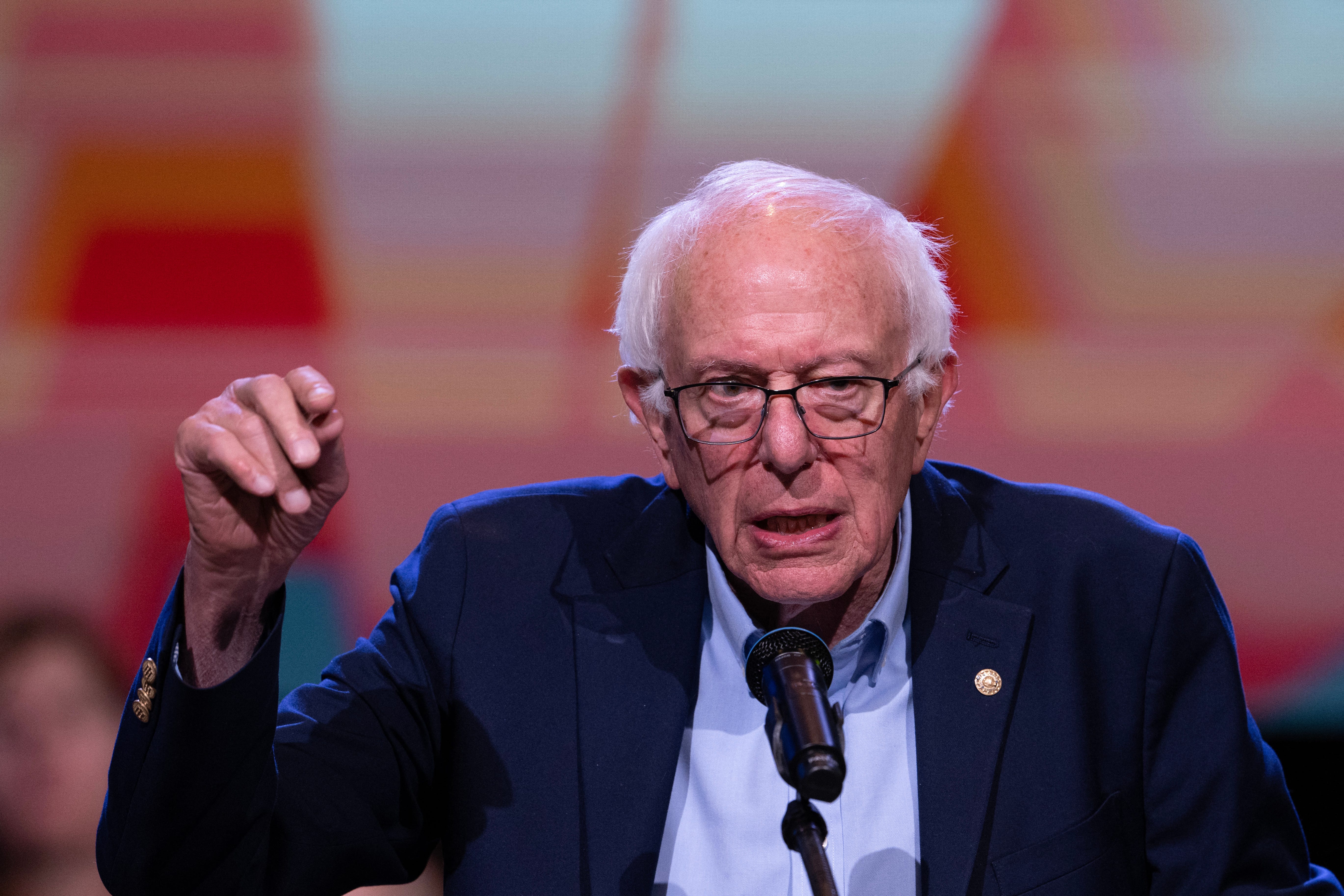
The clearest precedent I can think of for the way he’s governing is Bernie Sanders as mayor of Burlington. Sanders won narrowly in a three-way race, thanks in part to support from the police union, and by all accounts gained support during his time in office.
As mayor, Sanders did not do socialism in one small New England city. He did really normal good mayor stuff, like deliver cost-effective city services, keep the streets clean and safe, and promote economic development. Being somewhat familiar with Sanders’s record as mayor, I found what I’d heard about Sanders offering advice and mentorship to Mayor-elect Mamdani reassuring.
Notably, though, Bernie spending eight years as a pragmatic mayor of Burlington didn’t mean he stopped being a leftist. He ran for the House as a leftist, moved up to the Senate as a leftist, and is obviously an extremely eager left-wing factional politician.
The reason a hardcore leftist can spend eight years being a pragmatic mayor is that leftists care a lot about building political power. Once they’ve won a mayoral election as a leftist, the best way to build leftist political power is to do a good job as mayor. The alternative, on display in Brandon Johnson’s Chicago, is to flounder and discredit the left.
Governing like a pragmatic moderate for the sake of leftist power-building is different than actually being a pragmatic moderate. In a lot of ways, the former probably works better in municipal governance because it means left-wing members of the media will criticize the leftist cranks who protest you when they might side with protestors against a more moderate mayor.
Which is all just to say that in a lot of ways, I think the fact that the center-left finds itself surprisingly pleased with Mamdani shows that while the divide between moderates and progressives gets a lot of coverage, there’s an under-discussed divide between politicians who have (mostly executive) jobs featuring real accountability for outcomes and the bulk of backbench legislators, who are basically just posting.
As a professional poster myself, I know full well that factionalism between posters gets intense. Actual governing, though, tends to produce consensus instead.
The reverse-Mamdanis of the U.S. Congress
You can really see this in action with politicians who’ve moved from executive office to Congress.
I believe Maggie Hassan, Jeanne Shaheen, and John Hickenlooper, all former governors, think of themselves as pragmatic moderates. And if you look at their records as governors, they clearly were pragmatic moderates. They won what were, at the time, tough races in swing states.
And while they were, of course, more progressive than their Republican opponents, they did not take huge progressive policy swings. New Hampshire, notably, continued to be a state with no tax on earned income under the leadership of Hassan and Shaheen. Hickenlooper refused to take a position on a 2011 ballot initiative to raise income and sales taxes to increase school funding. He fought with teachers’ unions about pensions, and he declined to push for a law that would grant collective bargaining rights to Colorado state and local public employees.
And when they became senators, it’s not as if they became wild-eyed leftists.
But as legislators, they don’t tangle with any progressive interest groups. They all (at least officially) endorsed the more expansive multi-trillion version of Build Back Better that was cut down by Joe Manchin into the Inflation Reduction Act. As governors, none of them were proponents of dramatic expansions of the social safety net, but as senators, they were.
Or look at someone like Abigail Spanberger, who as a House member was known as a “moderate” in the sense that she sometimes fought with the Squad, but she wasn’t a thorn in the side of party leadership or someone who refused to endorse major interest-group priorities. But when she ran for governor, she said she wouldn’t repeal Virginia’s right-to-work status because she believed it was good for the business climate of the state. As governor, she’s been fighting with the legislature about a proposal to do public sector bargaining because she thinks the way it’s been drafted is going to be bad for local government finances.
The basic difference is that if you’re a governor or a mayor, you need to brag primarily about things that are happening in your state. Kathy Hochul and Maura Healey, neither of whom are particularly moderate as a question of factional identification, are both trying to get new natural-gas pipelines built because they are worried about state energy prices. If you’re a legislator, you can brag just about positions you’ve taken.
A Democratic House member can talk all they like about taxing the rich and being pro-labor. But a governor or a mayor needs to sit down and really think through whether the outcomes of a particular policy choice are actually going to be good for the state or city. And while of course people disagree to an extent about values on the basis of overall political ideology, in practice I think they don’t actually disagree all that much. Mamdani doesn’t want Wall Street firms to close their New York City offices and send those jobs to New Jersey or Texas. Everybody brags when crime goes down and not when it goes up.
Reasonable people can and do disagree to an extent about which policies will generate good outcomes. But I think the existence of these reverse-Mamdani figures underscores that disagreement about the facts isn’t actually the main difference.
The difference is that the natural state of the safe-seat Democratic Party legislator is to say “yes” to a lot of different interest-group asks without thinking too hard about them or whether they’re contradictory. You figure that someone else is going to pick and choose what actually happens and that your job is mostly just to be a people-pleaser and coalition-manager.
President Senator vs. the strong mayor
For an executive, pure people-pleasing doesn’t work nearly as well.
That’s why, unless they only care about Israel, there’s a lot for moderates to like about non-moderate Mamdani and a lot to dislike about self-identified moderate Joe Biden.
A friend who spent years working in the Senate joked to me that Biden conducted himself as President Senator, very much declining to set priorities and say, “We’re going to do this and not that.” Nobody finds it particularly remarkable that Chris Coons and Lisa Blunt Rochester are just baseline Democrats who sign on to all the normal bills and don’t think very clearly about tradeoffs. That’s just life as a safe-seat senator. But from a president, it was actually quite odd. His team was aware that affordability was a pressing crisis, but nobody on the team was empowered to make any pro-affordability decisions that would get them crosswise with labor unions or environmental groups. They could care about the economic impact of international oil sanctions because green groups didn’t lobby on that, but they didn’t apply the same logic to the Interior Department’s setting of drilling fees since that was something those groups did lobby on.
Mamdani is more left-wing than Biden. He’s also a much stronger leader.
The City Council tried to bully him into giving public-school paraprofessionals a bonus, and he wouldn’t do it. Mamdani also fought, successfully, to delay implementation of a state-mandated reduction in class sizes that he’d voted in favor of as a state legislator. He ran on making the bus free and then appeased more technical transit advocates by revising it to “fast and free.” But actually doing free buses would cost a ton of money and not be very beneficial, so now he’s just focused on speeding up the buses, which is a better idea because it doesn’t impair his ability to spend money on other things.
He hasn’t reinvented himself as an anti-spending libertarian. New York City is still a very high-tax, high-spend jurisdiction, and he’s working to make spending higher.
But he does face fiscal constraints, and he wants to focus on a specific goal — expanding child care offerings — so he’s trying to not get sucked into other commitments. Activists want him to pick a fight with the police commissioner because that would build their political power, but it builds his political power to have a good working relationship with the governor (who likes the police commissioner), and there’s no actual problem with the N.Y.P.D. status quo, so he’s not doing it.
The ideological content of Mamdani’s administration is genuinely not that different from Bill de Blasio, who was mayor quite recently. But de Blasio, despite a number of admirable qualities, was a pretty weak Biden-like figure who was seen as delivered into office by an interest-group coalition and who in return governed largely by parceling out doses of interest-group slop. The equivalent 2025 figure would have been Brad Lander.
Mamdani emerged somewhat independently of the interest-group ecosystem and has more leverage to stand outside the system and insist on his priorities rather than accept slop. This is not exactly moderation — it’s all in pursuit of the larger goal of democratic socialism — but it’s not not moderation.
Posting versus governing
For 2028, I really want moderate Democrats — by which I mean people who admire the Blue Dog Coalition and think that Biden, Chuck Schumer, and Hakeem Jeffries are too left-wing — to let go of their terror of a leftist winning the primary.
A big part of this is just that, to a large extent, I really do think fear is the mind-killer. My ideal 2028 outcome is that someone runs a smart moderate campaign based on a smart moderate critique of the Democratic Party establishment and wins. That would be great and, in my opinion, better than nominating Ro Khanna or Alexandria Ocasio-Cortez.
But I don’t want to panic and bandwagon behind some tired establishment figure like Gavin Newsom or Kamala Harris just to box out someone from the left. If someone from the left wins, they’ll just end up stuck dealing with the same problems of practical governance.
Because the fact is, moderates are right about what the practical problems of governance look like. If President Ocasio-Cortez is sitting in the Oval Office in 2029, she’s not going to want to burn a bunch of political capital on a totally undefined ICE abolition agenda. She’ll achieve whatever is easy to achieve through new leadership and new orders and move on to trying to get Congress to act on her top priorities. She’s also not going to overhaul the entire $5 trillion-a-year health-care system in one fell swoop any more than President Newsom would. But she’ll get something done on health care, and hopefully progressives will be happy with it because they’ll believe she tried in good faith, just like they believe in Mamdani even though he’s delivering only a fraction of what he promised.
A lot of what passes for factional disputes between the establishment and the left right now is really just left-wing backbenchers doing posts.
“We should abolish ICE” or “the government should give everyone free health care” aren’t really plans for governing. It’s just posting takes. If you don’t actually need to set priorities or deal with recalcitrant legislators or stay within a fixed budget, you can fire off whatever takes you want. And I’m not per se opposed to people posting takes. I’m a takesmith myself. But I have all kinds of takes, such as “We should do a revenue-neutral carbon tax with the price set at the globally optimal social cost of carbon and the revenue used to offset regressive payroll taxes.”
Well, so what? I do think that we should do that. If you ask me in a mailbag or during the Q&A session at the end of a panel, I will offer that take. If it comes up in a referendum, I will vote for it. I also think we should “abolish ICE” and have a consolidated federal police agency.
But these things are not going to happen. They’re just opinions. As an opinion columnist, I think it’s important that I try to have correct opinions, and I like other columnists to also have correct opinions. But I find the impulse to assess politicians as if they’re columnists to be a bit perverse.
Legislators, after all, can accept the responsibility to govern. I don’t really agree with Senator Sheldon Whitehouse’s takes qua takes, but he sat down and did the work of negotiating a really good bipartisan energy permitting bill.
The truth, though, is that members of Congress have the option of having successful careers as politicians basically just by posting and never buckling down to the work of writing bills, aligning stakeholders, and setting priorities. Executives also can duck the work of governance, but when they try — like Biden in the White House or Johnson in Chicago — they tend to fail in obvious ways. There’s a kind of objective incentive for a mayor or a governor or a president to try to be responsible, while many legislators can get away with just posting.
Still, even backbench legislators can attempt to seize the wheel and participate in the governance of the country if they want to. Sometimes when they do that, they cook up ideas that are dumb. But just as the responsibility that’s inherent in executive leadership tends to push people to exercise better judgment, the practical need to count votes and make deals tends to force legislators to think harder about what they’re actually saying. Otherwise, they’re basically just out here doing my job — a job that I think should be left to me.
Perfect timing for this analysis given the New York Times story out today that details how Mamdani is trying to get rid of the head of the Racial Equity Commission legislated under his predecessor and put in a loyalist instead because he doesn’t want to do state mandated DEI and pick a fight with the Trump admin. The person who is being replaced (a true believer) and the city council is throwing a fit and planning to protest outside City Hall today https://www.nytimes.com/2026/10/27/nyregion/mamdani-tigani-racial-equality-commission.html
Isn't this exactly why, historically, voters have selected governors rather than senators to be president? Demonstrating real-world executive leadership seems to be a good trial run for the big job (granted, without the foreign policy exposure).