

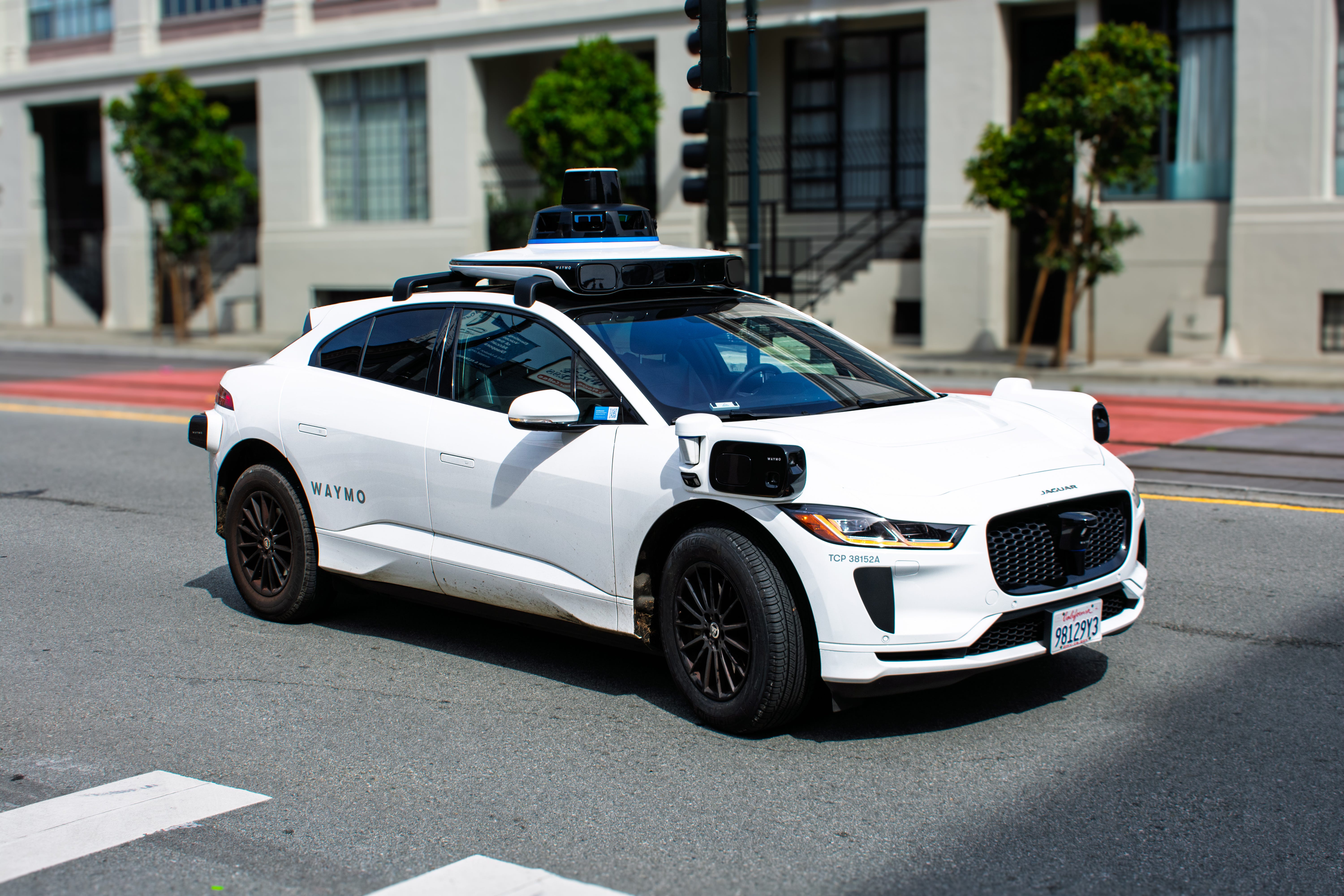
It’s Mother’s Day tomorrow and, in addition to the scented candles, flowers, and breakfasts in bed, I propose that those of us who love the mothers in our lives give moms something that will actually improve motherhood.
Being a mother is rewarding and fulfilling, but it’s also stressful, labor-intensive, and, at times, full of drudgery. For mothers of children aged three to 16, it involves so much ferrying kids to and from school, activities, and doctor’s appointments that “Mom’s Taxi Service” has become its own genre of Etsy merch.
I don’t have a solution for most of the domestic work that more often than not is done by mothers. But on the issue of “Mom’s Taxi Service,” there is something that policymakers can do: Support the self-driving-car industry, or at the very least get out of its way.
The burden on mothers
Driving is just one part of a much broader set of responsibilities that disproportionately fall on women: Time-use data shows that moms spend more time with children than dads at every age, and the gap is especially large during prime parenting years. By their mid-30s, women spend about five hours a day with children, compared to roughly three hours for men. Among full-time working parents, mothers do 1.7 times as much child care and household work as fathers — 19 hours per week compared to 11.4.
This labor comes with a cost: Forty-two percent of parents who spend more than 10 hours a week driving kids around fear they are putting their jobs at risk due to the demands. And unlike a lot of child care responsibilities, this actually gets worse as kids age into more intense extracurriculars and become teenagers with busy social lives.
But imagine a middle schooler getting to soccer practice without a parent rearranging their entire workday. There’s no early sign-off from the office, no scrambling to beat traffic, no 45-minute round trip for a one-hour activity. That could be the new reality.
Very few moms feel comfortable letting a random Uber driver bring their child to school or to their afterschool activities, but a self-driving car is a very different proposition. Schools’ dropoff lines could be supervised to securely bring children from Waymos into the building, and similar systems could be set up at recreation centers, after-school programs, tutoring centers, and other venues that cater to children. For some families, that’s 10-plus hours a week of driving that simply disappears.
And even when mom is in the car with her kids, the experience changes. If she’s dealing with a toddler meltdown or kids fighting in the backseat, she can focus on that situation instead of splitting her attention between the road and her children.
The benefits aren’t limited to parents of school-age children. Starting in infancy or even pregnancy, Waymo, the most popular self-driving-car service right now, could save time on grocery shopping by picking up goods from supermarkets and bringing them to a mom who can’t leave the house.
Making motherhood less burdensome is valuable on its own.
But it may also do something state-sponsored pro-natal policies have struggled to achieve: help women have the number of children they already say they want. That number, 2.7, is quite a bit higher than the 1.77 children women end up having on average. Women who already want larger families are more likely to have them if raising kids feels manageable, especially if it’s easier to combine that responsibility with a career.
Waymo is a feminist issue
There’s plenty on offer for women who aren’t mothers, too.
Women more often than not end up taking care of elderly parents. Waymo can make a big difference there as well, allowing the elderly to keep their independence longer. That means fewer tasks for adult daughters — taking mom to run errands, carting dad to his doctor’s appointment — and fewer difficult, emotional conversations about “taking the car keys away.” Men of course love their parents and take care of them in old age, too, but this will be a benefit that disproportionately helps women.
On the security front, there’s already some understanding that a partnership between feminism and self-driving cars is a “thing.” NBC News interviewed several women who said they feel safer taking a driverless car, citing the risk of harassment or assault by overwhelmingly male cab drivers.
I went to college in Italy and New York, and on a night out my friends and I would have certainly preferred to be alone with each other than be joined by a man we didn’t know.
There’s good reason for this. From 2017 to 2022, a total of 400,181 Uber trips resulted in reports of sexual assault and sexual misconduct in the United States alone, court documents examined by the New York Times show.
Danger of this sort is not something that women can just “get out of” unless they avoid going out altogether. At 1 a.m., a ride home can be the least safe part of a night out. Women are more vulnerable to attack than men if they try to walk home, and public transportation has similar issues.
Self-driving cars, though, are an alternative that lets them avoid all of that. Women can call a Waymo from a safe place and only come out after it arrives. There’s no driver to pose a threat inside the vehicle. And we haven’t even gotten to traffic safety.
A safer road
Waymos are already safer than human drivers. It’s just true at this point. Kelsey Piper wrote a great breakdown of this for The Argument, and Understanding A.I. regularly takes an in-depth look at the incidents that Waymos are involved in. The latest roundup shows that human drivers keep crashing into Waymos, not the other way around.
If self-driving cars become more common, roads get safer. This helps everyone, but it helps women most of all.
For people who are uncomfortable driving — a group that skews female — the built environment in much of the U.S. effectively limits where they can go and what they can do. Self-driving cars don’t just make roads safer; they expand access. Someone who today avoids driving on highways, at night, or in unfamiliar areas could instead rely on a system that handles those conditions for them.
And when they’re in an accident, women are more likely to face negative consequences. Research out of the U.K. shows that if a woman is in a car crash, she is 73 percent more likely to be injured and 17 percent more likely to die than a man. That gap is usually attributed to vehicles being historically designed using male-based crash test dummies, resulting in lower safety performance for female occupants.
Beyond the self-driving capability itself, the business of this emerging technology could play out in a way that benefits women even more. In a world where self-driving cars are ubiquitous, it’s not a given that car ownership would remain the norm in the U.S.
Imagine a world where a large fleet of Waymos stay parked near a dense neighborhood and leave in waves each morning to bring Waymo-subscribed commuters to work. The cars could then be dispatched to ferry tourists, the elderly, and others in a more traditional taxi capacity. At the end of the business day, they’d return to workplaces to bring commuters home, before shifting back to being a taxi service in the evening as people go out for fun.
In that world, most people wouldn’t own cars at all. They’d subscribe to access in a setup that would be something between Uber and a lease. This would mean that instead of individuals interacting with a bunch of auto-related businesses, they’d mostly be dealing with a handful of large companies.
This shift would also benefit women, who are often charged more by autorepair shops, new-car dealerships, and for car loans. Nearly everyone has an anecdote about a used-car salesman treating a woman in their life differently. But this discrimination requires the seller to see the buyer and then adjust the price based on their sex. Large corporations, however, have uniform, public prices, so the consumer’s gender does not matter. By sitting between consumers and this basket of automobile professionals, the self-driving car industry could wipe out a source of inequality.
Resistance to Waymo
Given all the potential benefits, the current opposition is a real shame.
In general, women are more likely to be skeptical of emerging technology. A poll for The Argument this fall showed that 39 percent of men wanted to allow self-driving cars, but just 19 percent of women said the same. That stat isn’t a one-off: Forty-eight percent of women wanted to ban the technology compared to just 32 percent of men. In other words, the people who stand to benefit the most are also the most skeptical.
Notably, many of the cities most resistant to this technology are also places that have made gender equality a major policy priority. Washington, D.C., for example, in 2018 passed the Birth-to-Three for All D.C. Act to provide affordable child care, and its Universal Paid Leave Amendment Act provides up to two weeks to care for pregnancy and 12 weeks to bond with a new child. Yet that same city also delayed the rollout of Waymo over a long-stalled safety-review process that was originally due back in 2022.
But there’s some evidence that skepticism isn’t fixed.
In the West, the region where self-driving cars have actually been deployed, support is highest and opposition is lowest. Only 38 percent of women there were in favor of banning self-driving cars, compared to 51 percent of women in the Northeast, South, and Midwest combined. Even the D.C. Council last month began moving legislation forward to allow deployment.
That suggests that as the technology becomes more common, women may become more open to it, perhaps because of the kinds of benefits described above.
The potential upsides to letting self-driving cars scale are huge, and women are already paying real costs for the delay in the form of time, safety, and independence. Right now, the places most committed to feminist ideals aren’t just undervaluing this technology — they’re using policy levers to slow its adoption. This Mother’s Day, let’s speed things up so we can give moms a gift that will actually make a difference.
I want Waymo for Father's Day for all the reasons you cite! It is especially frustrating as a parent to be like "yay, no more daycare, my 11 year old is more independent...wait, soccer practice at 4:30 twice a week?"
"In general, women are more likely to be skeptical of emerging technology. A poll for The Argument this fall showed that 39 percent of men wanted to allow self-driving cars, but just 19 percent of women said the same. That stat isn’t a one-off: Forty-eight percent of women wanted to ban the technology compared to just 32 percent of men. In other words, the people who stand to benefit the most are also the most skeptical."
Fascinating - that's what I've found as well. Guys are like, "Wow, this is amazing I can't wait to try it." And women, almost universally are saying, "Absolutely not."