

The biggest collective brain fart by the Democratic Party over the course of my career was almost certainly convincing itself that America’s rising Hispanic population share guaranteed a progressive hammerlock on American electoral politics.
This 2013 take from Ron Brownstein — that Barack Obama’s re-election proved culturally conservative white people had become irrelevant — had an unusually blunt headline but was typical of the spirit of the era.
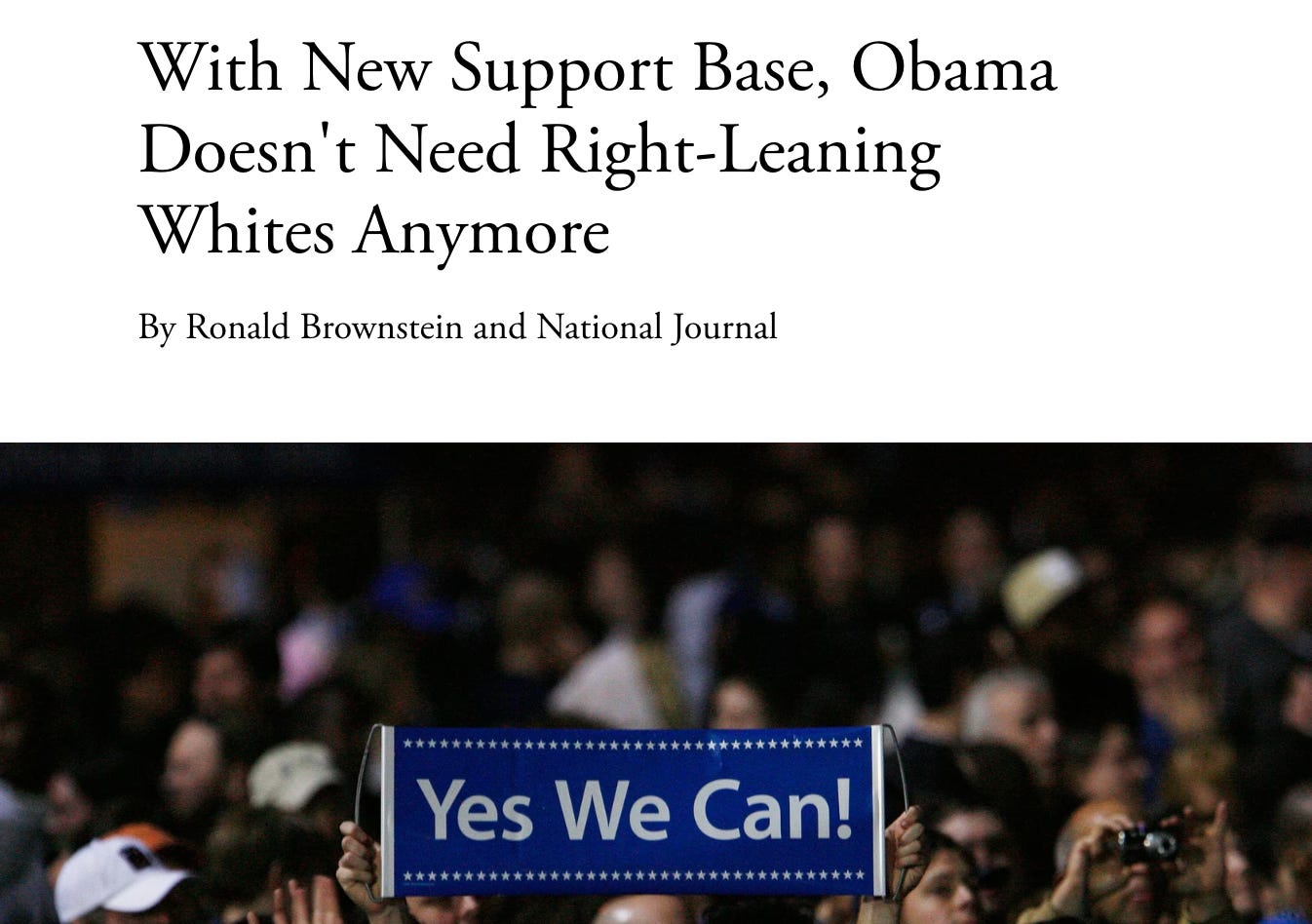
This analysis never made a ton of sense, even on its own terms. In 2012, Obama won Iowa and Ohio and Michigan and Wisconsin and Pennsylvania, none of which had a particularly large Hispanic population share. This basic math was known and knowable at the time, but it was ignored amid emerging Democratic majority hype and a focus on non-pivotal states like Nevada.
But the notion that demographic changes meant Democrats didn’t have to do politics was misguided in deeper ways, and it helped set the party up for some serious tactical and strategic errors. Those mistakes led to blowing off not only the actual views of the kind of secular white working-class Midwesterners who were important to Obama’s wins but also to blowing off the actual views of most American Hispanics.
In 2020, Donald Trump shocked many liberals by making meaningful gains with Latino voters even while doing quite poorly overall. Then in 2024, with the national trends at his back, he did even better.
A huge part of the 2026 story is Hispanic voters coming back to Democrats. Trump’s own choices are the largest factor, but an important secondary one is Democrats developing a more sophisticated understanding of the Hispanic electorate. And part of that, I think, has been cultivating a larger crop of moderate Latino politicians. Slow Boring’s 2026 candidate slate featured three different Latino guys who wear cowboy hats. And if Democrats want to continue to win, politicians like that — people who actually represent their voters and know what they’re like — have to control the narrative and not let it be seized again by unaccountable NGO types spinning wildly unrealistic dreams of endless progressive dominance.
The false dawn
One serious problem with post-2012 hubris about Hispanic voters is that it kind of understandably radicalized Republican opinion against immigration.
People have a range of concerns about immigration, some more fact-based than others. But people also have lots of opinions about topics that aren’t immigration. The thrust of Brownstein’s argument was that catering to people with culturally conservative views on non-immigration topics was now unnecessary thanks to the rising Hispanic tide. This notion got rephrased by conservatives as an alarming and possibly potent narrative that immigration debates should be understood not as economic policy but as a progressive effort to perpetrate a “great replacement” of the existing electorate.
And at the same time, it generated a breakdown of ideological discipline in the Democratic Party.