

I published a New York Times op-ed this week about new research from David Broockman and Josh Kalla detailing exactly which kinds of moderation are most electorally potent. Something I mention in the piece is that they do find that on a handful of issues, moving to the center actually backfires on the Democratic Party — candidates should ditch unpopular issue positions, not popular ones.
At a very superficial level, this lends credence to the left-populist thesis that rather than moderating on cultural issues, Democrats can just sort of pound the table with popular economic views.
But it’s worth emphasizing exactly which progressive economic policies are actually popular. The big ones are: allow more doctors and engineers to immigrate, don’t cut Social Security, raise the minimum wage to $15 an hour, expand Medicaid, and raise the income tax rate on people earning more than $400,000 per year to 45 percent.
I think most self-identified progressive Democrats would support all of those ideas, but they would probably also find them objectionably moderate as the totality of a Democratic Party economic agenda. Joe Biden and the bulk of congressional Democrats supported a much more far-reaching agenda, only to see their ambitions curtailed by Joe Manchin.
So while it’s true that there is a progressive economic agenda that is popular enough that it would be counterproductive to back down from, I’m not sure it’s the economic agenda that progressives have in mind. Broockman and Kalla specifically test the idea of promising stepped-up antitrust enforcement, for example, and find no benefits to it and some potential that it backfires. To be fair, it’s not like abundance agenda ideas are super-popular either.
The point is just that in electoral terms, all the juice is in moderating on key issues. Then if you win, you get to govern and you need to try to do a good job.
Brian T: What’s going on with the racial justice movement and housing policy?
If you read most of the articles and books produced by the racial justice intelligentsia, they very consistently locate the key driver of structural racism as housing and housing policy.
Racial justice activism and political advocacy is very much focused on criminal justice as the main driver of structural racism, and make political decisions accordingly.
Nobody is interested in reconciling, or even acknowledge, the difference between 1 and 2.
I love an excuse to write more about housing policy! I think that as stated, this is a bit of a caricature, but it’s a caricature that captures some important truths.
The first-ever big anti-segregation victory at the Supreme Court was a case striking down explicit racial zoning, and the decision was handed down all the way back in 1917, way before the heyday of the civil rights movement. So we can see that land use policy in the United States was set up under conditions of deep and profound racism, often with the explicit goal of promoting de facto segregation. Precisely because this all happened before the Civil Rights Act, it was not unwound by the events of the early 1960s and remains a huge deal today.
And it’s relatively easy to find books like Richard Rothstein’s “The Color of Law” or Jessica Trounstine’s “Segregation by Design” that are making these points about land use and racial inequality. It’s not like this is some big secret.
So why isn’t it a bigger activist focus?
One answer is that the YIMBY movement has tended to move away from emphasizing the racial justice angle. YIMBYism originated in some very progressive cities, so the question of how to win left-wing people over to the cause loomed large in the early days of the movement. That involved a lot of appeals to racial justice considerations, which some people (like me) criticized on the grounds that it’s bad overall politics. If people develop the impression that the purpose of zoning reform is to help African-Americans while making white people worse off, that’s going to mean zoning reform doesn’t happen.
Most of the big land-use-reform success stories have involved bipartisan coalitions that see it as a win-win policy change, and injecting concepts like structural racism into the mix is not helpful for that.
Connecticut for a while was an outlier on this and the state’s main housing-advocacy group was literally called Desegregate CT, but they have recently renamed themselves Pro-Homes Connecticut. They say that this was done “after many months of thoughtful conversations with our coalition members, key partners, and other community stakeholders in the pro-homes movement.” I haven’t had the chance to discuss it in detail with them, but I suspect they made the right call here.
It is true that Connecticut’s pattern of land use policy is promoting segregation. But it’s also true that their pattern of land use policy is making public sector pensions hard to sustain and putting upward pressure on property tax rates. You wouldn’t call the organization “Sustainable Property Tax Rates CT”; the point is to build as broad a coalition around the policy goal as possible.
In the other direction, I think the over-emphasis on criminal justice reform has a couple of origins.
The main one is that it’s always easier to push yourself into lanes where you’re avoiding coalition tensions. Twenty years ago, it was mainstream to say that improving K-12 school quality was an important racial justice issue. But there’s no way to have a robust agenda for improving K-12 schools that doesn’t involve some tensions with teachers unions. That’s not even to say that unions are the main problem in K-12 schools. It’s just that any time you try to change anything, you’re going to have tensions with other stakeholders.
If you focus on housing reform, you end up in some battles with environmentalists, but mostly you end up in a conceptual battle with people who don’t like to admit that less regulation and more capitalism is sometimes the answer. If you focus on criminal justice reform, of course, you get tensions with police union stakeholders. Because cops are right-wing and teachers are left-wing, in some sense it would be more reasonable to pick a fight with teachers (who are still going to vote for Democrats anyway) than with cops. But from a coalition-management standpoint, it’s the opposite.
The other thing, though, is that unfair racial profiling by police officers is a really big deal, specifically to relatively successful African-Americans. They’re the ones who are most likely to find themselves looking “out of place” in the “wrong” neighborhoods and falling under suspicion.
Every Black man I meet in media or politics or academia has stories about this (up to and including Senator Tim Scott), and many of the Black women I know worry about their sons and brothers and husbands, so it looms large in the discourse. I have relatively tough-on-crime views, as you know, but I think this is a legitimate complaint, and the law-and-order community does itself a disservice by not acknowledging it as such.
Conversely, I think an important but actually kind of narrow complaint about racial profiling allowed people with fundamentally unsound views about crime and policing to sort of hijack the banner of racial justice in a way that doesn’t accord with the real interests at play.
Ray Jones: Matt likes dynamic and surge pricing and appreciates its power, but is technology going to enable some applications that he finds go too far?
An example: say my daughter is sick and we are out of Tylenol. I go to the store, but based on the facts I’ve left work and gone to the school earlier than typical, communicated with my wife and the school through my phone, the store’s algorithm thinks I might be willing to pay more. The digital tag in the aisle at Walgreens updates when I get near and increases the price.
I agree that the concept of totally custom prices seems distressing. Beyond these kind of sick kid cases that would strike most people as morally scandalous, something that I personally worry about a lot is being victimized on account of my sheer laziness.
There’s a roster of grocery staples — Cheerios, milk, butter, apples, cantaloupe, eggs — that we always stock in our house and when we’re running out, I just go buy more. I don’t check what that stuff costs before grabbing it off the shelves.
That’s one part Rich Guy Privilege: I am affluent enough that I am confident we can afford Cheerios regardless of what the going price of Cheerios is on any given day. But I’m also exercising Lazy Guy Privilege and taking for granted that whatever they are charging me for Cheerios is, in fact, the going price of Cheerios. Other people who are more thrifty will, I assume, notice if one store is wildly overcharging and those thrifty people will restore the competitive equilibrium. If prices are fully personalized, this doesn’t work. Thrifty and diligent people will get charged the Thrifty Person price and people like me will get charged the Lazy Person price. The Lazy Person price is going to be high. They’re going to be trying to screw me, figuring that I may not even notice that I just bought a $50 box of Cheerios.
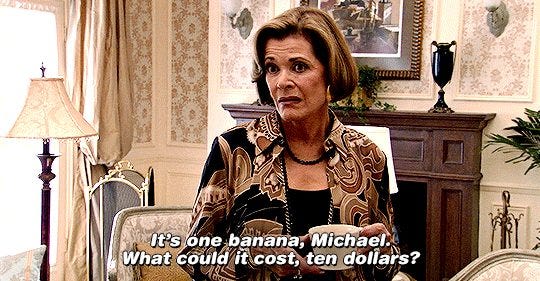
Even if that doesn’t work, they are going to make me personally prove that I am willing to say “No, convenient store that I am accustomed to shopping at, I will not buy your expensive Cheerios” and actually personally walk to some other store to go buy my cheaper Cheerios. I can’t free-ride on some hypothetical other, thriftier person. I have to actually be the thrifty person.
And it may take a bunch of back and forth to establish my credibility as thrifty. And once that credibility is established, it will probably be tested. What if we raise the price 11 cents? Is he really gonna walk to the other Safeway over 11 cents? But then next time it’s one dollar and 11 cents, and who knows where it stops?
To me, this sounds like a nightmare.
The one thing that does temper my populist outrage is the recognition that the whole point here is that custom pricing algorithms are going to try to screw me personally because I’m pretty affluent.
This dynamic in which the lazy can free-ride off the efforts of the thrifty seems objectively bad for poor people. They are putting time, energy, and emotional labor into being price conscious and I am benefiting.
In a world of ubiquitous price discrimination, running a store becomes much more lucrative. Theoretically that should lead to more stores, stores keeping longer hours, and both more convenience for shoppers and also more employment. But the extra profit margin is going to come from bilking people who are rich; raising prices on the genuinely thrifty or on those who simply cannot pay more isn’t going to pay off. Right now, I am reaping the benefit of their thrift. In the future, they will reap the benefit of my laziness. And that actually seems more just.
But that’s a long digression away from the core question. What’s to stop the store of the future from bilking everyone, including people who make very low incomes, for their very last penny while they’re trying to get medicine for a sick kid? One potential solution here would be that instead of banning variable pricing you set aside a specific basket of necessary commodities with guaranteed low prices. A few years ago, I had to buy some acetaminophen in Antibes and was shocked by how cheap it was. That’s because the whole regulatory environment for over-the-counter medications is different in France in ways that make them less convenient to buy but dramatically cheaper. We could do something like that to address the specific ethical concern around sick kids.
The point of the long digression, though, is that on average I would expect the long-term impact of more price discrimination to be distributionally progressive.
The problem is that “the long term” might take a while to arrive and in the short term you are talking about a reduction in consumer surplus for consumers at all points on the economic distribution.
AlleyOop99: Last year, the Substacker Cartoons Hate Her wrote about how people—especially men—dance less in public because everyone carries a camera and people are self-conscious about being filmed. It got me thinking: could the same dynamic be contributing to the decline in sexual activity among young people? Beyond obvious factors, I wonder if people are more cautious about any social activity that could feel awkward—because it’s now so easy for partners or peers to broadcast or gossip about it online. Has anyone studied whether technology and the always-on social feedback loop are shaping intimate behavior in ways we haven’t fully appreciated? I also wonder if people are being more inhibited in bed than past generations for the same reason.
My speculative take would be that the lines of causation run in the other direction — that hitting the dance floor at a party or a club or the kind of bar where that sort of thing happens was a way for men to meet women or escalate with women they’d already met. The emergence of dating apps as a purpose-built infrastructure has (as Halina was discussing last week) crowded out basically all other ways of meeting people.
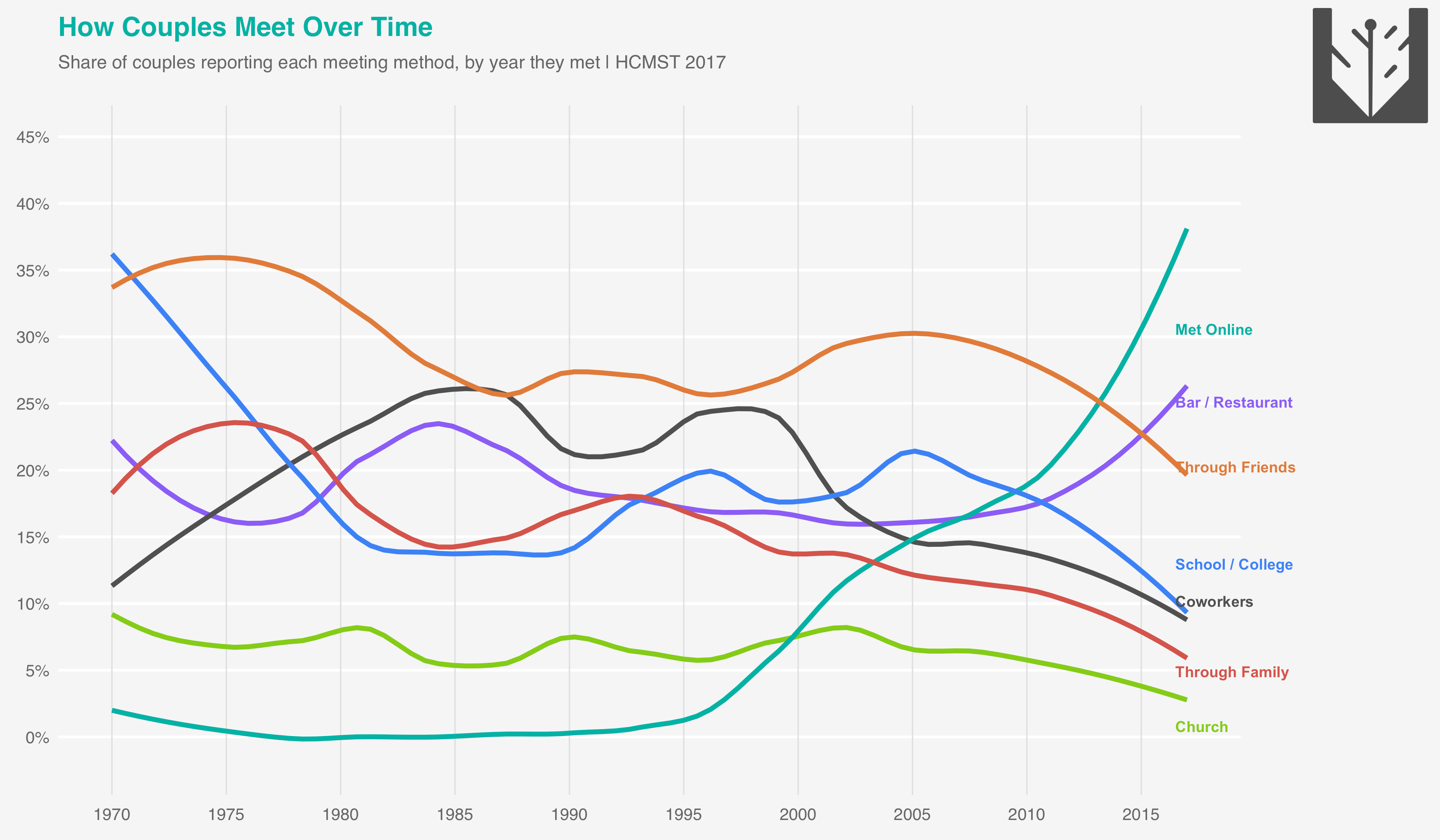
Think about all those people who used to meet “through friends.” Sure, probably some of them were explicitly set up on a date. But a lot of them probably met at a party, had a vibe, danced a little, and one thing led to another. If you’re swiping instead, that implies less dancing.
Joseph: At the moment, the Senate landscape looks meaningfully less dire for Democrats than it might have: Iowa has a credible challenger, Texas got the electable Democrat and Republicans may still choose an ideologue, Ohio polling looks decent, Georgia doesn’t seem to be slipping, North Carolina has a strong recruit, and even Maine may be live. If that’s the picture, where should the marginal dollar actually go? Which race is most likely to be underinvested by the market, and is the best use of funds, persuasion, turnout, or simply shoring up a seat that looks better than it really is?
The betting odds on this have tipped dramatically since the war with Iran started, to the point where I occasionally see Democrats even favored to take a majority. This frankly strikes me as an over-read. Generic ballot polling confirms that Democrats are in the lead nationally, but does not show any substantial effect of the war or a shift in the opinion landscape that would make you think Democrats have an easy path anywhere outside of Maine and North Carolina.
I’m inclined to say that Iowa is underrated as an investment relative to Texas. In part, that’s because Iowa is a lot cheaper than Texas.
But more importantly, even though the partisan fundamentals are similar in Iowa and Texas, there are plenty of older people in Iowa who voted for Tom Harkin or Chet Culver or Barack Obama. I like James Talarico, but I think convincing someone who has never voted Democratic before to back you is an inherently hard sell and I’m just not sure what he’s done to make that sale. Convincing someone who voted Democratic in the past but then got disgruntled but is now maybe having some discontents that you’re like one of the old-fashioned good Democrats is an easier task.
City of Trees: What’s your take on Vision Zero? Is it practical and feasible to demand that not one single person is ever killed in a traffic collision? ( certainly hope and believe that it is.) Are there any changes the movement could make that would help to improve its cause?
As someone who walks with his kid to school every morning and then walks to the office, I would like better pedestrian safety. I am also the kind of person who would be more persuaded by Vision Cost Effective Pedestrian Safety Interventions than Vision Zero.
More substantively, I think the traffic safety community is facing a fork in the road when it comes to autonomous cars. Letting robotaxis on the road and hoping that over time their price falls and they largely displace human-driven vehicles would clearly be a win for traffic safety and would reduce pedestrian deaths. It will also greatly reduce the need for parking, and allow in-demand dense urban areas to become even denser. Nevertheless, autonomous cars are opposed by many urbanists, like the folks at Streetsblog and Greater Greater Washington, on the grounds that they will increase vehicle miles traveled, increase sprawl, and reduce transit ridership. That’s a worldview that seems to think that pedestrian safety is worth pursuing only insofar as it makes driving less convenient. A win-win technical solution like robotaxis doesn’t work for them, which to me is ridiculous.
Michael Tolhurst: I feel as far as Empire go, the Austro-Hungarian Empire has far fewer fans in the United States as compared to Rome. (E.g. the “He’s thinking of Rome” meme) What features of it did you wish Americans knew more about? Would it be a healthier site for Americans’ tendency for engaging in historical nostalgia for other countries’ history? (Not, “Rome was strong!” but “Trieste was cultured!”)
The reason that I personally am often thinking of the Habsburg Empire is that I think a somewhat odd meme has taken hold of large swaths of the public that ethnically homogenous nation-states are a “natural” form of human political organization and that diversity and multiculturalism are newfangled impositions. In truth, not only has pluralism always been part of the American design, but pluralistic polities are also very historically normal.
The reorganization of Central Europe into homogenous nation-states was only achieved through horrific acts of violence that occurred in the fairly recent past.
What should people know about the Habsburgs? I think primarily that, yes, some of the pinnacles of Western culture — especially those in classical music (Mozart, Beethoven, Liszt, Schubert, Dvořák) and architecture — flourished under this regime.
Life there was hard for most people because most people in the past were poor and the Austro-Hungarian Empire was not at the leading edge of industrial development and prosperity. But its economy was in fact growing pretty rapidly in the period between 1870 and 1914, especially in Lower Austria, Bohemia, and Silesia.
It was not democratic, but few places were at the time and the empire was in fact becoming more democratic. Compared to the regimes that were to follow, the empire was quite humane and liberal. And it’s just a mistake to believe that the world wars and the interwar suffering and the rounds of ethnic cleansing that resulted were a necessary path to set the world on track to modern prosperity and liberalism. Absent the tragedy of World War I, which set many more tragic events in motion, the empire could have continued to develop.
People were marveling the other day on Twitter about the beauty of the Riva promenade in Split, Croatia.
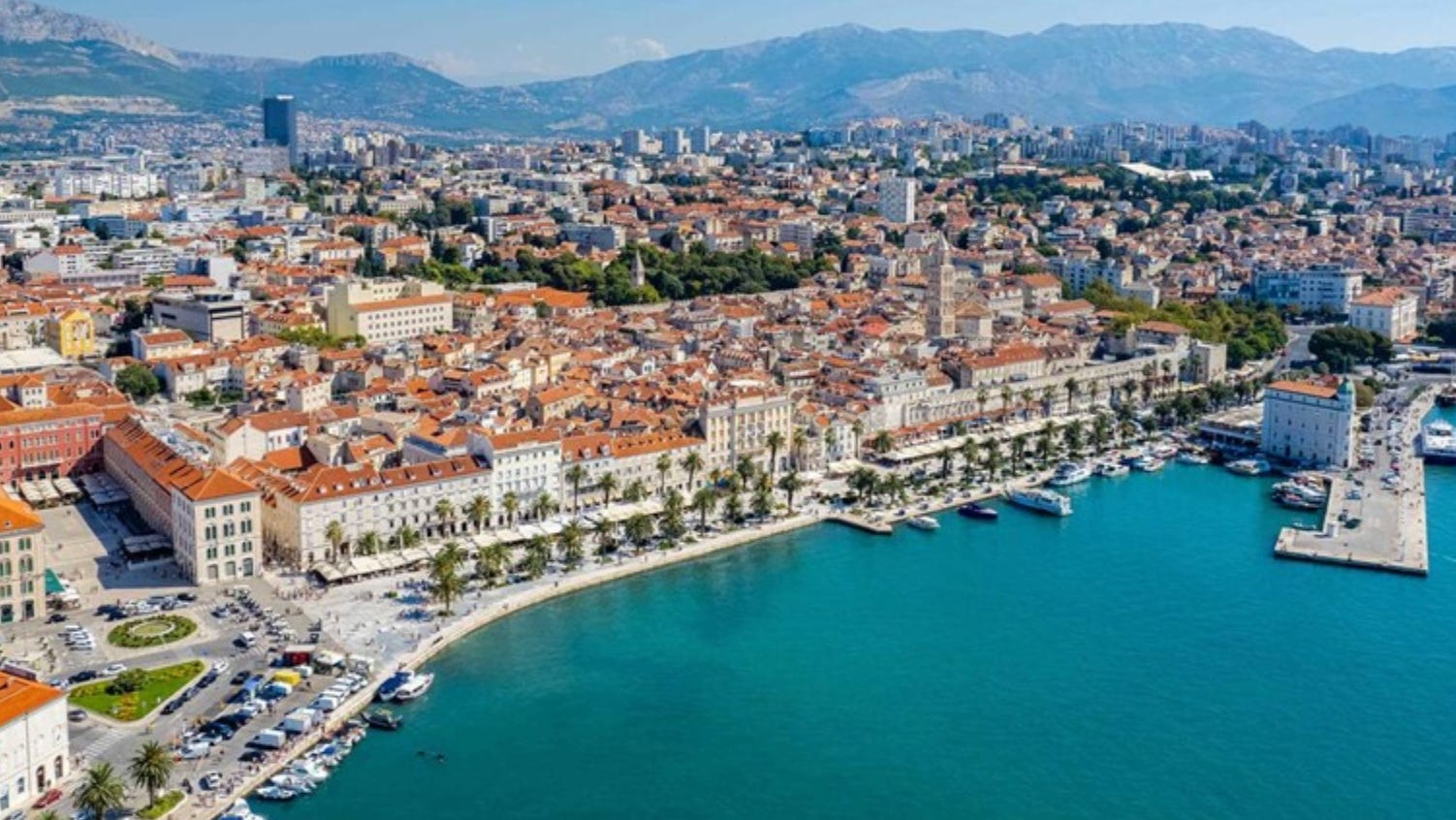
It’s beautiful and it dates back, of course, to the Habsburg era. At that time, Split was part of the province of Dalmatia, which was majority Croat in its population but also had many Italians who later got kicked out. It’s visibly the product of a kind of multi-ethnic state that valued and supported some of the transcendent aspects of European culture. And I bet the food would be better if they still had more Italians around.
Connor: Does the United States really even need a Strategic Petroleum Reserve anymore?
Now that the US is largest oil producer and a net-exporter, it doesn’t seem a strategic imperative to keep large stockpiles. It’s more of a “political” petroleum reserve that presidents can dip into to minimize price spikes, nowadays.
Modulating commodity price swings seems like a legitimate public-policy goal to me.
The other thing is that for technical reasons, the existing stock of American oil refineries includes not enough capacity to refine the light sweet crude that comes out of Texas and too much capacity to refine the sour crude that used to come from American Gulf of Mexico fields but now is often imported from Mexico or Venezuela. So despite the U.S. being a net exporter of oil, we actually import a significant amount of oil — it’s just that we export even more. The Strategic Petroleum Reserve is mostly sour crude, which there is a bona fide strategic reason to stockpile.
Person With Internet Access: One of the many problems with the Trump era is the move towards a political version of total war, where ever more extreme tactics are justified by the actions, or projected actions, of your opponents. How much of this is a feature of Trump’s personality vs the ideological sorting of the parties or some other factor? And how can we pull out of the potential doom loop?
I think the root cause here is having two-party politics with nationalized parties.
Trump’s personality, rhetoric, and approach have made things much worse, but I also think that part of the reason that Trump was an appealing figure to a lot of G.O.P. primary voters was precisely that his approach fits a dynamic of zero-sum totalizing partisan competition that we had already fallen into. The older American system had each national political party operating as something like a federation of separate state parties. Some state parties were highly ideological and others were kind of vague catch-alls. The issue and ethnic cleavages were different from state to state.
Once you lapse into nationalized two-party politics, I think it’s tempting to start thinking of the purpose of politics as being not just “win the election and then govern” but “govern with a view toward destroying the political opposition,” which is pretty toxic to the functioning of democracy. I’d love to see us shift to proportional representation, a system that would encourage more parties to exist and put everyone in a dynamic where everyone remembers that there is always going to be a next election and a next coalition and shifting levels of support and shifting alliances.
BK: Plemons was better in Bugonia than MBJ in Sinners. Wild choice.
I’m always saying that what’s interesting about movies as an art form in today’s world is that they very much are an art form, but they also, despite recent difficulties, remain a major commercial enterprise with a mass audience and investments from giant corporations. They’re not like contemporary novels, which have fully bifurcated into “pop” and “literary” halves; they’re more like 19th century novels, where Charles Dickens and Dostoevsky were earning a living through publishing serials.
The Oscars, in turn, reflect that. They are by far the biggest and most prestigious film awards but they are not awards handed out by a group of critics or scholars or cinephiles. The voting body is made up of working professionals in the commercial movie industry. And the awards tend to reflect that. This is not like Sight and Sound telling us we need to watch Jeanne Dielman.
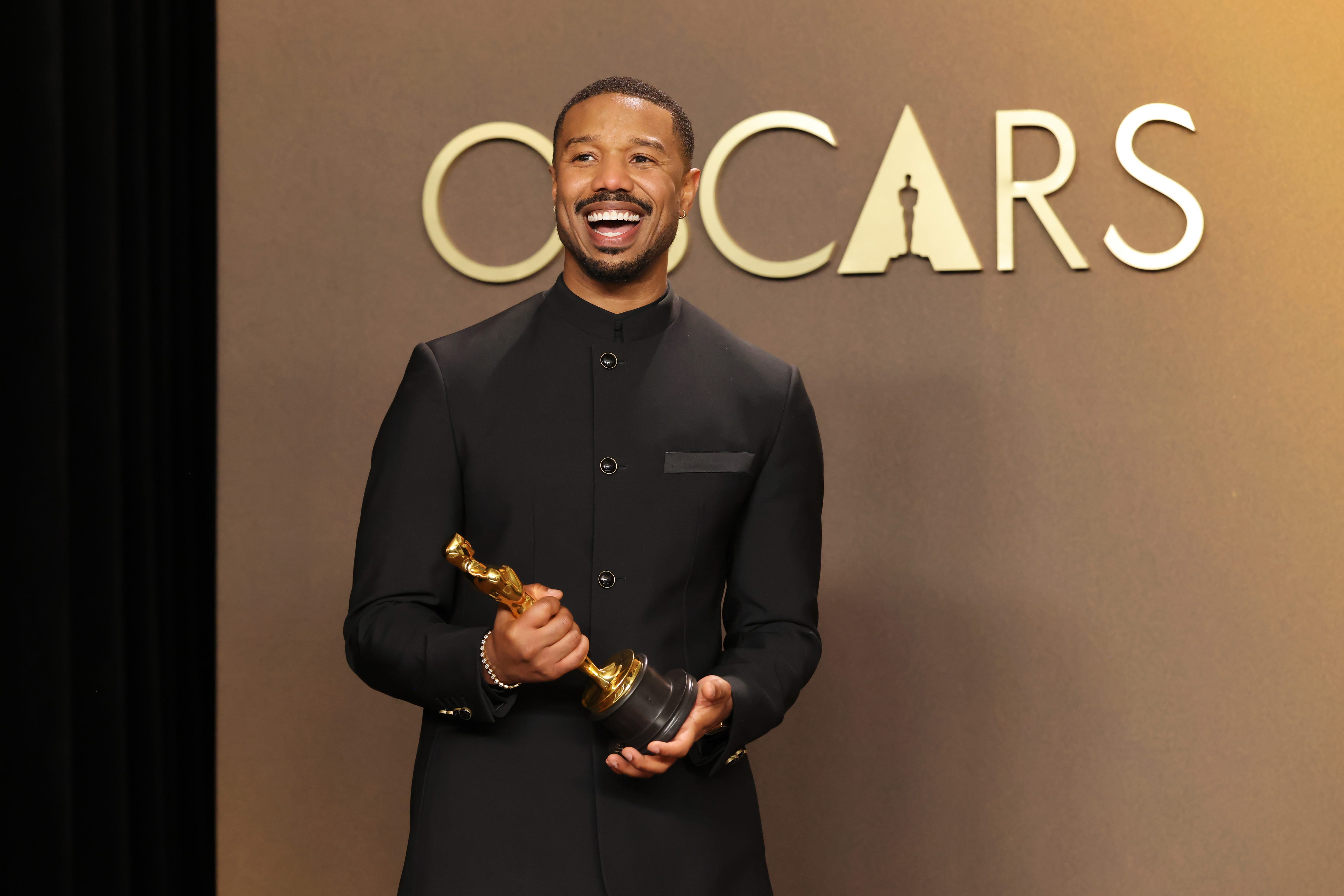
In keeping with the general spirit of the Oscars as a Hollywood awards show, I think Michael B. Jordan delivered a really big movie-star performance. He’s a talented and charismatic guy who’s played multiple iconic movie-star roles and has also been in our lives a long time because of his prior work in television. “Sinners” was a big hit movie, and he carried it on his shoulders. Playing both of the leading roles in that type of film was a serious flex.
I agree that in an acting school sense, Jesse Plemons is actually doing a lot more. But I think within the terms of the Oscars as we know them, Jordan’s very much a deserving winner.
The “Sinners” award I would question is best original screenplay. Because Ryan Coogler was competing in original screenplay and Paul Thomas Anderson was competing in adapted, I think Coogler winning here served as a kind of consolation prize for losing to Anderson in the best director sweepstakes. And of course when you’re talking about movies where the writer was also the director — which was the case for eight of the 10 screenplay nominees and all five of the best director nominees — it’s hard to draw a meaningful distinction between where the writing stops and the directing begins.
But if I had to be a little bit arbitrary about it, I would have gone the other way and given Coogler best director but not best screenplay. Because to me, “Sinners” was kind of a triumph of project management — a really fun movie on a scene-to-scene basis that also does an incredible job of bringing a specific milieu to life — with its weakness lying in the specific story beats. The vampires-as-political-allegory doesn’t totally make sense as allegory and the vampire worldbuilding is kind of unclear. I would rather see Coogler acknowledged for his directing achievement than for the writing.
“One Battle After Another,” by contrast, is a genuine triumph of adaptation — it captures something about the story of “Vineland” but also changes everything to fit the current moment appropriately. That’s really hard to do.
Per what I said above about Hollywood as a commercial venture, I don’t really expect to see Norwegian movies winning outside the foreign language category, but I would have given best original screenplay to “Sentimental Value.”
I think the whole pricing thing is dystopian but I also think it would most likely end up being defeated by consumer price monitoring apps, possibly run for you by a little shopping AI assistant, and maybe even businesses whose strategy involves deciding 'we don't screw people like that.'
Pros of self driving cars:
-less traffic accidents+fatalities
-less erradic drivers
-safe option for shuttling kids around
-risk free elderly driving
-New mobility for the disabled
-ability to coordinate across vehicles, removing needs for even stop lights in AV-only areas
-95%+ utilization aka less on-street parking
-all EVs
-reduces overall insurance cost
Cons:
-someone elses idea other than transit activists