

I was at the YIMBYtown conference for much of this week, and it was a great opportunity to meet, hear from, and talk to tons of people who are doing housing-supply work in state and local government. There are so many different things happening in so many different places at this point that it’s challenging to say anything fully general — the dynamics in the state legislature in Montana are very different than the dynamics in New York, and the local politics in Raleigh are very different from the local politics in Los Angeles.
But something you do see generally is along the lines of one of the points I made in Wednesday’s column, namely that there’s just a big difference between “affordability politics” as a campaign theme and actually shifting policy priorities in a way that makes housing more affordable. It’s hard! It’s not impossible, but it requires a lot of difficult coalition-building and a lot of attention to detail and good judgment.
I saw one panel about single-stair reform where they had a former fire chief on, and she was talking about why most fire departments don’t like this and why they’re wrong to see it as a major fire-safety hazard. I am fully convinced by her (see this Pew brief), but it’s easy to see why a mayor, a state legislator, or a random person might find fire chiefs to be more credible about the safety implications than housing reformers. Actually persuading more fire chiefs is probably going to be important to winning this issue, because even in a huge affordability moment, people (reasonably!) do not want to make what they worry would be large fire-safety sacrifices for the sake of cheaper housing.
And yet there’s nothing you can do that doesn’t have some kind of tradeoff or politically powerful opposition. If there were fruit hanging that low, it would have been picked already.
Many of today’s reader questions come from GiveDirectly donors, who get to ask one must-answer question as a perk of their charitable giving. If you’d like to get in on the action, look out for our next GiveDirectly fundraiser, which is coming up very soon.
Chris Granner: What will it take to restore the mandate to the ACA? At the time, it was one of three required legs of the stool; Trump 1 killed it, and within a few years, most of the “bent cost curve” went poof and the extra expense, thanks to the ACA subsidy rules, went straight to the deficit. Switzerland (“Obamacare done right” as I read more than once) has a mandate. As M4A (that’s “MedicARE”, not “MedicAID”) skeptics, don’t we need to restore it?
I keep meaning to write this take, so thank you for asking.
To recap, the way the Affordable Care Act individual marketplace works is that insurance companies (with limited exceptions) are not allowed to engage in normal insurance underwriting that would deny coverage to or demand exorbitant premiums from people with high levels of health risk. This makes sense because the social function of health insurance policy is to make sure that sick people can get care.
The obvious problem with this, though, is that if you make insurance a much better deal for people with serious health problems than for people in good health, you risk the people in good health getting sticker shock at the premiums and just saying “thanks but no thanks.” If those people drop out of the pool, then premiums get even higher and you get more sticker shock and eventually a death spiral.
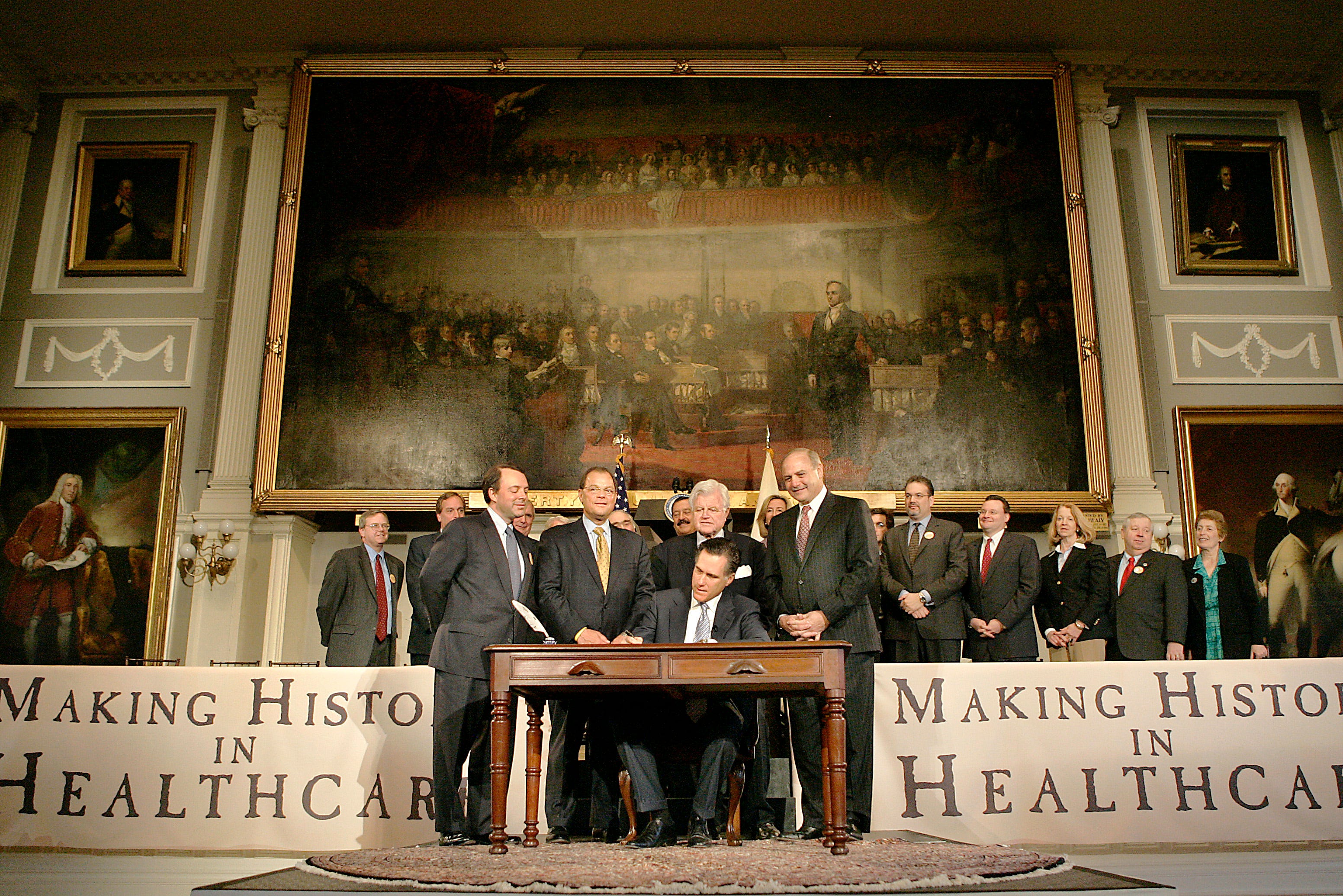
The A.C.A. has two features that partially mitigate this. One is that for lower-income families, public subsidies cover a large share of the cost of premiums so buying in is a better deal in practice than it looks like on paper. The other is that A.C.A. plans cover a bunch of preventive care that it makes sense to get whether or not you are sick. So you don’t get the immediate death spiral. Still, it’s a problem. So as originally conceived, the A.C.A. included a financial penalty for going without insurance. This is designed to ensure that affluent healthy people are nudged to buy insurance, which reduces the average cost of an unsubsidized plan, which also reduces the average cost of subsidies. In the context of Massachusetts, where you had moderate Republican Mitt Romney as governor, this worked well in securing bipartisan support for a plan. Business interests essentially liked it better than higher taxes and higher explicit public subsidies, and bipartisanship is usually good politics.
But when Barack Obama took the idea to D.C., Republicans weren’t interested. And as a partisan matter, a mandate to buy insurance was politically unpopular.
The Obama administration handled this poorly, I think, by insisting on the mandate as part of the A.C.A. legislation but then implementing the mandate in their rule-writing in a relatively soft way. That meant the A.C.A. didn’t achieve true universality, even leaving aside state-level failures to adopt Medicaid expansion and the ongoing problem of illegal immigrants — who realistically and for fairly obvious reasons are not going to be given health care at public expense. But the weak mandate worked okay, and the program got off the ground. Then Donald Trump killed the individual mandate in his first term, but we only got two years of that until the Biden administration came in during Covid with increased subsidies as an alternative to the mandate — carrots rather than sticks. Now in Trump 2, the Obama-era stick is gone and the Biden-era carrot is gone and things are unraveling.