

Years ago, back when Barack Obama was pressuring Israel to freeze settlement activity on the West Bank and pro-Israel groups were giving him shit about it, I found myself on the phone with Marty Peretz, the longtime owner and editor of The New Republic.
At the time, I was giving shit to the people who were giving Obama shit, making the case that it would be much better for the United States if Israel stopped building east of the Green Line and re-engaged in good faith negotiations with the Palestinian Authority. Peretz and other folks on the pro-Israel side were flinging lots of accusations around, and I’d successfully prevailed on someone I knew who worked for him to communicate that it was really quite offensive to me, as a Jewish person with lots of Jewish relatives who I love and who themselves have a range of views about Israel,1 to be called antisemitic. It was an awkward call, but he was prepared to concede the point that I was not an antisemite.
But then he wrong-footed me by asking “are you a Zionist?”
I was not comfortable adopting that label, in part because I think there’s something fundamentally odd about Zionism as an ethos among residents of the diaspora in the 21st century. Nothing is stopping us from moving to Israel. If you choose not to, then whatever you may say, that lack of action indicates something about your actual feelings. I did not feel — and have never felt — any desire to move to Israel or that it would be a good idea for American Jews to move en masse to Israel. My ancestors are from Eastern Europe, not Israel. My family’s culinary traditions are not Israeli. And I have no particular desire to shed my Jewish American identity in favor of an Israeli identity.
That said, I also wanted to get him off my back, so I said something about supporting the continued existence of a Jewish state with secure borders inside the historic Land of Israel.
And it’s something that I’ve thought about a lot over the past six months, because I knew, even at the time, that my response was sort of a cop-out — you don’t have to be a firm ideological believer in Bangladeshi nationalism to think that trying to dissolve Bangladesh would be a bad idea. But as part of the post-10/7 discourse, some on the left have been attempting to normalize the deflationary account of Zionism that I gave to Peretz. Unless you think that Israel is so fundamentally flawed that it needs to be dissolved, you are a “Zionist,” which is understood to be a sharply derogatory term.
In the debate over whether anti-Zionism is per se antisemitic (per the IHRA definition), sensible people are supposed to say that it is not. And I agree. But I also think anti-Zionism is an unsound ideological program that’s gotten tons of people killed.
There were many pre-war nationalist projects
A key piece of mischief here is that anti-Zionists of 2024 steal a lot of valor from anti-Zionists of the early 20th century, when the whole situation was different.
Theodore Herzl, the founder of Modern Zionism, was born in 1860 in the Austro-Hungarian Empire. The year after he was born, the Kingdom of Italy was proclaimed, uniting most of the world’s Italian speakers (but not Rome and its environs or the area around Venice, or the Italian-speaking people of the Dalmatian coast, or the city of Trieste, or the Italian-speaking minority in Nice) into a single state. When Herzl was 10, the German Empire was created, and for the first time, all German-speakers who weren’t Swiss or ruled by the Habsburgs were united in a single state. And throughout Herzl’s life, Europeans embarked on all kinds of nationalist projects. An additional war between Italy and the Habsburgs brought Venice under Italian control, and the Russo-Turkish War of 1877-78 established Romania, Serbia, Bulgaria, and Montenegro as countries independent of the Ottoman Empire.
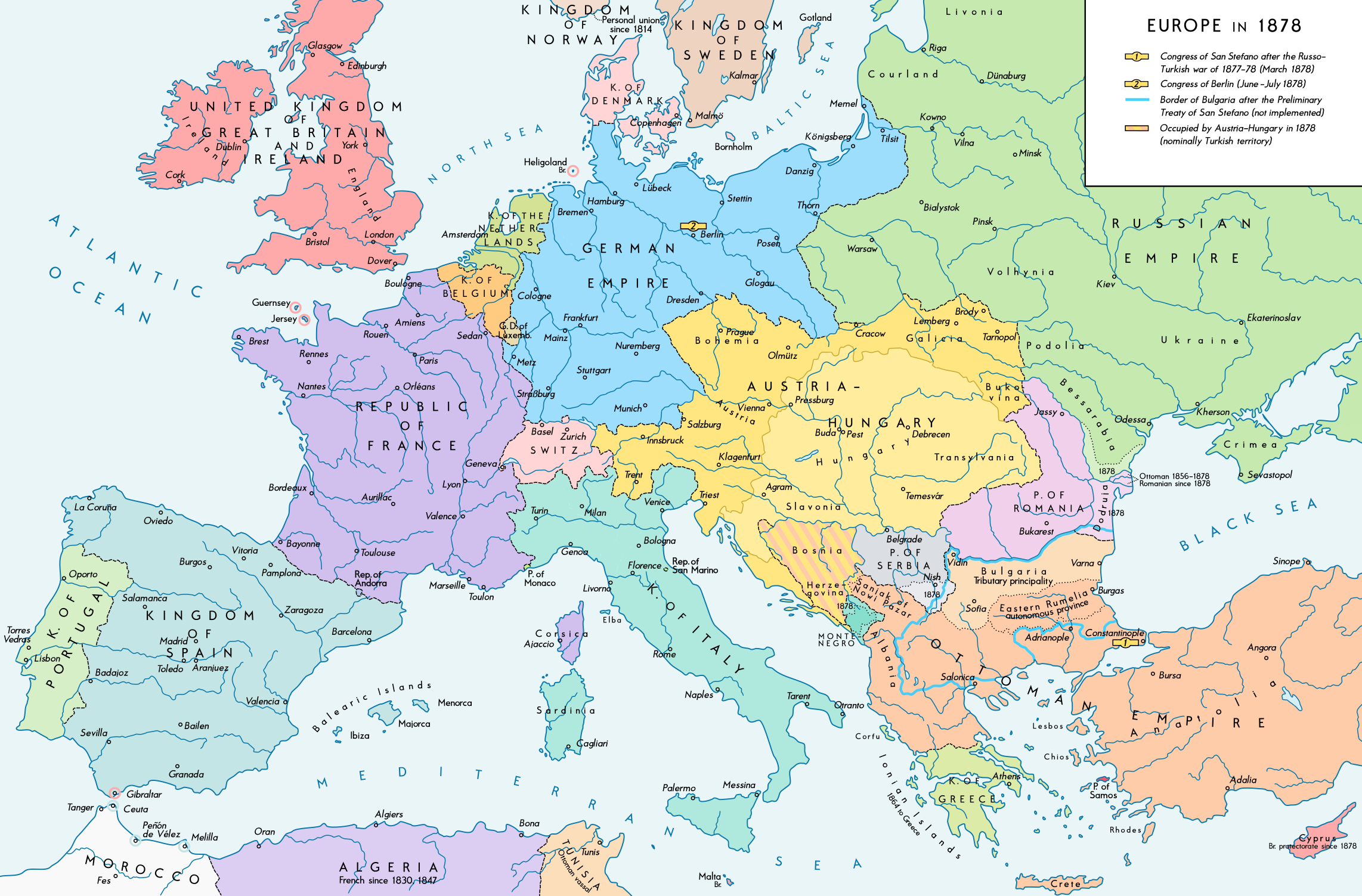
When a nationalist project gains steam, people tend to get killed and/or kicked out of their homes. Lots of Turkish people were living in those newly independent ex-Ottoman provinces, and the aftermath of the war saw large refugee outflows. The Turks massacred Bulgarians. Albanians got expelled from Serbia, and many of them went to Kosovo, which later became part of Serbia, and in the late-nineties, Serbs did more ethnic cleansing of Albanians. Later, when Albanians got the upper hand there, they engaged in ethnic cleansing of their Serb neighbors.
There’s a lot of history between the Russo-Turkish War and Kosovo’s independence from Serbia. But all that history reflects the fact that the underlying population geography of Eastern Europe does not lend itself to drawing lines neatly on a map.
By 1895, when Herzl wrote his book, “The Jewish State,” most of Central and Eastern Europe was still not organized along national lines. But it had become mainstream to support the idea that there should be an Albanian State and a Polish State and a Czech State (or maybe a Czechoslovak State), and that the existing Romanian State should expand to encompass all the Romanians and the Bulgarian State should encompass all the Bulgarians. Of course, people argued about things: Were Serbians and Croatians different nationalities or the same? What should happen to the Hungarian-speakers living in Romania? What’s the deal with Russians versus Ukrainians?
And Herzl’s take was that as long as half of Europe was being reorganized into nation-states carved out of the Habsburg, Ottoman, and Romanov Empires, there should be a Jewish state, too.
Early Zionism’s limited appeal
This was a bit of a nutty idea, in my opinion.2 But it deserves to be contextualized relative to other national projects of the time. The Poland that emerged from World War I did so following an unlikely series of events (first Germany and Austria defeating Russia, then Germany and Austria being defeated and then beating Communist Russia in a separate war) and was less than 70 percent Polish-speaking. Huge minorities spoke Ukrainian or Belorussian, smaller ones spoke German and Lithuanian. Plenty of Polish people were left outside its borders, which featured a corridor around Gdansk that had Germany both to its west and to its east.
#/media/File:Poland1937linguistic.jpg)
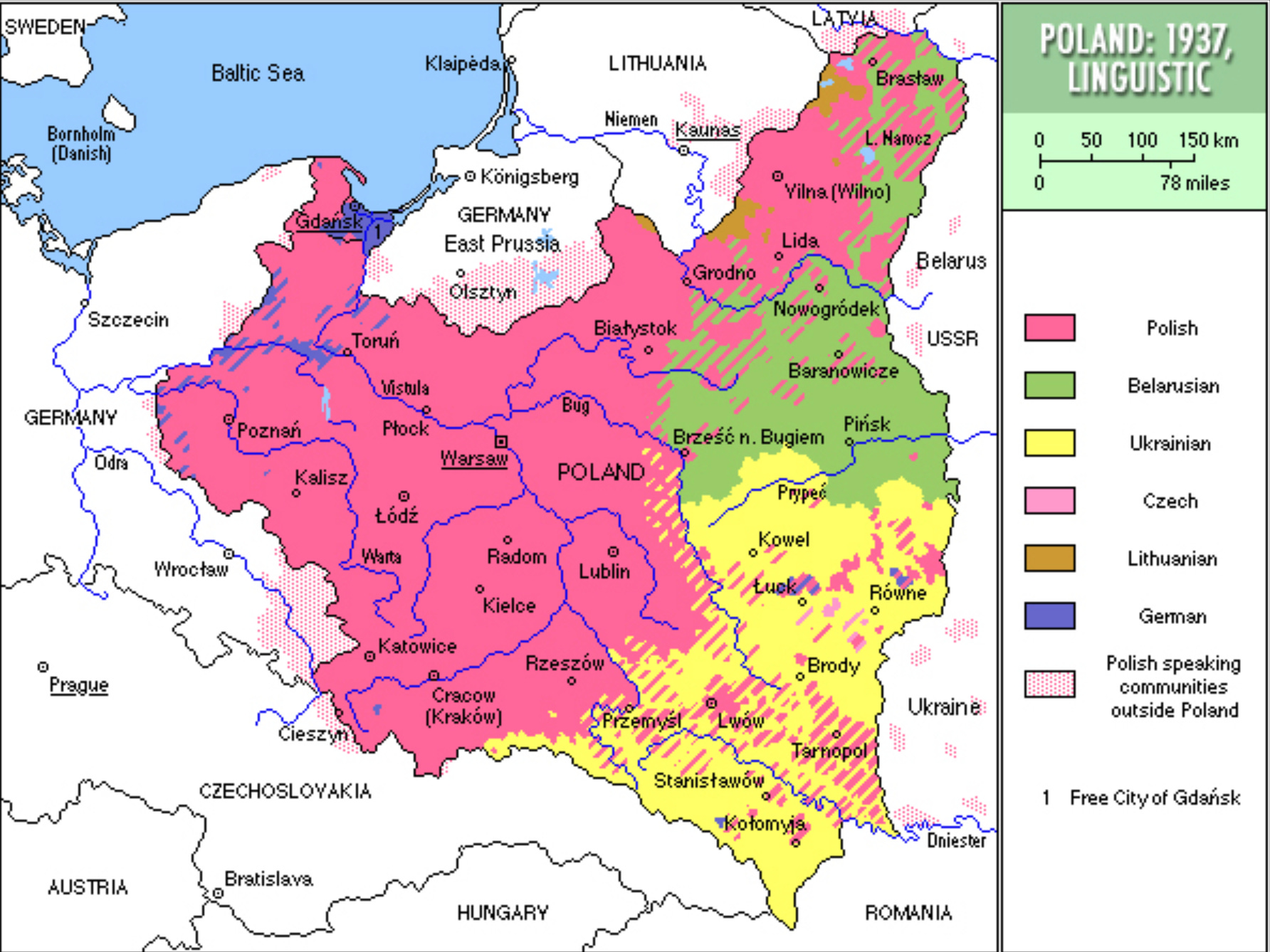
This version of Poland was not a particularly practical or workable idea. But the more compact, more homogeneous Poland that arose out of World War II has totally different borders and also experienced two different waves of ethnic cleansing (plus the Holocaust) as its demographic foundations. And those same waves of bloodshed would eventually birth a Jewish state.
But it’s important to understand that before World War I, these ideas had relatively limited mass appeal.
And that’s especially true of Zionism. During the First and Second Aliyahs, between 55,000 and 70,000 Jews fled Czarist Russia for Ottoman Palestine. At this time, there were large Jewish communities in Baghdad and a few other Ottoman cities, and almost none of them saw major migration to Palestine.
Where Eastern European Jews moved was the United States of America — about 300,000 arrived in the period before 1880 and then about 2.5 million between 1880 and the immigration crackdown of the 1920s. During that period, Jews also moved to Argentina, Australia, Canada, and everywhere else Europeans were moving. The whole Palestine idea was marginal. Then, World War I happened, millions of people died, multinational empires began to dissolve, and the Levant passed from Ottoman to British hands. The ending phase of the war saw the Armenian Genocide followed by large-scale ethnic cleansing of both ethnic Greeks and ethnic Turks to create tidier demographic lines around the fringes of the Middle East. And then in 1924, the United States made its immigration laws much stricter.
The Fourth Aliyah occurred under these circumstances, with tens of thousands of people moving to a difficult economic situation in Palestine, because they were fleeing persecution in the newly national Europe and the United States had closed the doors. A fifth wave of migration to Palestine, precipitated by the Great Depression and the rise of Hitler, was much larger than any of the earlier waves, not because abstract Zionist arguments became more compelling but because more and more people felt a practical necessity to leave their homes. The basic reality was that it was easier to immigrate illegally to British Palestine than to the United States of America, so people did. Still, this Fifth Aliyah was only 300,000 people — a fraction of the number who went to America when that was possible. And then the war came, and subsequent events made anyone who’d managed to get to Palestine look really smart.
I think that to qualify as a genuinely paid-up Zionist, you should have to believe something like “the events of 1939-1948 go to show that Herzl had tremendous foresight,” which really does not seem correct to me.
Hitler clearly built on longstanding seeds of European antisemitism, but his conduct was strikingly different across multiple dimensions from anything any previous leader had done. And the nature of his rise hinged on a whole series of events — most obviously the First World War, the Russian Revolution, the Great Depression, and Weimar Germany’s bad response to the Depression — that Herzl couldn’t possibly have foreseen.
My read of everything that happened across this whole roughly 70-year span is that romantic nationalism in general got a tremendous number of people killed.
The new anti-Zionism
I think the basic Palestinian nationalist narrative about their particular corner of the story up to this point — the one you find in Rashid Khalidi books, for example — makes a lot of sense. They got jobbed. The British colonial authorities were not nearly as hostile to large-scale Jewish migration to Palestine as an independent government would have been. The rising tide of German antisemitism that precipitated with Fifth Aliyah was not in any sense the fault of Levantine Arabs, and things went from bad to worse for the Palestinians when the Holocaust created a huge Jewish refugee problem. The UN Partition plan presented in 1948 assigned half the land to the proposed Jewish state, even though Jews were easily less than half the population, precisely because they were trying to set empty land aside for new Jewish immigrants as the solution to Europe’s refugee problem.
The decision to go to war rather than accept this was not the most high-minded call, but in the grand scheme of things that have been done in the name of nationalism, it is extremely understandable. But the Jews won the war, and as is often the case during such conflicts, a very large share of the Arab population in the lands that fell under Jewish control ended up fleeing — some voluntarily, some under duress, and most under a mix of the two.
But here’s where my perspective shifts.
The reason this essay is so long and meandering and full of talk about Bulgarians and the borders of Poland and the fate of the Armenians is to make the point that the violence and dispossession associated with the transformation of multinational empires into nation-states was widespread and systematic. “There was a war and a bunch of people got kicked out of their villages” is absolutely the least-weird and least-distinctive aspect of the whole Zionist enterprise. And it didn’t end with the Nakba — Middle Eastern and North African Jews who’d previously shown little interest in moving to Palestine found themselves coerced out of their homes in ways that strengthened the Jewish state’s demographics. Around this same time, the British were partitioning India into a Hindu State and a Muslim State. This was done mostly on the basis of the underlying population geography, but again, there were massacres and millions of refugees.
What’s unusual about Palestine is that they didn’t accept fait accompli and try to make the best of things. Instead, there was a new, post-1948 version of anti-Zionism that didn’t just say “this whole ‘move to Palestine’ idea sounds weird and doesn’t really solve the problem of antisemitism.” Instead, it said that having improbably created a Jewish, Hebrew-speaking state in the Levant, we need to try to make that state go away.
The high price of anti-Zionism
Today, there are many people in Gaza who’ve been displaced from their homes by war and Israeli bombs. But if you’d gone to Gaza or the West Bank a year ago, you’d have found enormous numbers of people characterized as refugees living in towns or neighborhoods characterized as refugee camps. These are the descendants of people who lost their lands and homes in 1948, and then fled to territory occupied by either Jordan (the West Bank) or Egypt (Gaza), where instead of being permanently resettled, they were encouraged to pass on to their descendants the aspiration to return “home.”
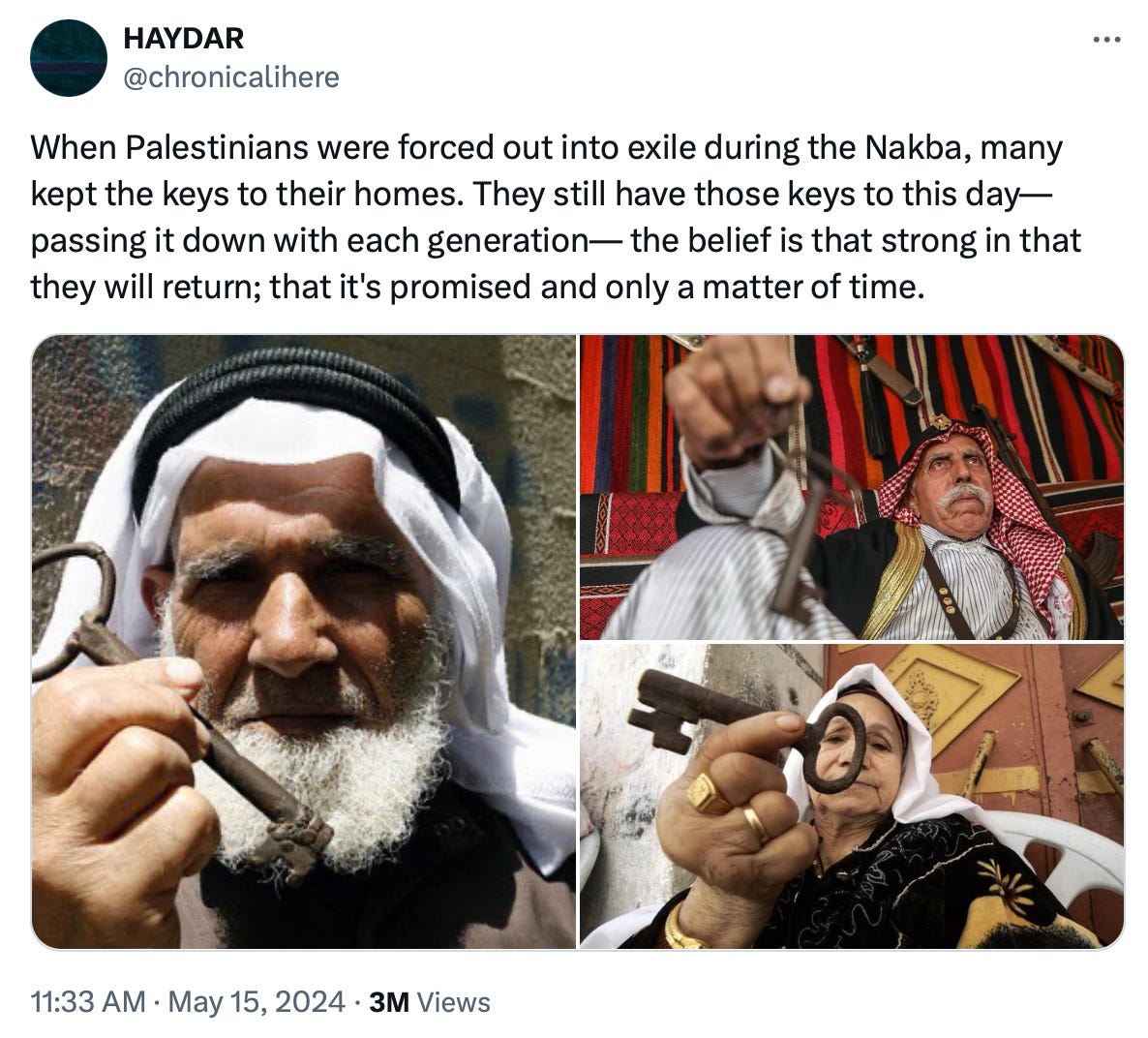
I am happy to concede that the project of nurturing this long-term grievance and attendant aspiration to reverse the creation of Israel is not, per se, antisemitic.
But debating that narrow point undersells how bizarre it is.
Speakers of Romance languages belonging to the Italian dialect family had been living in Istria and Dalmatia (regions of contemporary Croatia) since the days of the Roman Empire. They were subjects of the Republic of Venice and of the Habsburg Empire and then, after World War I, of Yugoslavia. After World War II, they were kicked out and went to Italy as refugees. There has been some diplomatic fuss about this, some financial compensation has been paid, and you can find the occasional Italian nationalist rant about it on LinkedIn. But there’s no right of return coming to Slovenia or Croatia. From the Turkish-Greek population transfers of 1920, to the departure of 99 percent Artsakh’s ethnically Armenian population just last October, these events tend to be permanent.
Arab states did not treat the defeat of 1948 as permanent, which led to additional wars in 1967 and 1973, and it was Arab military defeat in those wars that created the intractable occupation. One should not exaggerate the extent to which Israelis have been generous or reasonable in their post-1967 diplomacy with the Palestinians. Bibi Netanyahu’s staunch personal opposition to good-faith negotiations has done a lot to delegitimize Israel in many people’s eyes, and he’s a democratic elected leader who has repeatedly won elections on this platform. But it’s still the case that anti-Zionism, rather than anything that Israel did, is the reason that the West Bank and Gaza came under Israeli rule. The determination to not just be sad about the Nakba but actually try to reverse it was costly. And Students for Justice in Palestine (SJP) and other related groups who’ve been active in the west are continuing to push anti-Zionism — not Palestinian independence — as their stated demand.
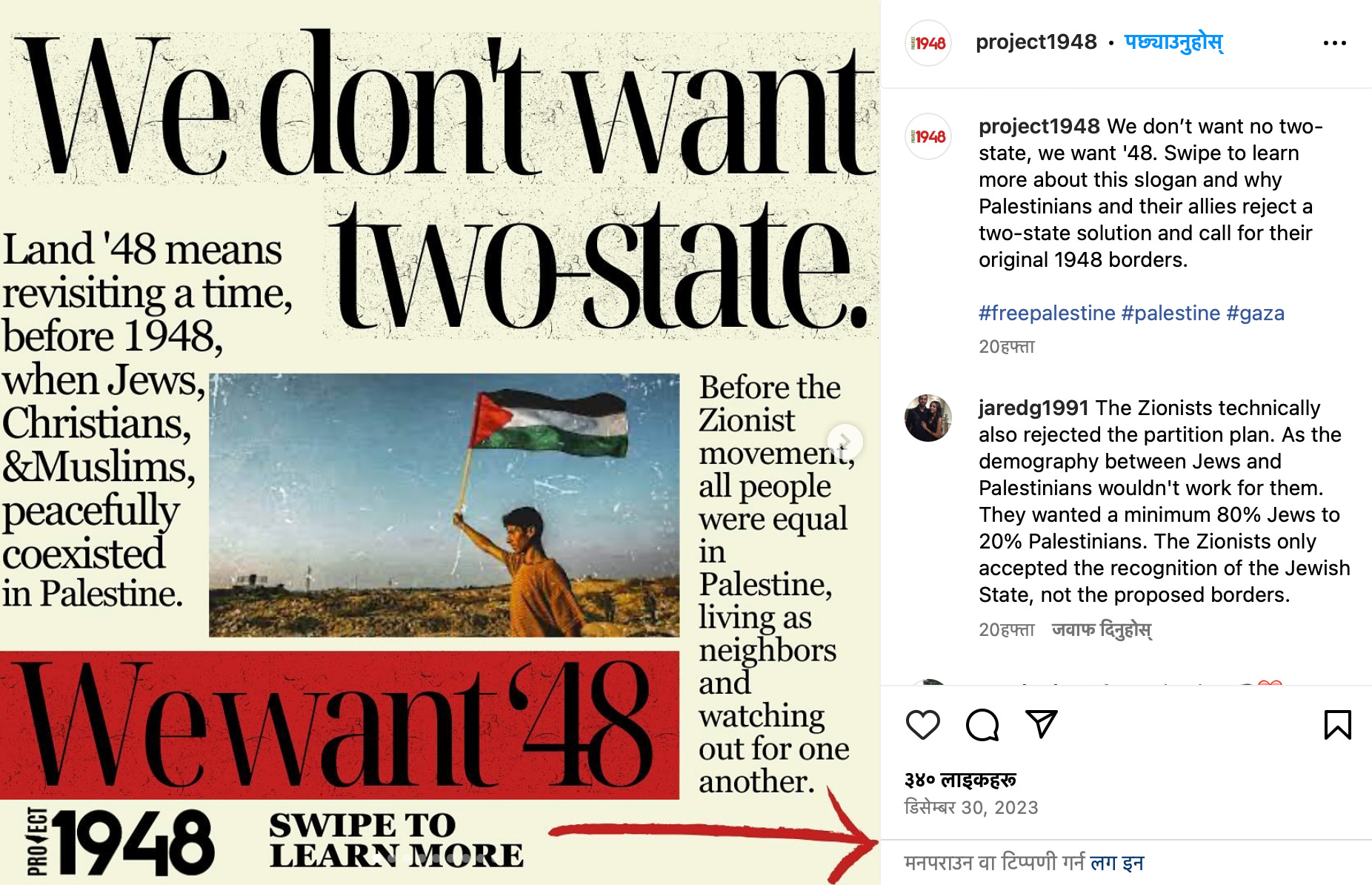
Your mileage may vary on whether you agree with that or which side you are inclined to pick in a remorseless struggle not subject to compromise. But it’s objectively the case that taking this line means a longer struggle with more suffering than if the Palestinian national movement were not invested in anti-Zionism.
Zionism and anti-Zionism today
Where does that leave us? Zionism as a historical proposition was a pretty goofy-sounding instantiation of a fundamentally unsound (but widespread) nineteenth century trend toward romantic nationalism. It wound up somewhat improbably succeeding due to a complicated series of events that its early proponents couldn’t have possibly foreseen, including a world war, a radical shift in American immigration policy, a Great Depression, another world war, and the emerging Cold War.
That said, despite this success, it has clearly failed as an answer to the problem of antisemitism — Israel relies much more on the support of diaspora Jewish communities than it provides in support to them — and it owes a lot to the objectively philo-semitic sentiments of the United States of America.
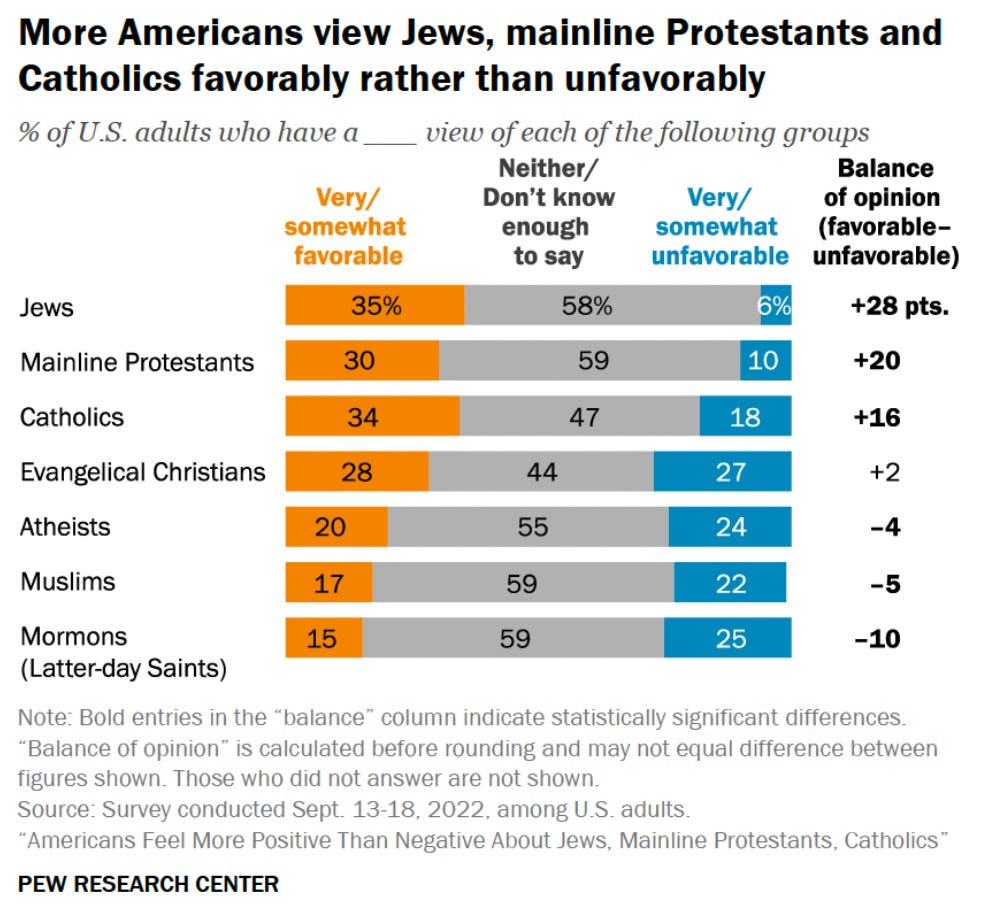
Indeed, stridently pro-Israel Americans are the people most inclined to see antisemites lurking around every corner, and in that sense, I think historical Zionism looks pretty bad.
Conversely, I think the anti-Zionist position made a lot of sense in pre-war intra-Jewish debates, and I think it’s natural that Palestinians were anti-Zionists in the context of the 1940s. But as a post-1948 political program, anti-Zionism has been a huge disaster. It’s absolutely true that both sides bear blame for the post-1967 aspects of the conflict, but the occupation of the West Bank and Gaza are direct consequences of anti-Zionist zeal. And this carries through to the present day. There was a wave of peaceful protest in Gaza in 2018-2019 that characterized itself as the “March of Return” — a choice of political objective that made the marching much less likely to succeed than if the demand had been control over Gaza’s territorial waters or airspace. When SJP pushes divestment from Israel until the state is dissolved rather than until an independent Palestine is created, they are reducing the odds of success, prolonging occupation, and intensifying Palestinian suffering.
That being said, I don’t think it’s out of the question that they will succeed in the long term.
When I visited the West Bank, someone told me that the Crusader Kingdom of Jerusalem lasted 200 years, so Israel’s durability wasn’t so impressive. I think Palestinians would be better off not rolling the dice on that, but they might win. I also think Israelis would be better off adopting a more compromising posture, freezing settlements and engaging in real negotiations over a two-state solution. But it’s certainly possible that they’ll find a way to maintain occupation indefinitely and/or encourage the bulk of Palestinians to eventually leave. When you have two peoples both insisting on moonshot strategies rather than trying to maximize their core interests, the result is violence and death.
“Two Jews, three opinions” as they say.
I think Herzl would have acknowledged that the proposal was pretty out there, there’s a reason that “if you will it, it is no dream” is one of his famous sayings.
I wish Matt had spent a bit more time discussing the partition of India in 1947. It’s so similar to the Israel situation but where no one is calling for a return to status quo ante and the dissolution of Pakistan and Bangladesh. My ancestors came over to Calcutta from the Pabna district in B’desh, albeit to escape constant flooding and for professional reasons, but a few years later and it could very well have been due to Partition. I don’t hold a key on a chain around my neck. There are movies and TV series about families (especially on the western front) who wax nostalgic about their old homes and neighborhoods in Lahore and Karachi. Best friends reunited after decades. But no one is clamoring for the Hindus who have now been in India for generations to go back to their old land in Pakistan. The two countries find each other highly irritating but fundamentally, we recognize the existence of the other.
Truly, I wish the Palestinians just saw a future in the land they do have (whatever, negotiate to ‘67 borders) and got on with the business of building a nation.
Ha! I stayed up till 3:30 am my time working, so I get to be one of the first commenters for a change!
So, I have a lot of Feelings about this post, also I'm super sleep-deprived so I probably won't be very coherent or logical about any of this, here goes.
This sentence right here really, REALLY gets at the difference between the American liberal and the Polish (or really, any Old World country) traditional mindset:
"This version of Poland [the one that existed in between WWI and WWII] was not a particularly practical or workable idea."
And you know what, the American in me looks at that wonky map and nods sagely and says, yes, it certainly is not a very good map, look at those big populations of Ukrainians and Belorussians, do we really need Vilnius, shouldn't that go to Lithuania?"
And the Polish person in me, the one raised on stories of a century-plus of oppression and subjugation by foreign powers, looks at that sentence and says, "Hey doofus, WE GOT OUR COUNTRY BACK! Our independent homeland! Do you know what it meant to us, how Polish people under Russian and Prussian and Austro-Hungarian occupation used to pray, Grant us our free homeland back, O Lord? You have the temerity to criticize the Second Polish Republic for being impractical or something? You have no idea, you who were born in America and could always take it for granted that a bunch of German or Russian troops wouldn't just walk over and take your country from you!"
Ahem. The cognitive dissonance is strong.
Anyway! When I think that way, the Polish way I mean, I can sort of kind of understand the Palestinians. They lost their country! They want it back!
And yet, on the whole, with lots of "it's complicated", I support Israel and not Palestine, how can this be? Three reasons!
1. Poland was an actual, existing country before Russia and Prussia and Austria-Hungary took it away. We had a king and a royal castle and stuff! And the FIRST constitution in Europe, how about that! In contrast, there was never a country called Palestine. OK, but that's kind of a weak sauce excuse, so what if there was no official country "Palestine," there's still Palestinian national identity. So, on to...
2. The goal was Polish independence, not the annihilation of the occupying nations. Mostly we just wanted them to f*** off and go back where they came from, to their own sovereign nations of Russia and Germany and wherever. In contrast, there is no sovereign nation that Jews can "go back to" that is THEIRS, no secret Jewish nation in Antarctica or Atlantis. Israel is it. Furthermore...
3. I was a child when I learned Polish history, and maybe it was somewhat sanitized for a child's consumption. However, while the stories I heard certainly emphasized manly heroism and glorious death in battle, I do not recall anyone EVER promoting things like "let's rape a bunch of Russian women and slaughter a bunch of Russian children, that'll learn 'em for occupying us!" Acts of savagery and butchery against civilians were strongly frowned upon. We wanted to see ourselves as the good guys, the beleaguered scrappy heroes who fight against overwhelming odds, not murderers and rapists of unarmed civilians.
Anyhow, I have to get a bit of sleep now, also the only reason I'm up so late is that I procrastinated catastrophically earlier this week, so to anyone reading this: learn from me and please don't do what I did.