

Solar panels have become incredibly cheap. This has been overwhelmingly good for the world, but skeptics continue to note issues with intermittency, seasonality, and the land use requirements of engaging in massively redundant overbuilding.
But that’s not what today’s post is about. Today, I’m writing about solar in a context where none of these limitations really matter and cheap panels are just a huge win: poor countries in sub-Saharan Africa.
If you live, as hundreds of millions of people do, in a village that does not have a functioning electrical grid, the goofy environmentalist dream of a decentralized power system based on rooftop solar is incredibly appealing. I sometimes hear this characterized as “leapfrogging,” as if getting power in that manner is genuinely superior to having centralized utilities. I don’t believe that’s true. But it is absolutely superior to having no electricity at all.
Beyond the baseline consideration, the other big advantage that solar power has in most of Africa is that seasonality considerations are much weaker. The closer you are to the equator, the less variation in sunlight there is between summer and winter. Even better, it doesn’t get really cold in the winter, so home heating needs aren’t as energy intensive. Many American environmentalists want to shift to a 100 percent renewable grid while also persuading residents of the northeastern United States to switch to heat pumps. Building a stable, winter-peaking electricity system based on solar panels at the latitude of Massachusetts carries specific challenges that simply aren’t relevant in many African countries.
Long story short, equipping African households with decentralized solar systems — especially when paired with batteries so they work at night — is a huge win for human betterment. You probably won’t solve big economic-development problems this way, because these systems don’t provide enough power for industrial or commercial uses. But you’ll make life better in concrete, tangible ways for some of the poorest people on Earth.
Accordingly, many institutions are working with African governments to spread decentralized solar/battery systems, and there is clear evidence of a rapid solar takeoff.
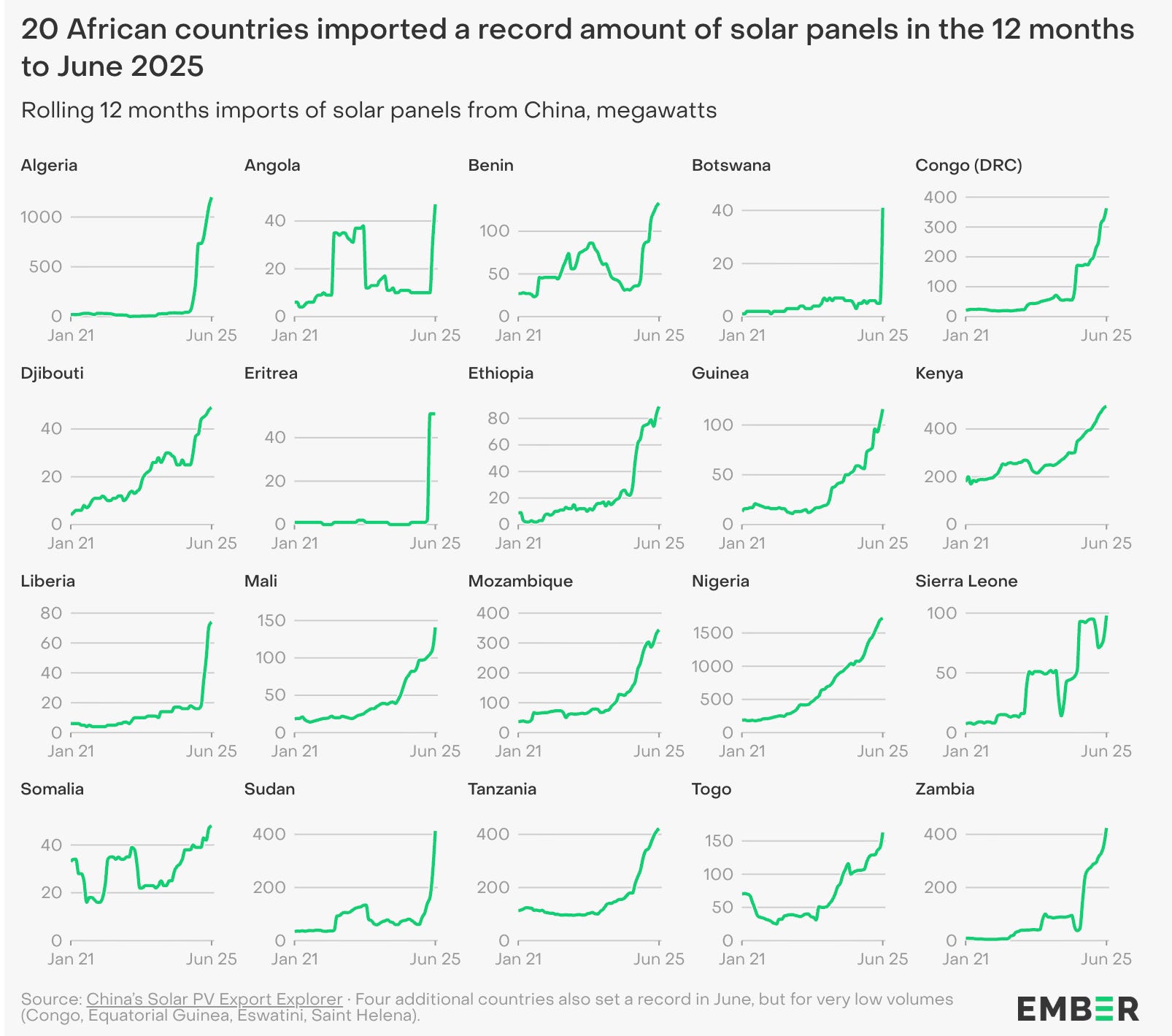
Great news! Except there’s a big problem with the batteries.
A new report from the Center for Global Development documents that most of these systems use lead-acid batteries, like Americans use in cars. Lead-acid batteries work for a while and then need to be recycled. If they’re recycled safely, that’s fine. But in poor countries, most lead-acid batteries are not recycled safely and they become a huge source of toxic lead poisoning.
C.G.D. believes that decentralized solar systems are currently generating somewhere between 250,000 and 1.5 million tons of unsafe lead-acid battery waste per year, a number that could grow much higher.
The overall lead context
Americans have mostly heard about lead issues in recent years due to the tragic situation in Flint, Michigan. But on the whole, lead exposure via faulty water pipes is a relatively minor issue. Across American history, the biggest culprits for lead exposure have been lead paint and leaded gasoline. Both were phased out decades ago, but old paint chips and lingering lead in soil have remained problems for years, albeit at diminishing rates.
The global situation is quite different and much worse, to the point that in low- and middle-income countries, half of children have blood lead levels above the threshold that would trigger emergency action in the United States.
It sounds fantastical to cite numbers this high. But there is credible (albeit somewhat uncertain) research indicating that five million people per year die as a result of lead-induced cardiovascular impairments. And roughly 20 percent of the gap in academic achievement between poor and rich countries is due to lead’s impact on kids’ cognitive development.
The sources of poor-country lead toxicity are varied.
There are tainted spices. In some parts of the world, cosmetics that contain lead are common. The Food and Drug Administration periodically warns about cookware widely used in South Asia that leaches lead into food.
But another major source of lead is the recycling of lead-acid batteries, as the C.G.D. report details. Unsafe recycling has long been known to cause an intense, localized environmental hazard right where the smelting is taking place. But a couple of years ago, Rory Todd and Lee Crawfurd realized that if you sample a wider radius, you find elevated levels of lead contamination across a much larger area.
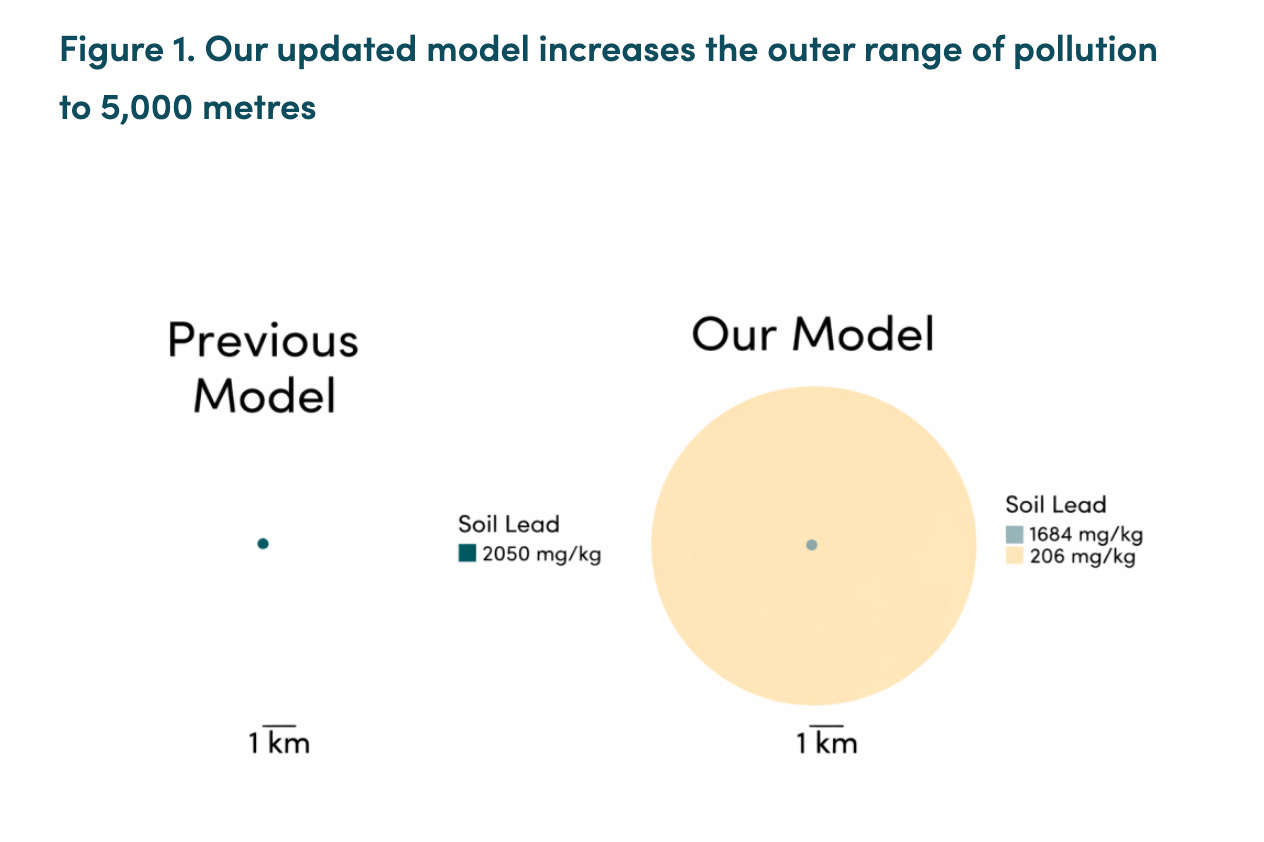
The upshot is that poorly regulated recycling of lead-acid batteries (the kind used to start cars, motorcycles, and other vehicles) is a much bigger problem than was previously realized.
In rich countries, solar systems use cleaner, safer, but more expensive lithium-ion batteries. The batteries directly funded by the World Bank also use lithium ion. But solar panels themselves have become relatively cheap and widely available, while battery storage remains the expensive component of an off-grid system. Lead batteries are cheaper than lithium ion, so it seems that lead batteries are dominating the market in poor countries. Those batteries are then recycled and ecological catastrophe ensues.
A problem worth paying attention to
If you look at C.G.D.’s estimates for how much lead waste is being generated by off-grid solar systems, the span of uncertainty is annoyingly high. It’s either a medium-sized deal or else a super-gigantic deal and, to their credit, the researchers aren’t lying to us and pretending to have more certainty than they really do.
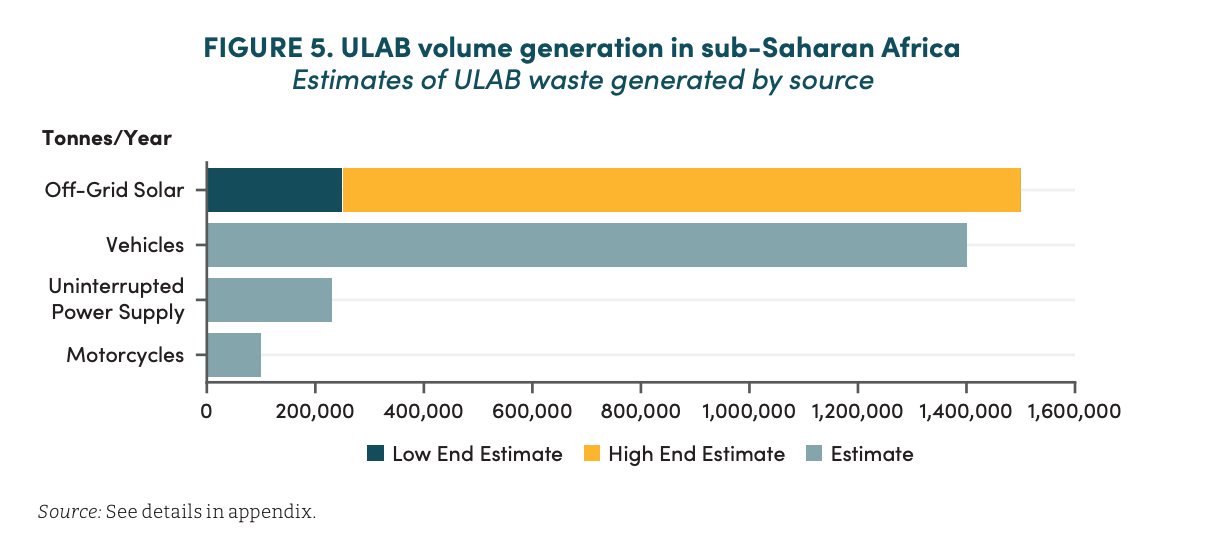
But the uncertainty is not just troubling; it’s a sign of how little attention is paid to lead-related problems. Only a tiny number of people work on this issue, to the point where even basic measurement is hard.
And the neglect is tragic because, in most cases, these are fairly tractable problems.
Both lithium-ion batteries and safe recycling are perfectly workable technologies. Using lead-acid batteries and recycling them in an unsafe manner is cheaper, which is why it happens, but it causes massive externalities. With better regulation or more generous funding of higher quality batteries, we wouldn’t need to be doing this to the world.
The solar issue is worth paying attention to not just for the irony that a green technology is contributing to extreme environmental harm, but precisely because decentralized solar is such a fundamentally promising technology for poor countries. It’s plausible that African solar generation will go vertical over the next few years, which would be great — except if it also means a huge increase in unsafe recycling of lead batteries, then that would be terrible. The world desperately needs to get ahead of this problem.
Those who want to learn more about lead poisoning from lead-acid battery recycling and what to do about it should subscribe to Hugo Smith's fantastic Substack:
https://leadbatteries.substack.com
There are a few organizations that are working on this, including the Lead-Acid Battery Recycling Initiative and the Partnership for Battery Action:
https://www.labrecyclinginitiative.com
https://globaldevincubator.org/initiative/partnership-for-battery-action-pb-action
"Many American environmentalists want to shift to a 100 percent renewable grid while also persuading residents of the northeastern United States to switch to heat pumps. Building a stable, winter-peaking electricity system based on solar panels at the latitude of Massachusetts carries specific challenges that simply aren’t relevant in many African countries."
Every movement has its nuts and I'm sure some environmentalists in MA would like to base the grid on solar, but the environmentalists in MA actually making policy are advocating for a 60% clean grid by 2030 and an 80% clean grid by 2050.
So no, not a 100% renewable grid anytime soon. MA law doesn't target a generation mix, but policy-makers believe they'll need about as much offshore wind as they need solar to realistically get to that 80% number (particularly due to winter loads). MA is actively signing contracts to help get gigawatts of offshore wind built. They're also working to secure lots of Canadian hydro for balancing. To round that out, the MA House of Representatives recently passed a comprehensive energy affordability and energy strategy bill (H 5151) that overturns the ban on nuclear power in MA (nuclear is around 20% of ISO-NE generation). Governor Healy's 2025 plan calls for the state to explore “cutting-edge nuclear technologies” and to reduce barriers to deploying advanced nuclear approaches.
So no, MA environmentalists are not planning to base the grid on solar power as Matt's comment above suggests. The MA plan is to get to 80% clean by 2050 using a mix of solar, wind, hydro, and nuclear, balanced with up to 20% natural gas.