

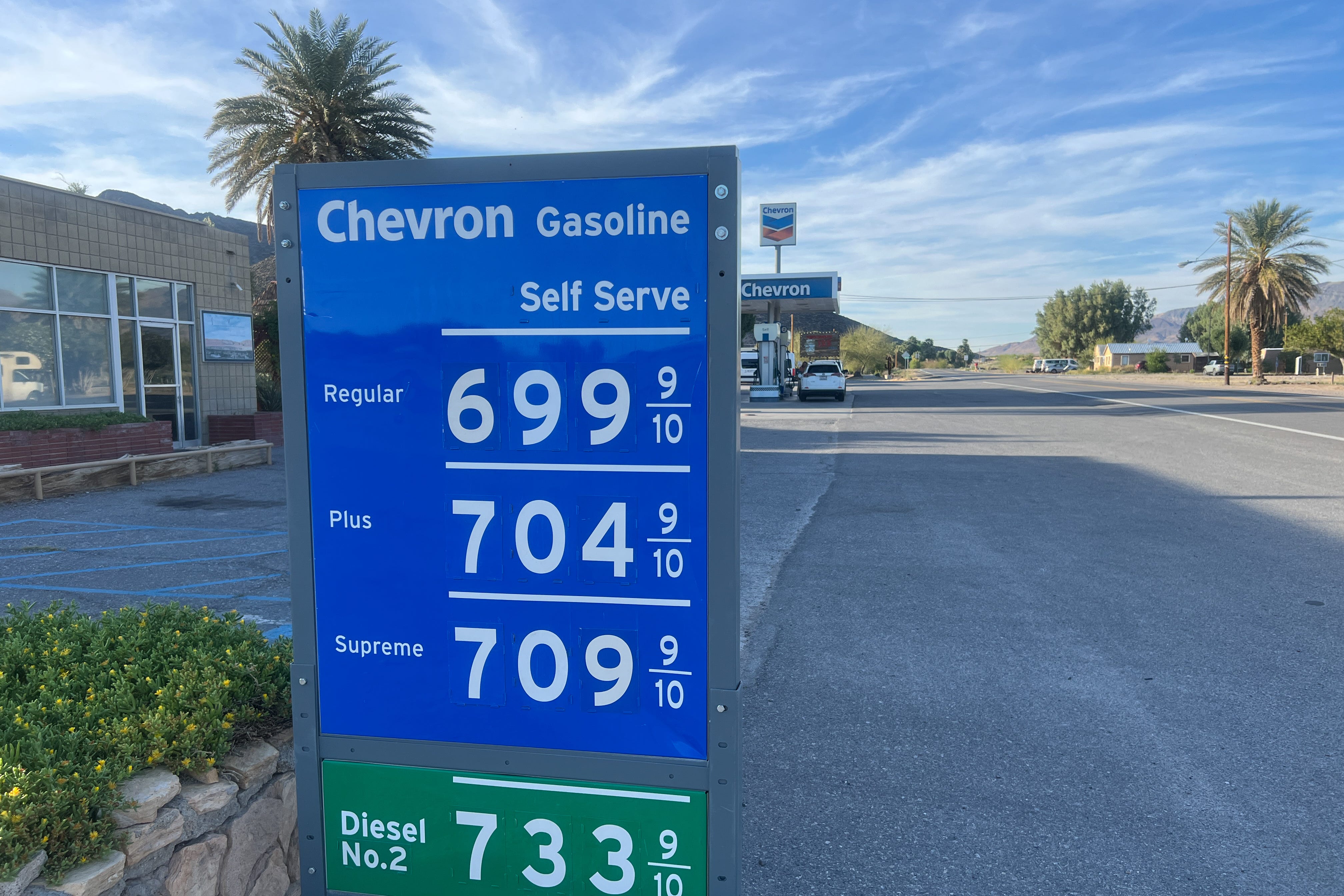
Mark Mills writes in City Journal that the economic chaos unleashed by the closure of the Strait of Hormuz should teach environmentalists that they are underestimating the indispensability of oil and gas to the world economy.
That take is not 100 percent wrong, and I’ve certainly beefed with the green community in the past. In particular, I think we just got a live illustration of what happens when global supplies of liquefied natural gas dry up, and the answer is a lot more coal gets burned.
That said, if I were writing about this war, especially in a center-right outlet for a center-right audience, I don’t think I would see greens as the ones who’ve made the error here.
After all, despite the rhetoric, it’s not “keep it in the ground” activists who’ve shut down a substantial amount of Persian Gulf oil production.
It is, once again, Republican Party foreign-policy hawks.
Because despite the conservative movement’s general appreciation of the importance of economic growth to human flourishing and its abstract realization that a steady and abundant supply of energy is critical to underpinning that growth, Republican administrations repeatedly screw up the global economy in a very specific way.
There’s a well-known (to liberals at least) statistical regularity that the American economy performs better under Democratic Party presidents than Republican ones. Alan Blinder and Mark Watson in a 2016 paper find that this is quite robust to different ways of measuring economic growth; it’s not some kind of time-series quirk, and it’s also not a result of systematic differences in fiscal or monetary policy.
So what is it? Well, they find that “the Democratic edge stems mainly from more benign oil shocks, superior total-factor-productivity (T.F.P.) performance, a more favorable international environment, and perhaps more optimistic consumer expectations about the near-term future.”
When their draft was first circulating in working paper form, it was broadly received as saying that Democrats have basically had better luck rather than better basic economic policy.
But I was never so sure of that.
Were the more benign oil shocks and more favorable economic environment really just good fortune? Or was it more like Bill Clinton took relentless criticism from the right for all eight years of his presidency for not taking more aggressive measures against Iraq and then his successor did take more aggressive measures against Iraq and it was a disaster?
Years later, and here we are again.
I don’t want to say that Democrats never make a foreign-policy mistake or Republicans never do anything that works out. But the Democratic tendency to err on the side of caution and risk-aversion, though it often exposes them to short-term political criticism, has some real wisdom to it. Republicans, meanwhile, persistently fail to integrate what they know about the world economy into their military conduct.
The long liberal battle for peace
As I wrote in response to the Trump administration’s much more successful putsch in Venezuela, there’s an interesting horseshoe about the economics of imperialist exploitation of natural resources.