

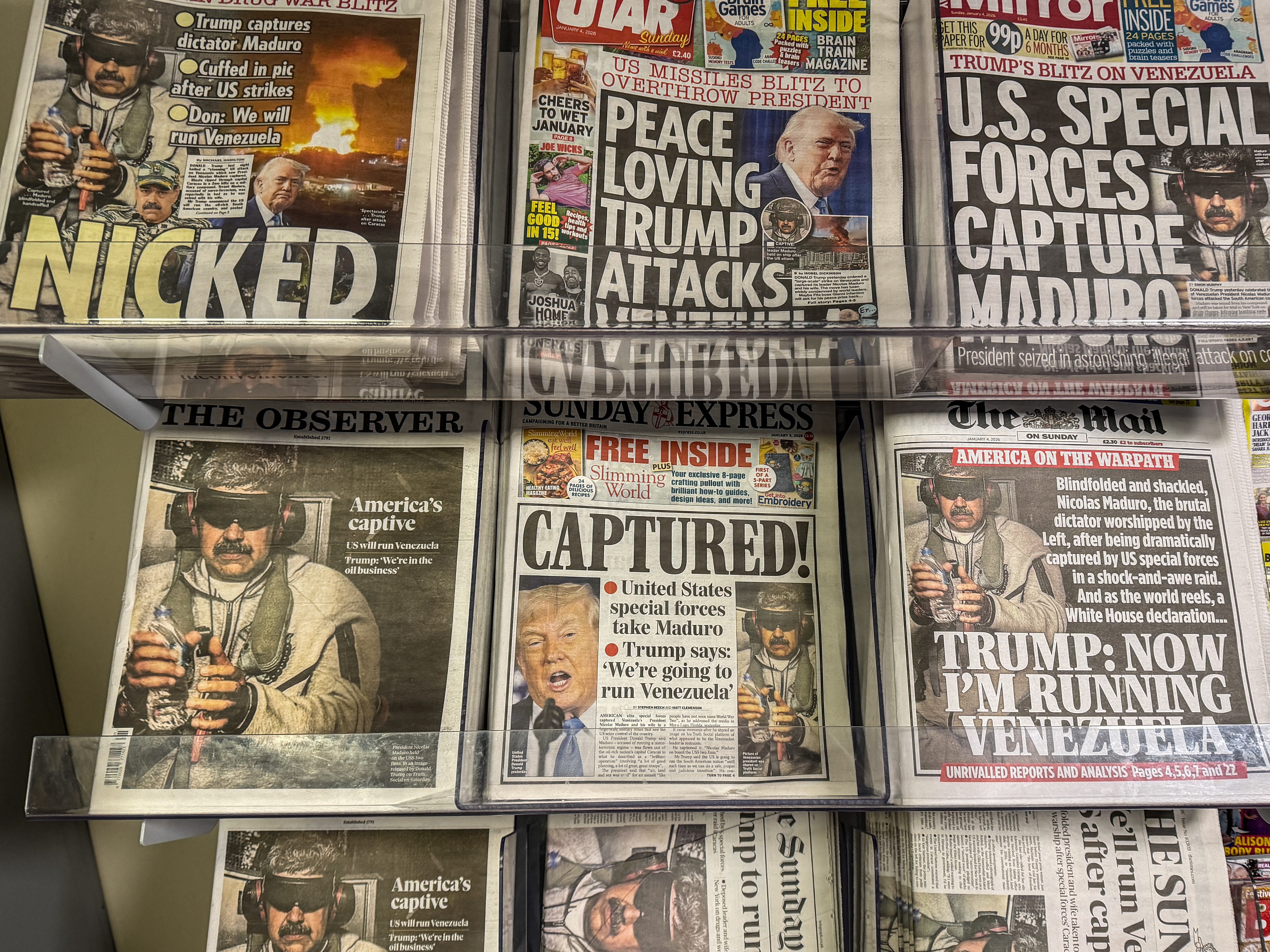
Before Trump’s snatch-and-grab operation against Nicolás Maduro, I’d been noodling a take about how the invasion of Iraq, for all its many problems, seems to have worked out better than the invasion of Afghanistan.
That’s a bit of a vexing conclusion, because the war in Afghanistan was much better justified. The September 11 terrorist attacks really happened, the Taliban had long been sheltering al-Qaeda, and the United States invaded with broad global support and legitimacy provided by the United Nations. There’s no such thing as a perfect war but, as far as these things go, this one was well-grounded conceptually. It just ended up failing in a pretty profound way, despite a solid casus belli and a perfectly reasonable war aim of “set up a government that is better than the Taliban.”
The point of this, pre-emptively, was going to be to say that just because the burgeoning war with Venezuela was insane and unprovoked didn’t mean it would necessarily be catastrophic.
Trump seems to have been thinking along the same lines because, rather than coming up with any kind of plausible-sounding pretext or legitimate war aims, he appears to have focused on shrinking the mission down so as to maximize the odds of success. Rather than actually changing the regime in Caracas, he decapitated it. He now seems to be simply trying to stabilize the situation under the leadership of a successor group of autocrats who’ll just agree to be more pliable to his demands, which center around seizing a slice of Venezuela’s natural resource wealth.
This is very much not what the Bush administration did in Iraq.
Notably, though, it is something that many of the Bush administration’s left-wing critics said he was doing in Iraq. The war was often portrayed by its opponents as a kind of cynical smash and grab for oil. Trump, meanwhile, has spent years being vocally critical of “neocons,” which led some lefties to see him as a kindred spirit.
But Trump himself has always been clear that he thinks we should have taken Iraq’s oil. In other words, his complaint with Bush is precisely that he thinks the war should have been a cynical smash and grab for oil. And you can see this same line of thinking in other contexts, too. An administration led by a John Bolton or Paul Wolfowitz type would have been very aggressive against Venezuela, but would complement that by being very supportive of Ukraine. The actual Trump policy is to continually back away from supporting Ukraine, but to follow up the Venezuela putsch with new threats to seize Greenland.
Trump is a guy who largely agrees with leftist critiques of the mythos of American power as a force for good in the world and sees military power primarily as a means to imperial extraction. But he thinks that’s good!
The old imperialism debate
I’ve written before about a parallel intellectual development in the slavery context. The basic question is whether countries’ wealth comes from coercive extraction or from positive-sum economic growth.
If you look back to 1855, the right-wing position was that slavery was the key lynchpin of the burgeoning Industrial Revolution and all humanity’s hopes of prosperity rest on overseers’ whips. The left-wing opponents of slavery believed this was not true, and that, while slavery might be good at enriching slave-drivers and plantation owners, it had fundamentally the economic characteristics of theft. Modern prosperity would be enhanced by a more fulsome embrace of free soil, free men, and free labor.
But 150 years later, the pro-slavery view has been reinvented as the New History of Capitalism, which also argues that the Industrial Revolution and modern prosperity rest on the overseers’ whips. This time, though, the point is that capitalism is morally tainted, and we need a program of reparations.
The arguments between Disraeli and Gladstone over British imperialism in the 19th century were basically about the same question. The Tory position was that English prosperity depended on creating and securing a large colonial empire. The Liberal criticism was that this is actually not true, that empire-building helps enrich a small elite by transferring the wealth of the colonized into their hands, but that actual prosperity comes from positive-sum growth via capitalism and free trade.
A somewhat parallel argument played out in the United States between Gilded Age Republicans and their Democratic opponents. On the verge of the Spanish-American War, the imperialist view was that it was important for America to seize Spain’s colonial empire — Cuba, Puerto Rico, the Philippines — for ourselves. The anti-imperialists pointed out that America had already caught up to the United Kingdom in prosperity and far surpassed the wealth of the other colonial countries and that this was a totally pointless approach to economic development.
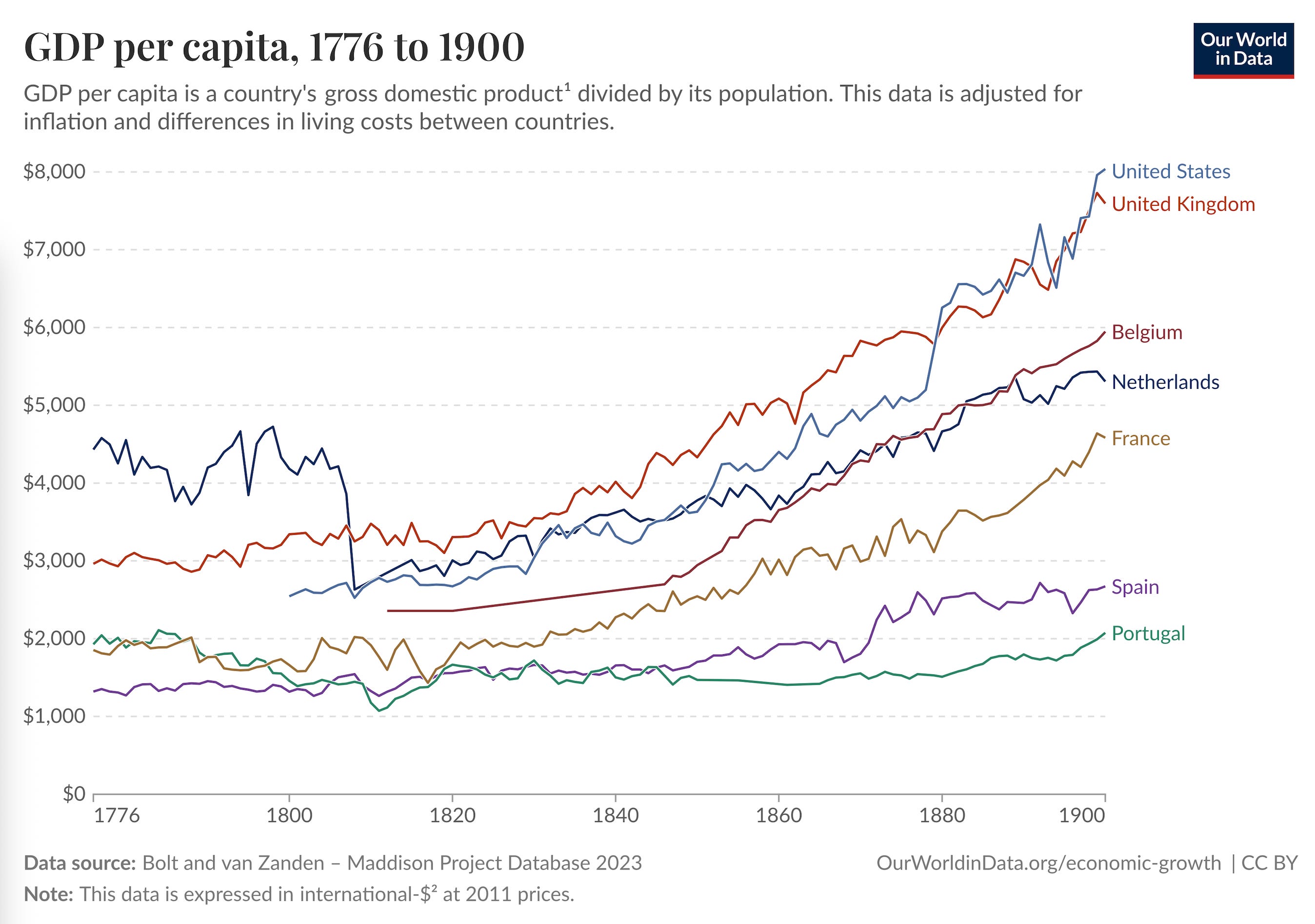
After all, the whole reason the United States could (and eventually did) seize several of Spain’s colonies is that having this empire wasn’t actually very useful. Nineteenth-century Spain was an economic backwater! America ended up becoming only a very minor colonial power and divested itself of the Philippines starting in the 1930s.
But there’s a school of thought on the left associated with Lenin and certain Marxist accounts of the origins of World War I which holds that the right-wing empire builders were basically correct.
For capitalism to be sustainable, on this account, you need imperial control of a hinterland to provide captive markets for your output. So Germany adopting the view that it was important to control Namibia no matter the human cost and therefore also very important to get into a massive naval arms race with Britain wasn’t a mistake; it was a cold-eyed assessment of the situation. Liberals felt that imperial rivalry and great power war was a negative-sum fiasco, but the hard left insisted it was an inevitable unfolding of the logic of capitalism.
After World War II, support for imperialism largely collapsed and the major powers decolonized. We then had essentially academic debates between leftists, who saw imperial exploitation as key to the rise of the West, versus liberals, who believed in the fundamental importance of science and markets and the rule of law.
In January of 2026, though, Stephen Miller is posting about how decolonization was a mistake and Trump is bragging about how newly colonized Venezuela will commit to exclusively buying American exports. It would be cute to say that Trump is recapitulating Lenin’s arguments, but it’s more accurate to say he’s reviving old and long-discredited right-wing arguments in favor of empire-building.
You can just buy things
The whole imperialist worldview has frankly never made much sense in the context of societies with market economies and representative governments.