

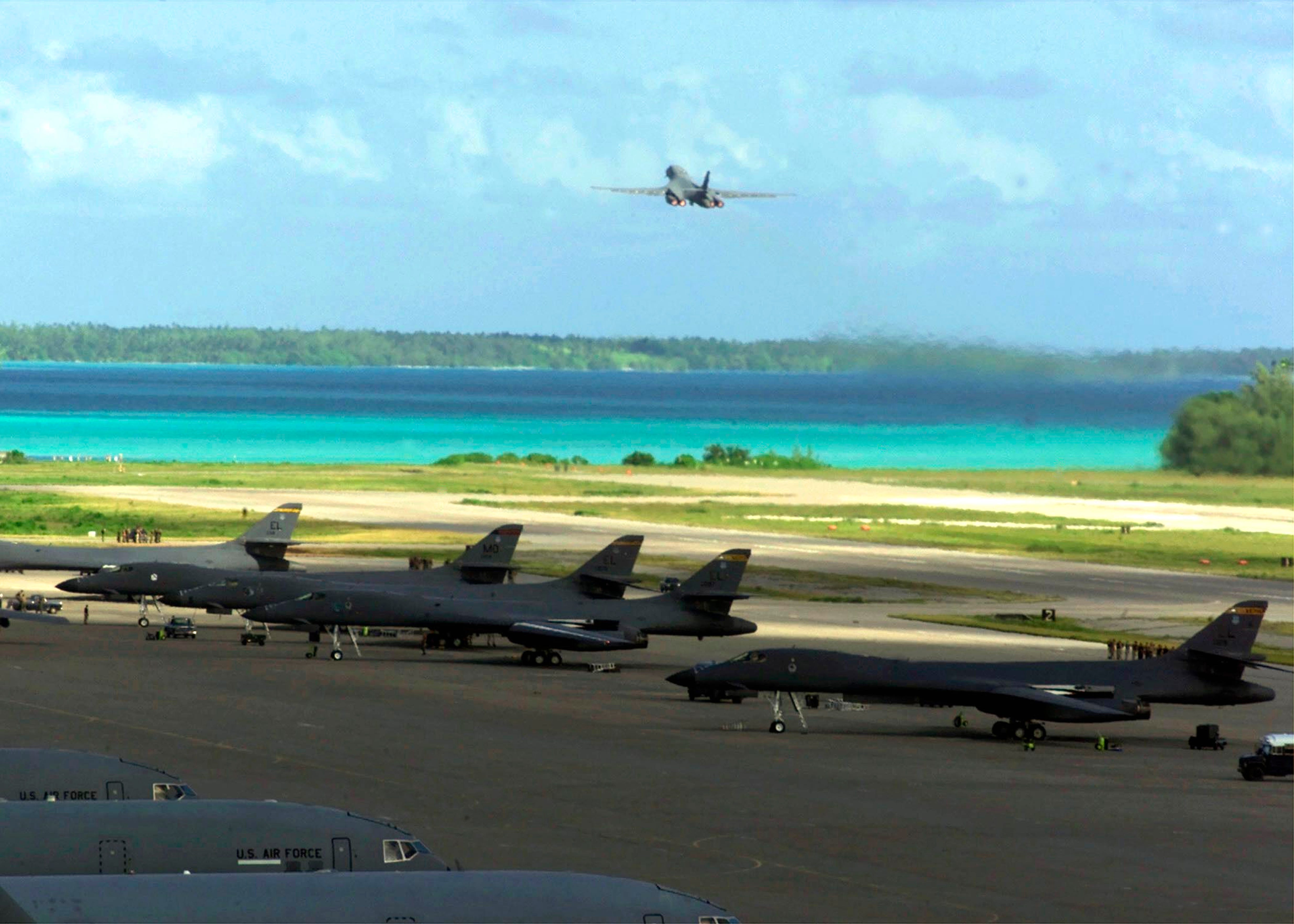
“DO NOT GIVE AWAY DIEGO GARCIA!” Donald Trump wrote on Truth Social last month, in what became most Americans’ first time hearing about the joint U.K.-U.S. military base strategically located in the central Indian Ocean.
What he’s referring to is an agreement between Britain and its former colony Mauritius to transfer sovereignty of the Chagos Islands, another British colony, to the latter. Conceived as a way to right some of the wrongs of Britain’s imperial past, the agreement has come under criticism mostly because critics argue it would give an ally of China a say over Diego Garcia, one of America and Britain’s most important bases. Many former residents of the islands and their descendants also argue against the transfer.
While the administration has been mercurial on who exactly should own the base — Marco Rubio’s State Department initially supported the U.K.’s handover of the islands — opposition to the deal has generally been “a thing” in the right-wing discourse spaces on both sides of the Atlantic. Priti Patel, the Conservative Party’s foreign policy critic, has called it a “surrender deal.” Right-wing British commentator Rod Liddle has said protestors opposing the deal are “up against idiocy.” On our side of the pond, John Kennedy of Louisiana has taken to the Senate floor to rail against the handover.
But is that right? Democrats don’t want to give China a major advantage in wartime any more than Republicans do, and there are serious decolonization criticisms of the deal that come from perspectives typically associated with the political left. Right now, Chagossians themselves are making the case that the deal does not right the wrong done to them and was not crafted with them in mind or with their consultation.
There’s a real case to be made that the dispute transcends the left-right divide. But to understand why, you have to start with how the base came to exist in the first place.
How did we get here?
It was in 1966 when the U.S. and Britain signed an agreement to build a military base on the Chagos Islands, a territory the latter has controlled since 1814. The countries stipulated that the islands be uninhabited, so the British government, with support from the U.S., forcibly removed the Chagossian population. Residents were ordered to leave their homes with only what they could carry and transported to Mauritius and the Seychelles. Some recall arriving at the jetty to see their dogs and livestock taken and killed before they were pushed onto ships; others remember watching the islands disappear over the horizon. One islander described it later as “the day the world went dark.”
What happened to the Chagossians is a wrong that many in the U.K. understandably want to right. A 2019 non-binding advisory opinion from the International Court of Justice points toward one possible solution: transferring sovereignty over the islands to Mauritius while leasing the base back for continued U.S. and British use. But this proposed fix may do little to address the grievances of the displaced islanders, even as it introduces new strategic uncertainties for one of America’s most valuable military bases.
Mauritius’s claim to the Chagos Islands is rooted in a shared history of colonization. When Britain took control of the region from France in 1814 at the end of the Napoleonic Wars, the Chagos Islands were administered as a dependency of Mauritius. In 1965, just before Mauritius gained independence, Britain detached the archipelago and created a new colony, the British Indian Ocean Territory, so it could host the Diego Garcia base (the islands’ position in the central Indian Ocean allows power projection across the Middle East, East Africa, and Southeast Asia).
The Mauritian government argues that international law now clearly supports its claim. In a statement, officials said that the archipelago “has always formed an integral part of the territory of Mauritius, as authoritatively determined by the International Court of Justice.” The deal, they say, would still guarantee the long-term operation of the Diego Garcia base while creating a trust fund and resettlement opportunities for Chagossians.
But the relationship between Mauritius and the islands themselves is less straightforward than the legal argument suggests.
The Chagos Islands lie more than 1,200 miles northeast of Mauritius, geographically closer to the Maldives.1 Like Mauritius itself, the islands were uninhabited before European colonization. However, a distinct Creole community developed, descended largely from enslaved Africans and plantation workers brought there by the French and British.
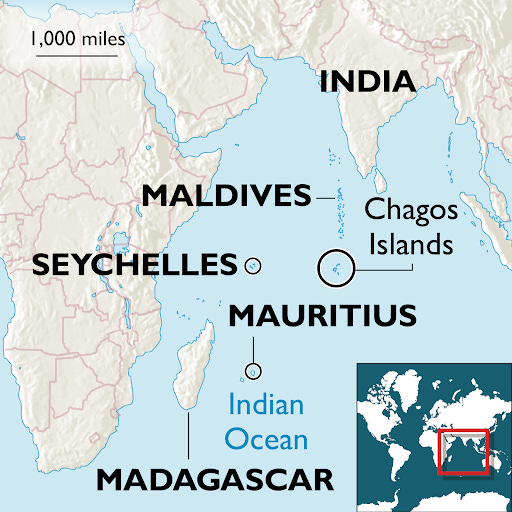
Numerous islanders were dropped off in Mauritius after being evicted from their homes, but Frankie Bontemps of the advocacy group Chagossian Voices tells me that they did not always feel welcome. “Many members of our community have experienced discrimination in Mauritius and have often felt treated as second-class citizens.”
That history has led many in the Chagossian community to distrust Mauritian authorities and to view the current proposal with skepticism. While Mauritius argues the islands were unlawfully separated from its territory before independence, many islanders see themselves as a separate community whose political future has been decided repeatedly by outside governments. Indeed, Bontemps tells me, “For many Chagossians, there is also deep concern that the transfer of sovereignty could feel like moving from one form of colonial rule to another.”
The people the deal is meant to help
Earlier this year, a small group of Chagossian activists and their supporters took matters into their own hands. They bought a boat in Thailand, stocked it with supplies in Sri Lanka, and set off on a five-day voyage across the Indian Ocean to the northern edge of the archipelago. Their destination was Île du Coin, part of the coral atoll of Peros Banhos, historically the main inhabited island in the chain.
Among those aboard was a man, now in his 70s and one of the few remaining native-born Chagossians. He was 14 when British officials forced his family onto a boat leaving the islands. When the archipelago finally came into view again decades later, those on board said he cried. The group hopes that establishing a physical presence on the islands will strengthen the case for a Chagossian right of return.
Their concerns — largely that Chagossians were never consulted about a deal meant to correct an injustice against them — have also surfaced in parliamentary testimony. A House of Lords committee noted that “by its own admission, the U.K. government did not consult the Chagossian community about the terms of the U.K./Mauritius agreement” transferring sovereignty. A survey of the community submitted as evidence saw Chagossians repeatedly warn that they “feel sidelined and wish greater involvement in future decision-making.” An overwhelming proportion of those polled were against joining the Chagos Islands with Mauritius.
International human-rights officials have also raised concerns. United Nations experts have warned that any settlement must ensure that the rights of the Chagossian people — including their right to self-determination and return — are respected. That U.N. committee has called on both Mauritius and the U.K. to suspend ratification of the agreement until the free and informed consent of the Chagossian people has been obtained.
The result is a peculiar situation. The deal that is now before the British government is intended to resolve the legacy of the Chagossians’ expulsion. But for many of the people who were expelled, the proposed solution looks less like justice than another decision about their homeland made somewhere else.
Concerns for Diego Garcia
Americans have a stake in this, too. Bryan Clark, director of the Center for Defense Concepts and Technology at the Hudson Institute, told me that the position of the Diego Garcia military base allows long-range aircraft taking off from the islands to reach the Middle East without aerial refueling and without flying over countries that may not support U.S. or British operations. The islands are close enough to key theaters to be operationally useful but far enough from potential adversaries that they are unlikely to come under attack in anything short of a major conflict. They also serve as a hub where naval vessels can refuel and re-arm.
In practice, the problem is not that the U.S. and Britain would immediately lose access to the base — the proposed agreement would still allow them to operate there. The concern is that the terms of that access could shift over time. A host government can reinterpret agreements, impose new conditions, or simply refuse certain operations if it believes they conflict with its interests. “In the same way European or Gulf nations often restrict the kinds of operations U.S. forces can conduct from their bases,” Clark told me, “the Mauritian government could impose restrictions on the actions forces can conduct from Chagos.” The trust that exists between the U.S. and the U.K. cannot be compared to the U.S.-Mauritius relationship — Britain and the U.S., in addition to their “special relationship,” are the two founding members of what is today the Five Eyes alliance, which shares the majority of each country’s most sensitive intelligence. Mauritius, on the other hand, supports China on virtually every geopolitical issue while receiving Chinese diplomatic and economic support for its own priorities, according to Jamestown, a think tank focused on U.S. foreign policy.
Some early signals suggest this risk is not purely hypothetical. Writing in the National Interest, Maurizio Geri highlights that in January the Mauritius government confirmed that the Diego Garcia base would be prohibited from storing U.K. and U.S. nuclear weapons were sovereignty to be transferred. Analysts also warn that geopolitical pressure could shape how Mauritius exercises its authority. China has been courting small island nations in the Pacific for years to challenge Western power in the region, and according to the U.K.-based think tank Royal United Services Institute there is evidence that Russia worked to ensure Mauritius would have support for its legal claim to the Chagos Islands. It isn’t hard to imagine that spying operations could be set up on an island near the base.
And with only a limited military presence on the islands, enforcing those arrangements could be difficult. “With only a small number of troops and ships or aircraft on the island,” Clark said, “the U.K. and U.S. would not be in a position to unilaterally assert control over Diego Garcia.”
Not everyone finds this argument convincing. Marko Milanovic, a professor of international law at the University of Reading, argues that critics overstate the practical consequences of the deal. In his view, the base would remain under British operational control even after sovereignty transferred to Mauritius, and the arrangement would largely formalize a long-term lease while addressing Britain’s diplomatic difficulties at the United Nations over the territory’s colonial status. “Nothing would, as a practical matter, change regarding Diego Garcia when compared to the status quo,” he told me.
Roads not taken, and a path ahead
This is a story about crafting effective policy and advocating for national interests. The U.K.’s goals seem to be:
Improving Britain’s reputation at the U.N. and around the world
Righting injustices done to the Chagossian people
Ensuring U.K. and U.S. national security is not compromised
While this proposed deal does address (1) well, there are serious questions of its ability to accomplish points (2) and (3).
If the U.K. had engaged the Chagossian community as partners from the beginning, it is plausible that together they could have come up with an approach that would accomplish all three goals. Many Chagossians do not want to become further involved with Mauritius; in their written statement to Slow Boring, Chagossian Voices highlighted their community’s desire for a guaranteed right to return to the islands, representation for Chagossians in decisions that affect their homeland, and reparations. It’s not clear that all that — and the reputational benefits a thriving Chagossian community would provide — can’t be achieved while the Chagos Islands belong to Britain.
If the islands must leave British hands, other options were at least conceivable. The Maldives, for instance, has raised objections to the Mauritius deal and there’s an argument that it would be a strategically preferable partner given its strong relationship with the U.S. But many Chagossian advocates reject framing the issue as a choice between potential sovereigns altogether, saying that the community itself should play the central role in determining the islands’ future.
By taking a backseat in advocating for their national interests, the U.K. has come to the precipice of affirming a deal that, at the very least, seems like a missed opportunity. After the agreement was signed, Peter Lamb, the Labour MP whose constituency includes many members of the Chagossian diaspora, warned that the deal would only be legitimate if the interests of displaced islanders were genuinely addressed. He pledged to “continue to use all avenues available to push with government at home and overseas” to ensure Chagossians have a meaningful role in shaping the islands’ future.
But it’s not too late: This agreement has not been ratified in the House of Lords, and a better future for Chagossians, one in which they have agency, is still possible.
Britain’s expulsion of the Chagossians remains one of the ugliest episodes of its late imperial retreat. But a settlement that fails to secure the support of the people most directly affected — while introducing new uncertainty around one of America’s most strategically valuable military bases — risks solving neither problem particularly well.
The Maldives has recently suggested it may pursue its own claim to the archipelago. Maldivian officials and analysts point to a range of historical connections between the Maldives and the Chagos Islands, including accounts of Maldivian fishermen regularly visiting the islands prior to European colonization, references in navigation records written in the official Maldivian language, and claims that Maldivian rulers asserted sovereignty over the archipelago centuries ago. President Mohamed Muizzu has argued that these historical ties give the Maldives a stronger claim than Mauritius.
We live in a weird world where Western nations are expected to abide by international law and norms while authoritarian regimes see such rules and norms as tools to facilitate their imperial ambitions.
Reminds me of Britain handing over Hong Kong to China against Hong Kong people’s will — also an unmitigated disaster