

Slow Boring is on spring break this week! Kate and I are traveling with family and will be online less than usual, while Halina, Caroline, and Ben keep things running. We’ve got some slightly less newsy content for you while we’re out (but a normal Mailbag on Friday) and look forward to resuming regularly scheduled programming next week.
Recent revelations about Cesar Chavez have led to some of the statues erected in his honor getting torn down. This is, of course, understandable, but it also reminds me of something I think about whenever anyone’s statue gets torn down: America could use more statues.
And when I say statues, I mean traditional statues. I don’t hate the Martin Luther King “Embrace” statue in Boston the way some people do, but the contemporary arts community needs to chill out a bit when it comes to public art.
Everyone understands what a cool statue looks like. Whether it’s Admiral Nelson on his column in London or Ulysses Grant on a horse in Chicago, a statue is a statue. Did you know there’s a Grant Circle in Washington, DC, but while Thomas Circle has a statue of General Thomas and Logan Circle has a statue of General Logan, there’s no statue of Grant in Grant Circle? That’s because it was moved long ago to the grounds of the United States Capitol, which is great! But it fails to manifest what I think is the necessary abundance mindset with regard to statues.
We have the technology and natural resources required to create another Grant statue and put it in Grant Circle. There’s also no statue of General Sherman in Sherman Circle, not because it was moved but because at the time it was named there was already a Sherman statue near the White House. But so what? Build another damn statue!
There should be plenty of figurative, heroic-looking statues of King and other civil rights leaders, too.
But I would also encourage city leaders to lean into more obscure, hipster historical figures to make statues of. DC should have a statue honoring Walter Washington, the first mayor of the Home Rule era. And there’s another guy who, under an older governance regime, held the title Mayor of the City of Washington from 1868 to 1870 who was tossed out of office after one term in a backlash to his aggressive promotion of school integration. Get that guy a statue!
I’d also just say that while it makes more sense to commemorate more deserving statue recipients, I don’t think we need to be too fussy about it. James Buchanan was by wide consensus the worst president we ever had, but it’s still kind of fun to come across his statue in a park near my house. For no particular reason the same park also has a statue of Dante. Why not? That’s the spirit we need.
The Confederate case
Obviously, one can’t talk about this without addressing the many monuments to Confederate States of America leaders that were erected in the South and the recent movement to take them down.
I was always for de-statuing Confederates, and when I saw more conservative people warning that this would be a slippery slope to taking down all kinds of statues, I dismissed that.
There’s a clear principle that honoring someone specifically for leading a rebellion against the United States of America is a mistake. And I think that’s different from honoring slaveholders like Thomas Jefferson and George Washington. Jefferson is honored because he wrote the Declaration of Independence. Washington is honored because he led the Continental Army and served as the first president. These people, like most powerful politicians, had serious flaws as humans. But the intent of commemorating them is to establish a canon of important positive events in American history, and I think anyone engaging with a modicum of good faith and open-mindedness can see that.
The aforementioned anti-segregation mayor of DC, Sayles J. Bowen, actually sounds like he did a kind of bad job and wrecked the city’s finances. But the point would be to commemorate a Reconstruction-era leader who was on the right side of one of the big moral questions of his time.
Similarly, you could imagine a situation where the founder of a town somewhere was also an officer in the Confederate military. I don’t have a problem with giving a guy like that a statue. It’s specifically holding up Confederate military service as worthy of honoring that seemed objectionable to me.
Fundamentally, though, if the only way to get Americans into statues is to accept a lot of P.G.T. Beauregard monuments or whatever, I think I’d take that compromise.
Statues add visual interest to towns and cities. It’s also nice to have a chance to learn about noteworthy people. When I grew up in New York, I lived near Washington Square Park, which has a statue of Garibaldi that was put up a long time ago by the Italian community that used to live in the neighborhood. Thanks to that statue, I and generations of other randomly curious kids learned something about Garibaldi. I bored my son once by telling him about Tomas Masaryk after we walked past the Masaryk statue that’s on the corner of 22nd and Q for some reason.
Immigrant enclave neighborhoods come and go over time, but I think it’s nice if they leave behind physical manifestations like statues. To the extent that we’re concerned about inclusion, the solution is just more statues.
Women should have statues, too!
Notably, the vast majority of prominent political leaders over the course of western history have been men, so most of the statues we have are of men. But we can fix this by commissioning more statues of women.
The headquarters of the American Red Cross is a classical revival building that has the text IN MEMORY OF THE HEROIC WOMEN OF THE CIVIL WAR carved into the façade. That’s great. But there should also be a statue of one of those heroic women. Or several! There were lots of women who did notable things during the civil war, and they should have statues in their hometowns and in places where they did those notable things.
Near that building is the headquarters of the Organization of American States, which somewhat randomly has a statue honoring Queen Isabel of Castile. I don’t know that the political logic of this is especially compelling, but the city is more interesting for having it there.
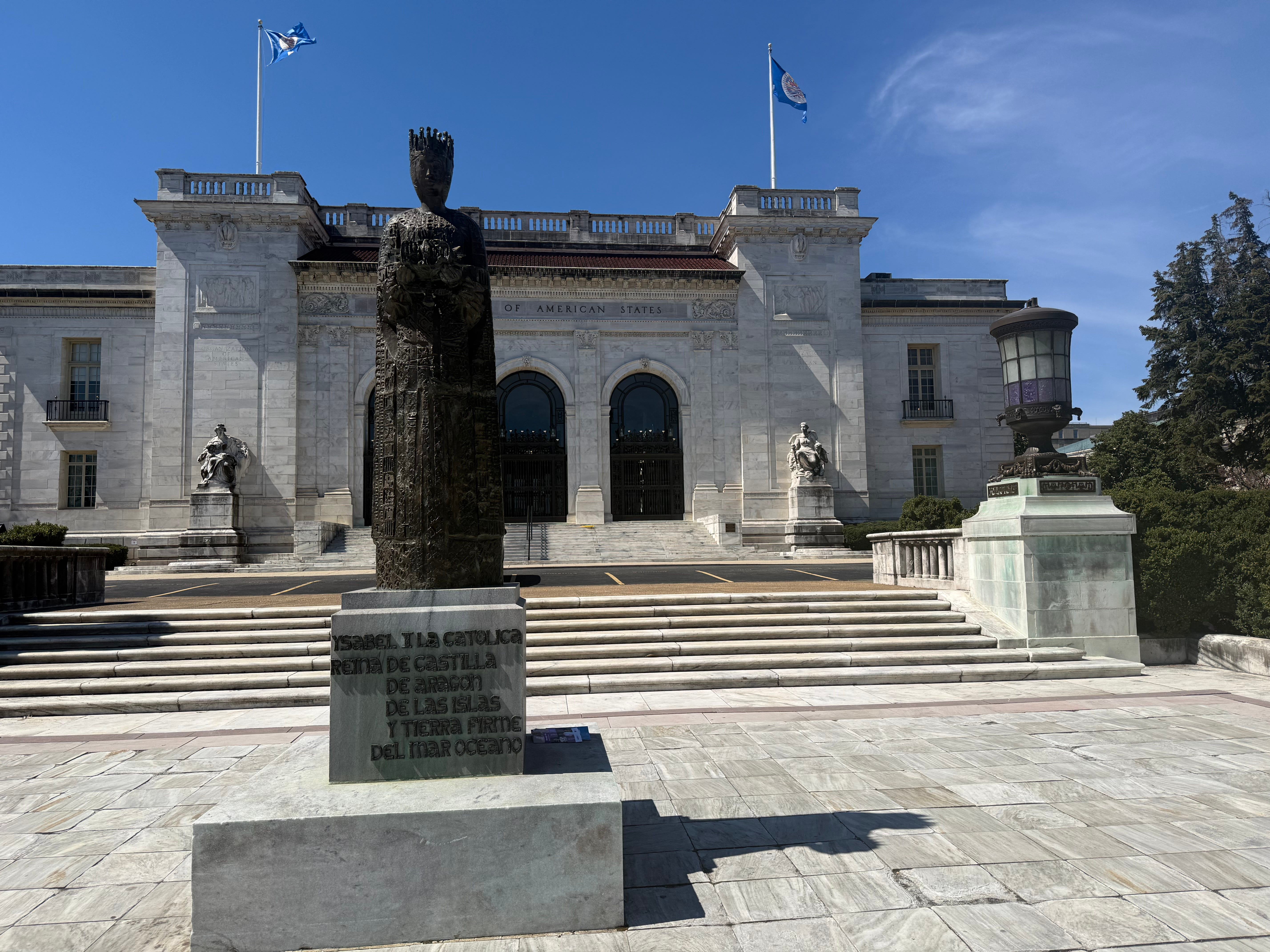
When I walked by, I noticed that the inscription calls her Ysabel with a Y rather than an I, which was interesting to me because of my own surname. My vague understanding had always been that the Yglesias spelling was a regional variant from Galicia, where my great-grandfather was from. But apparently in 15th century Spain, Y and I were used interchangeably at the beginning of words all across Spain. So it’s possible our weird family name has nothing in particular to do with Galicia and is just an idiosyncratic refusal to standardize.
When you put up statues, you learn things!
Part of what I think is compelling about statues as a tool to diversify the American canon is that the whole point is that the person doesn’t need to be already famous. I was in Pittsburgh once and saw a memorial to Christopher Lyman Magee that’s very beautiful because it was commissioned from Augustus Saint-Gaudens, one of the major sculptors of his time and the artist behind a lot of prominent statues of extremely famous people.
Magee by contrast is kind of random, but he played an interesting role in the history of Pittsburgh, and I learned about him because I saw the statue. We just need to let more groups of people get some money together and throw up more nice-looking statues.
Make public art more normal
I’m not a philistine or a hater or a dogmatic anti-modernist; I think it’s great if people want to support contemporary styles. But I’ve got to say that when this bit of public art went up in my neighborhood, I felt like it was definitely less fan-friendly than the more traditional statues we have in DC.
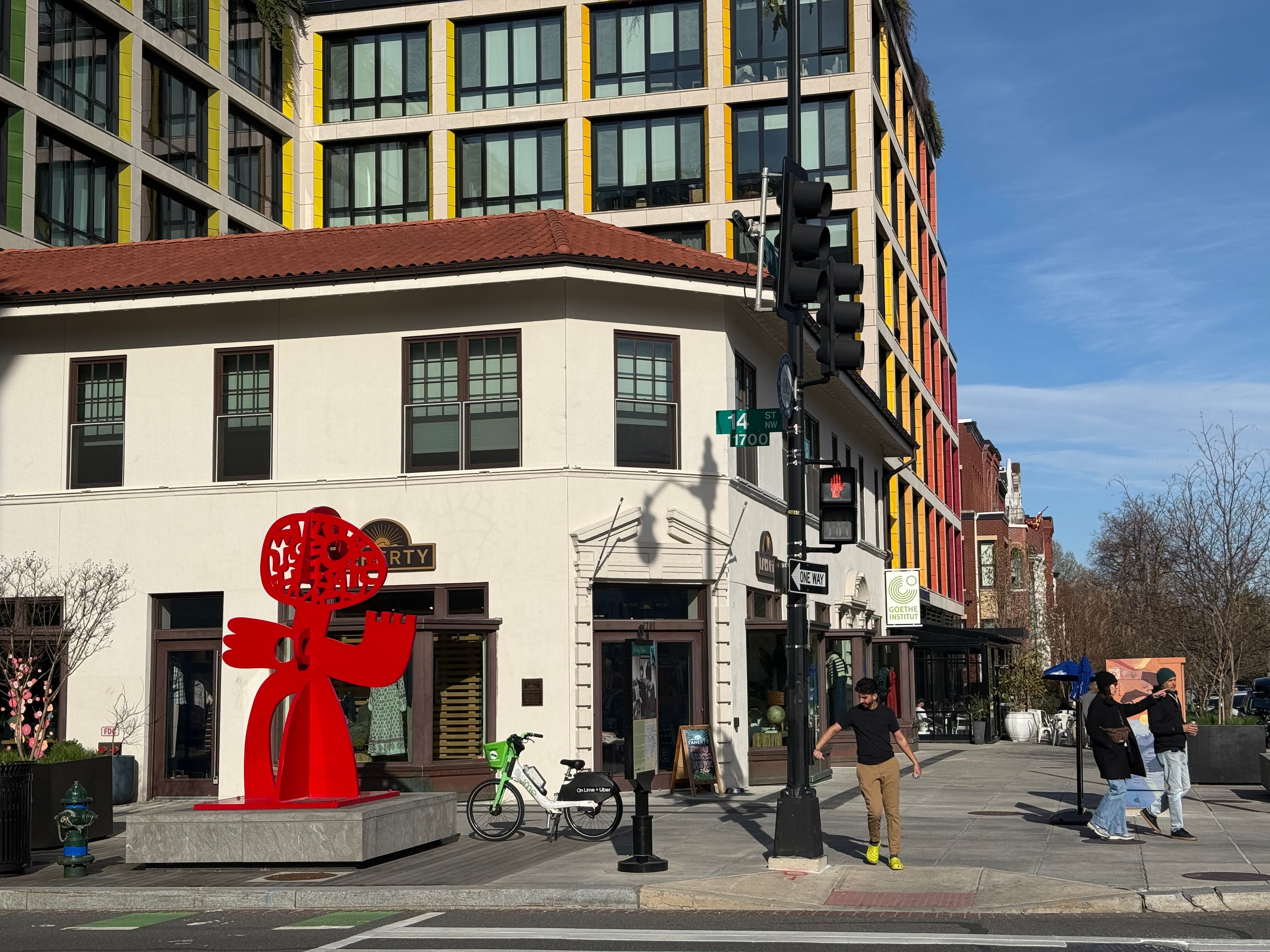
The building project you can see behind the statue was done by Whitman-Walker Health, a leading community health provider specializing in HIV/AIDS and LGBT health. It’s named for Walt Whitman and Dr. Mary Walker. Why not give Dr. Walker a nice, normal-looking statue?
I get that for real artists, it’s sort of cringe to pander to mass tastes. I appreciate that when Sight & Sound magazine did their most recent greatest films of all time poll, they featured “Jeanne Dielman, 23 quai du Commerce, 1080 Bruxelles” as number one on the list and as a result I checked out a bizarre Belgian art project. But if you’re trying to entertain a large group of people, you want to give them something well-made but accessible. Not total garbage or slop, but Raiders of the Lost Ark or Goodfellas.
If new statues were broadly aesthetically pleasing, people would want more of them, and political energy would go into thinking of new people to commemorate rather than to pull down. I’ve never been to a city and thought “this place has way too many statues.” Prague has an entire statue-lined bridge, and everyone loves it.
America has the capacity to make our towns and cities more statue-adorned, and we should do it.
They should include inspiring quotes too, such as, "A noble spirit embiggens the smallest man."
If one goes to the Library of Congress Jefferson building and looks in a general upward direction basically anywhere in the building, they will realize that something major has been lost when it comes to public art. Spending money on that type of work would feel ridiculously extravagant to the average tax payer today, even though we already spend ridiculous sums on less appealing public spaces.