

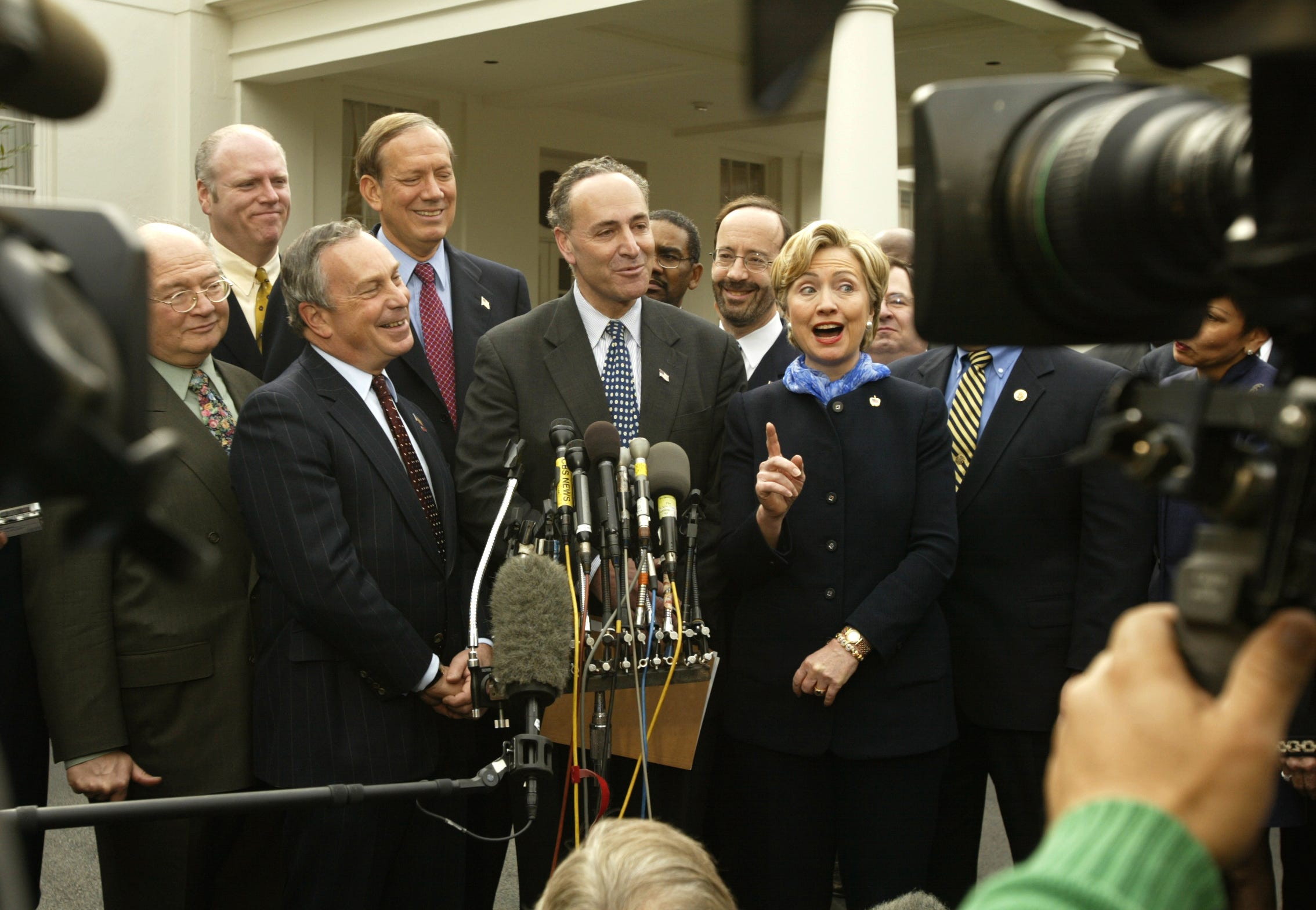
Twenty-five years ago, I was a summer intern in the office of New York Senator Chuck Schumer.
He was a sort of unusual case at the time. At the age of 50, he was relatively young for a senator and in his first term, having been elected to the seat in 1998. But he was first elected to the New York State Assembly when he was fresh out of law school at 23 years old and jumped to the U.S. House of Representatives when he was 29.
So he managed to be both a young senator and also a veteran politician.
It’s also hard to imagine given contemporary politics, but his 1998 victory over incumbent Republican Senator Al D’Amato was considered something of an underdog victory at the time. Politics was simply much less polarized. New York City had a moderate Republican mayor and the state had a moderate Republican governor, so there was no particular reason to think that a moderate Republican senator from Long Island couldn’t keep winning re-election indefinitely.
It was just a different time, politically, when basically every statewide office was considered at least potentially contestable if you could raise money, and the House battleground was much wider.
Part of the point here is just that I’m old.
My responsibilities as an intern included tasks like cutting articles out of print newspapers in order to fax a daily packet of clippings to the senator’s different offices around the state. I would also grab press releases hot off the printer and fax1 them to various media outlets. Photocopiers and fax machines were also a big part of my job during my internship at Rolling Stone the previous summer.
Literally nobody would perform such tasks these days. But it occurs to me that this is a situation where age brings some wisdom.
Precisely because politics was so different back then, a much larger share of working politicians thought a lot about persuasion and about swing voters. Political staffing is a young person’s game, and for a while now the whole concept of trying to persuade swing voters and beat Republicans has been a niche pursuit that only a tiny minority of elected Democrats focus on. As a result, staffers don’t really receive even “summer internship brown bag lunch” levels of training in how it’s done.
Obviously a lot of what Schumer and my direct boss had to say about this is now as outdated as the list of speed dial2 codes taped up to the wall by the fax machine. A lot of it, though, remains extremely relevant today.
The voters who matter don’t follow politics
Media consumption habits have changed enormously in the past 25 years. One constant, though, and something Schumer’s communications director really drummed into me, is this: