Chris Van Hollen and Cory Booker both recently introduced proposals to raise taxes on the very rich in order to finance broad-based tax cuts for the rest of the country.
The proposals differ considerably in their details (the Van Hollen version is considerably more fiscally responsible and less regressive), but neither senator has said anything about how their proposals fit in the jigsaw puzzle of Democratic Party prioritization.
As I noted recently, even a pretty minimalist Dem agenda requires trillions of dollars in offsets. And that’s before considering ideas like bringing back some or all of the green subsidies from the Inflation Reduction Act that Trump cut.
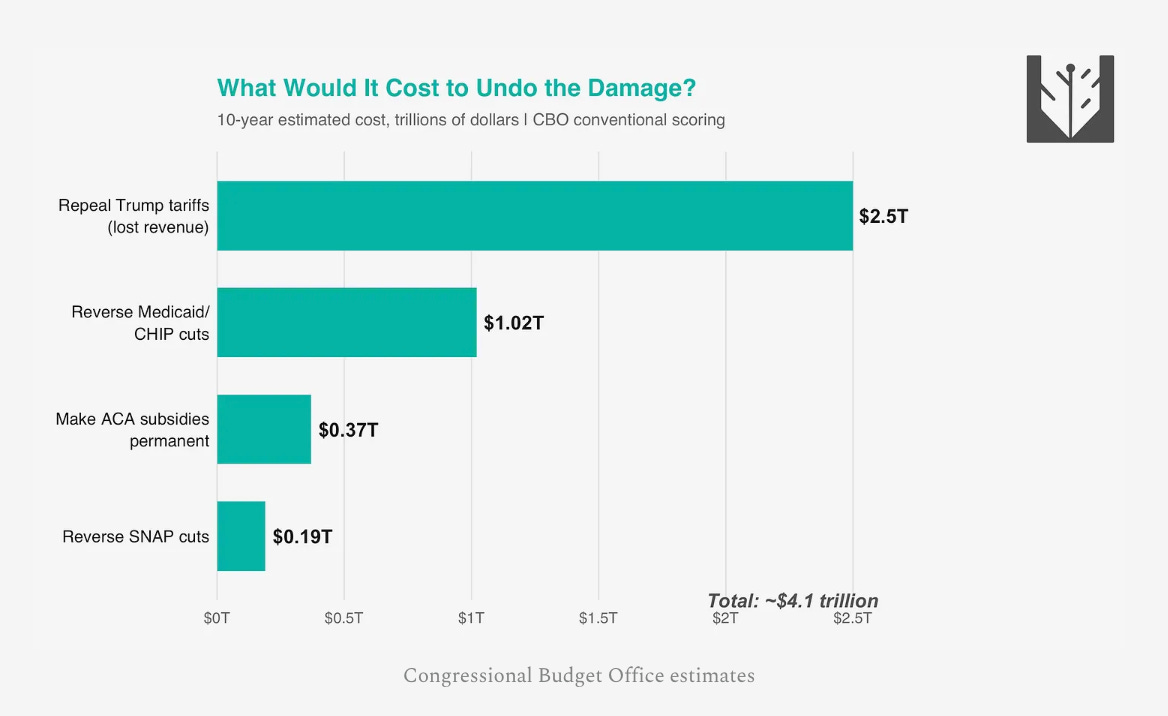
Neither proposal was greeted warmly by the Democratic Party economic wonk class, generating a moment of unity between left and moderate factionalists. But that didn’t stop Katie Porter from offering a state-level version of the same idea as part of her campaign for governor of California, or stop Van Hollen from securing a bunch of co-sponsors for his bill.
Stefanie Feldman offered the rejoinder that a middle class tax cut delivers short-term help on “affordability” in a way that almost nothing else can. Brendan Duke, a tax policy expert with the Center on Budget and Policy Priorities countered that both the Clinton and Obama administrations structured tax cut proposals around the Earned Income Tax Credit and Child Tax Credit without monkeying around with standard deductions and rate cuts in the way that Van Hollen and Booker are.
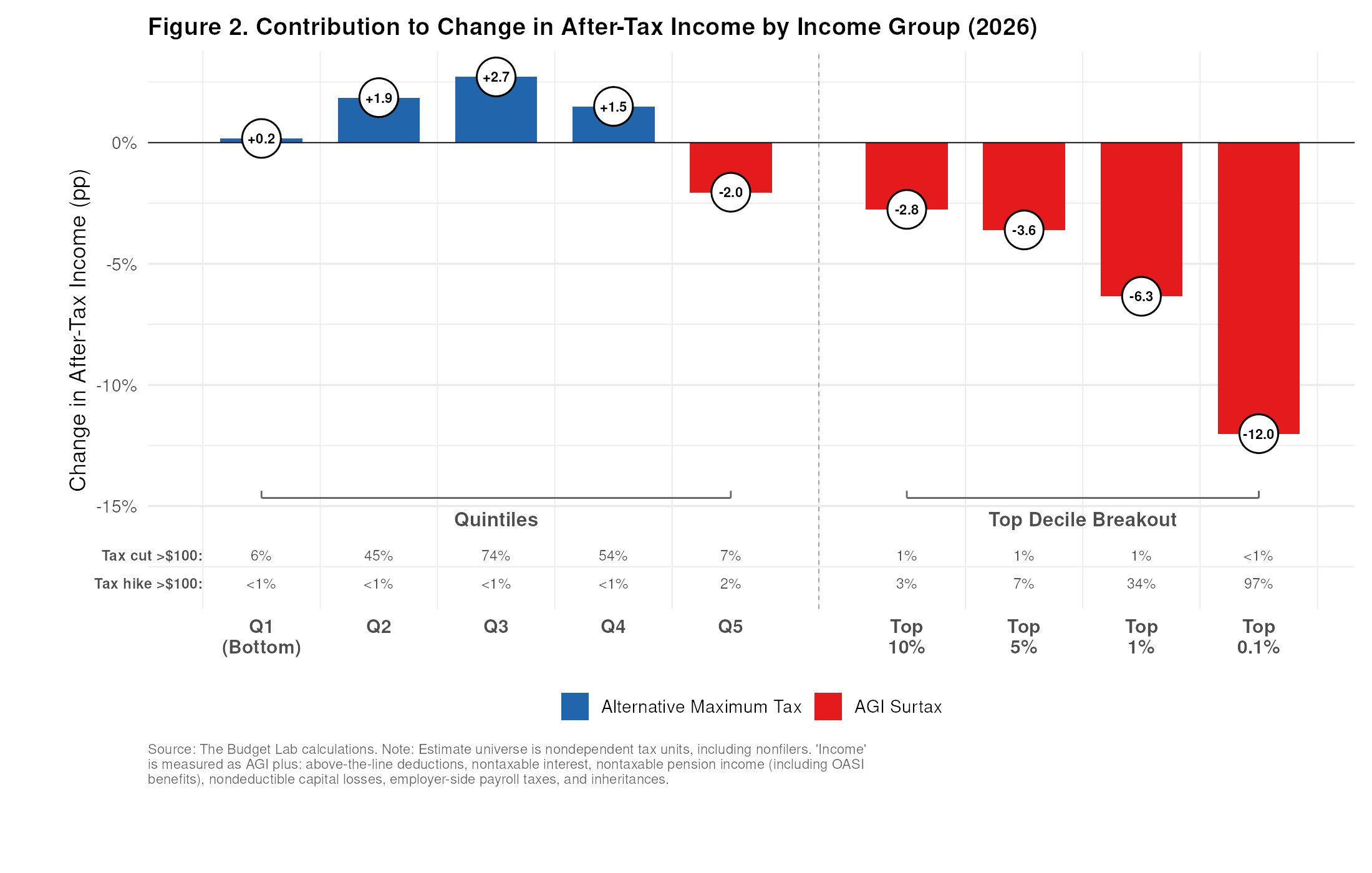
The reason past presidents made those choices is that the existing progressive structure of the income tax code means that any broad-based income tax cut is going to be regressive. Check out this Yale Budget Lab estimate of Van Hollen’s plan — he makes sure to soak the rich, but he does more with the money for the comfortable than for the struggling. Booker’s plan is even worse in this regard.
I believe that details really matter, and that’s absolutely true for things like tax policy where a broadly identical slogan — “tax the rich” or “tax cut for the middle class” — can describe wildly different policies.
But I also think tax policy is worth discussing on a more abstract level.
Marx talked about the ideas of a “class in itself,” which is a social stratum that is united by common grievances, and a “class for itself,” which is actively organized in pursuit of its interests. As the Democratic voting base has become more socioeconomically upscale, the question of whether the party should try to harness the worldview of college graduates with six figure incomes as a class for itself is implicit in a lot of debates.
The sidelining of Medicaid/SNAP/ACA issues in favor of a big tax cut and especially the particular structure of Booker’s tax proposal are ways of answering an enthusiastic yes to that question.
The wonk community has pushed back on these ideas because this is largely a group of people who care about helping the poor and who have vicious internecine arguments about whether the best way to do that is targeted programs and political compromises around work requirements, or whether more boldness in the face of political challenge would be more efficacious.
And I tend to side with the wonks as a whole that the class for itself vision is not morally attractive. But it does cohere not only with some demographic shifts in the electorate but with some other policy priorities of the contemporary Democratic Party.
Beyond that, though, I know most tax and budget wonks have zero interest in getting dragged into the culture wars. But I want them to consider that if you’re not willing to drag the party to the center on culture issues, the arc of history sort of inevitably bends toward Bookerism. If you want the kind of broad-based taxation that we got from Bill Clinton, you need an electoral base like the one he had.
Anti-billionaireism as party glue
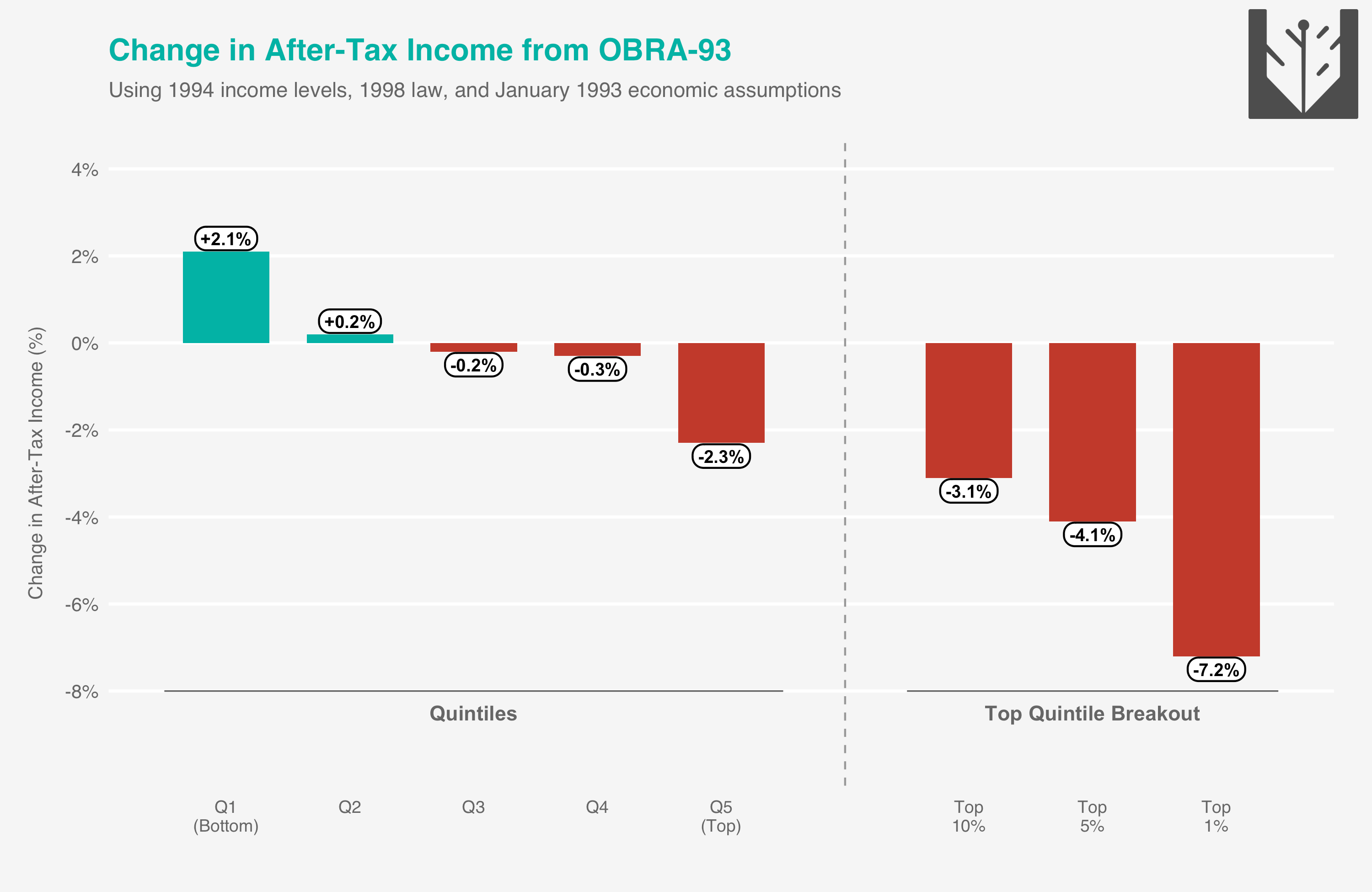
I was looking at the distributional tables for the 1993 budget reconciliation legislation that Bill Clinton signed, and it’s almost shocking how broadly he raised taxes and how favorable the overall bill was to those with lower incomes.