

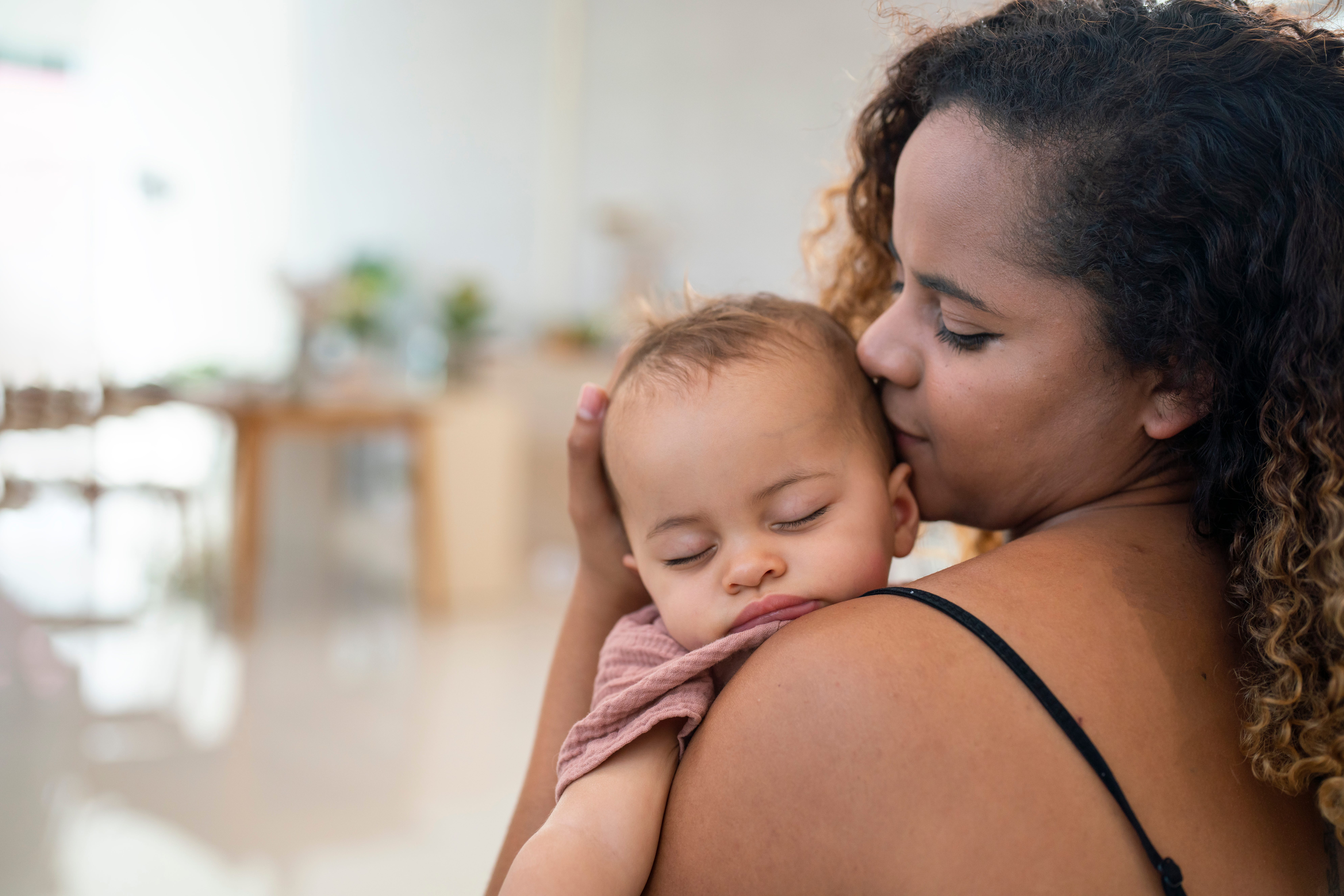
The Supreme Court will hear oral arguments this spring in what could be one of the most consequential immigration cases in decades. It will determine whether the Trump administration can end birthright citizenship for hundreds of thousands of babies born on U.S. soil each year.
The case, Barbara v. Trump, challenges President Trump’s executive order denying citizenship to children born in the United States if neither parent is a citizen or lawful permanent resident. While every court that has reviewed the policy has blocked it as unconstitutional, its legal journey has been fraught, involving a fight over nationwide injunctions, litigation pivots, and fundamental questions about the 14th Amendment.
If the administration prevails, it would do more than determine who gets citizenship going forward. It would overturn 125 years of settled precedent and fundamentally reinterpret what it means to be “subject to the jurisdiction” of the United States under the 14th Amendment.
Trump’s order
On his first day back in office, Trump signed an executive order declaring that children born in the United States do not automatically receive citizenship if their parents lack a sufficient connection to the country. The order specifically denies citizenship documents to babies born after February 19, 2025, in two scenarios:
First, if the mother is unlawfully present in the United States and the father is not a U.S. citizen or lawful permanent resident.
Second, if the mother’s presence is lawful but temporary — for example, on a tourist visa, student visa, temporary work visa, or any other nonimmigrant status — and the father is not a U.S. citizen or lawful permanent resident.
That second category affects the potential children of roughly 3 million people legally present in the United States. A baby born to two H-1B workers from India, or to a graduate student from China, would not receive U.S. citizenship under this policy.
Such babies would be denied Social Security numbers, passports, and other citizenship documentation. They could become stateless if their parents’ home countries don’t grant citizenship by descent.
Why it’s been blocked
So far, the policy has been blocked at every turn. Multiple federal district courts issued preliminary injunctions, concluding that the executive order directly contradicts the 14th Amendment, which states that “all persons born or naturalized in the United States, and subject to the jurisdiction thereof, are citizens of the United States.”
The phrase “subject to the jurisdiction thereof” is key. The Trump administration argues it means something like “complete political allegiance” or “not subject to any foreign power.” Under that interpretation, children of non-citizens wouldn’t qualify because their parents owe allegiance elsewhere.
Challengers argue this interpretation is historically wrong and functionally unworkable. The 14th Amendment was ratified in 1868 to overturn the Dred Scott decision and ensure that formerly enslaved people were citizens. The debates at the time make clear that “subject to the jurisdiction” was meant to exclude only people who have immunity from U.S. law.
But courts have consistently rejected the argument that illegal immigrants are also excluded, pointing to the Supreme Court’s 1898 decision in United States v. Wong Kim Ark. That case involved a man born in San Francisco to Chinese immigrant parents who could not become U.S. citizens under the Chinese Exclusion Act. The Supreme Court held that he was a U.S. citizen anyway because he was born on U.S. soil. The court interpreted “subject to the jurisdiction” to mean everyone except children of foreign diplomats with immunity and children of foreign soldiers during a hostile occupation — both groups that are not subject to U.S. law.
Barring those two exceptions, it has been understood for more than a century that every person born in the United States, regardless of their parents’ citizenship or immigration status, is a U.S. citizen. Now, conservative justices who claim to follow originalist methodology will have to decide whether to claim to believe the original public meaning of the 14th Amendment supports Trump’s position, or whether 125 years of settled practice should continue.
The procedural journey
When Trump’s executive order was first challenged in January 2025, multiple district courts across the country issued nationwide injunctions blocking the policy from being enforced anywhere. This is a common pattern in immigration litigation, in which plaintiffs file in friendly jurisdictions, judges issue sweeping injunctions, and the policy is blocked everywhere while appeals work their way through the courts.
But in June 2025, the Supreme Court handed down a decision in Trump v. CASA that significantly limited the power of district courts to issue nationwide injunctions. The court held that preliminary injunctions should generally be limited to providing relief only to the plaintiffs in the case, not to everyone in the country. The administration claimed this as a major victory and declared that the nationwide blocks on its birthright citizenship order were now invalid.
What happened next turned the outcome on its head. The A.C.L.U., which represented plaintiffs in one of the cases, pivoted to a class action strategy. Rather than seeking a nationwide injunction to protect everyone, the organization sought class certification to represent all babies affected by the policy. In a savvy bit of litigation strategy, they argued that if they couldn’t get a nationwide injunction, they should be able to represent a nationwide class.
A federal judge agreed and certified a nationwide class of all babies born in the United States after February 19, 2025, who would be denied citizenship under Trump’s executive order. With the class certified, the judge then issued a preliminary injunction protecting everyone affected by the policy.
The practical effect was essentially the same as a nationwide injunction, reached through a different procedural route.
So the administration’s win in the nationwide injunction case turned out to be something of a hollow victory. The policy is still blocked, and now the Supreme Court has agreed to hear the case on the merits.
What happens if Trump wins
If the Supreme Court sides with the Trump administration, accepting the administration’s interpretation of “subject to the jurisdiction thereof,” it would mean the 14th Amendment never guaranteed birthright citizenship for children of non-citizens in the first place. The practical implications would force a fundamental shift in how American society runs.
Hundreds of thousands of babies born in the United States each year would be denied citizenship. The Migration Policy Institute projects that an average of about 255,000 U.S.-born children would not have U.S. citizenship each year due to their parents’ immigration status.
Many of these children could become stateless. Not all countries grant birthright citizenship, and if neither the United States (based on birthplace) nor the parents’ home country (based on descent) recognizes the child as a citizen, the child would have no citizenship at all.
Implementation would be a nightmare. Who would be responsible for determining whether a newborn’s parents have the right immigration status? Would hospitals need to verify parents’ legal status before issuing birth certificates? Would state vital-records offices be required to collect immigration documentation?
It would create two kinds of birth certificates. Some birth certificates would prove citizenship, and others wouldn’t. This would introduce uncertainty and potential discrimination into all sorts of contexts where proof of citizenship is required.
It would change the relationship between the federal government and the states on citizenship questions. Currently, states issue birth certificates, and if you are born in a state, you are a U.S. citizen. Under the new administration, the federal government would decide who gets citizenship based on parental immigration status, potentially creating situations in which someone is recognized as a citizen in one state but not another.
Oral arguments are expected sometime this spring, with a decision likely by June or July 2026.
I wonder how many other commenters are native-born citizens who wouldn’t be so if these rules had been in effect at the time of birth. I am. Also, I really think birthright citizenship is one of the most fundamental components of America’s exceptional greatness and am not willing to cede an inch on it. In short, fuck these people.
"Some birth certificates would prove citizenship, and others wouldn’t ..."
Really important point that gets at how profoundly destabilizing this would be - and the ripple effects would call into question the citizenship of a LOT of Americans. Because if birthright citizenship didn't mean what we historically thought it meant, now you have to prove that your parents, and their parents, and THEIR parents, etc. had sufficient legal status for citizenship to be conferred by your birth in America. It ends up being a difficult problem of turtles all the way down ...
So in my own case - I'm the third generation in America on my dad's side. I have a birth certificate, but does that count? Well, only if my parents are both provably citizens or lawful residents under this new standard. And that's only true if THEIR parents are also provably citizens or lawful residents. And now that starts getting tricky - my dad's parents were both from immigrant families, who came to America in the early 1900s from what is now Lithuania and Ukraine but were at the time part of the Russian Empire. Would I be able to find enough documentation from this period to verify that they were citizens, and therefore my dad is, and therefore I am? It would be pretty hard!
I don't think it's an exaggeration to say that the Trump Administration would create a massive legal grey area here that would give them an opening to denaturalize a LOT of people who thought their citizenship was rock solid. And if you think "oh they'd never do something so extreme" I will just say that my citizenship depending on Trump and Stephen Miller showing prudent restraint and forbearance is not an ideal situation....