

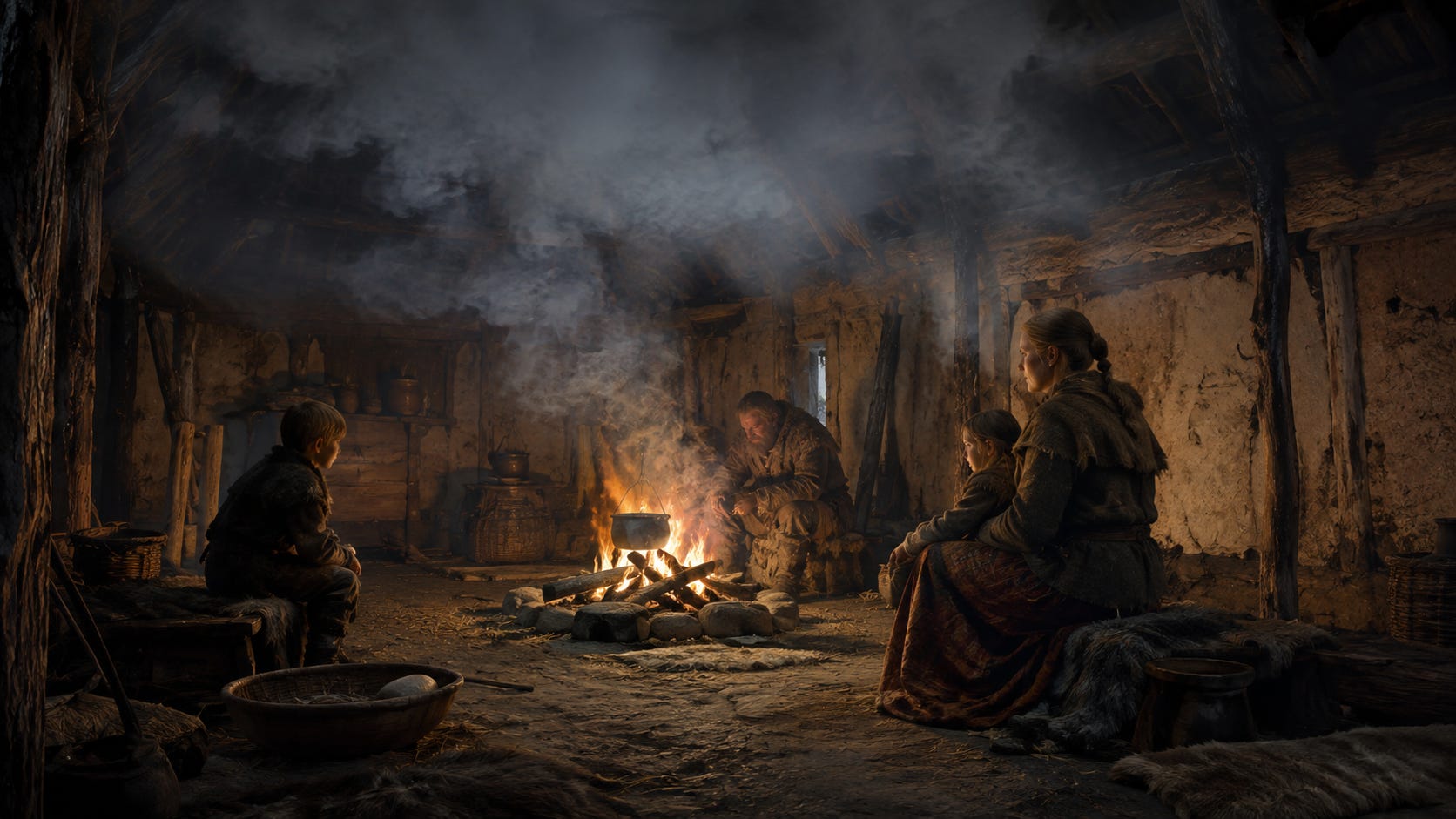
I’ve been thinking lately about the question of historical realism in dramatic depictions of the past.
And also about chimneys.
Their absence isn’t always obvious in either fictional (such as “The Odyssey”) or fantastical (such as “House of the Dragon”) depictions of ancient life, but chimneys are a more recent invention than you might think.
Scientists today believe that humans have been making fires for at least 400,000 years. The chimney, by contrast, seems to have been invented in England sometime in the 12th century and only slowly gained popularity over the course of several centuries.
Very early humans were presumably making their fires outside. But to survive winter in even temperate climates, you need a heat source inside your shelter. And in the extreme cold of the Ice Age that afflicted the world 20,000 years ago, people most certainly needed shelter.
Archeologists believe that Ice Age humans spent much of their time in natural rock shelters enhanced by deliberate attempts at insulation and that they spent summer nights in dome structures. All of these would have been heated by fire, of course, but that just meant open hearths in the middle of the dome or cave — essentially a campfire, but inside.
And that was the basic state of home heat for many thousands of years.
People understood that you needed some kind of hole in the ceiling or everyone would suffocate and die. But the upshot is still that people were breathing absolutely filthy air all winter long — something you rarely see depicted on screen because it would be ugly and depressing.
And even though this is long gone as a mainstream concern in developed countries, indoor air pollution from open fires continues to be a major problem facing the global poor.
Cooking as a health hazard
Literally millions of people die every year due to respiratory and pulmonary problems caused by inhaling smoke indoors.