

Half a million K-8 public-school students in New York City will be banned from using generative artificial intelligence this school year, Mayor Zohran Mamdani announced on Wednesday. Meanwhile, students at Arizona State University will spend the year completing A.I.-driven job-integrated coursework after the university’s vice provost for academic innovation reasoned that “work must live inside the curriculum, not at the end of it.” Williams College, an elite, private liberal-arts college in Massachusetts, has outlined that while A.I. can be useful in some contexts, it should not be used by students unless instructors provide explicit permission.
As rapidly developing generative A.I. technology throws the future of education into tumult, leaders at every level of student oversight are considering how to mitigate chaos and preserve the value of education. These approaches — Mamdani’s for N.Y.C. public-school students, A.S.U.’s for university students, and Williams’s for liberal-arts college students — respond to identical technology differently.
Even as these three institutions go in different directions, each is plausibly making the choice most appropriate for their own specific value proposition.
A.I. shrinks the gap that has historically separated students who learned from students who appeared to learn — the students whose work was traceable proof of their struggle to complete it versus the ones who found shortcuts to produce their end result. With the disappearance of that friction via tools that can do the difficult work adequately, educational leaders at every level are forced to reconsider and reckon with what exactly their institutions’ purpose is and with whether A.I. makes that proposition more valuable or undermines it entirely.
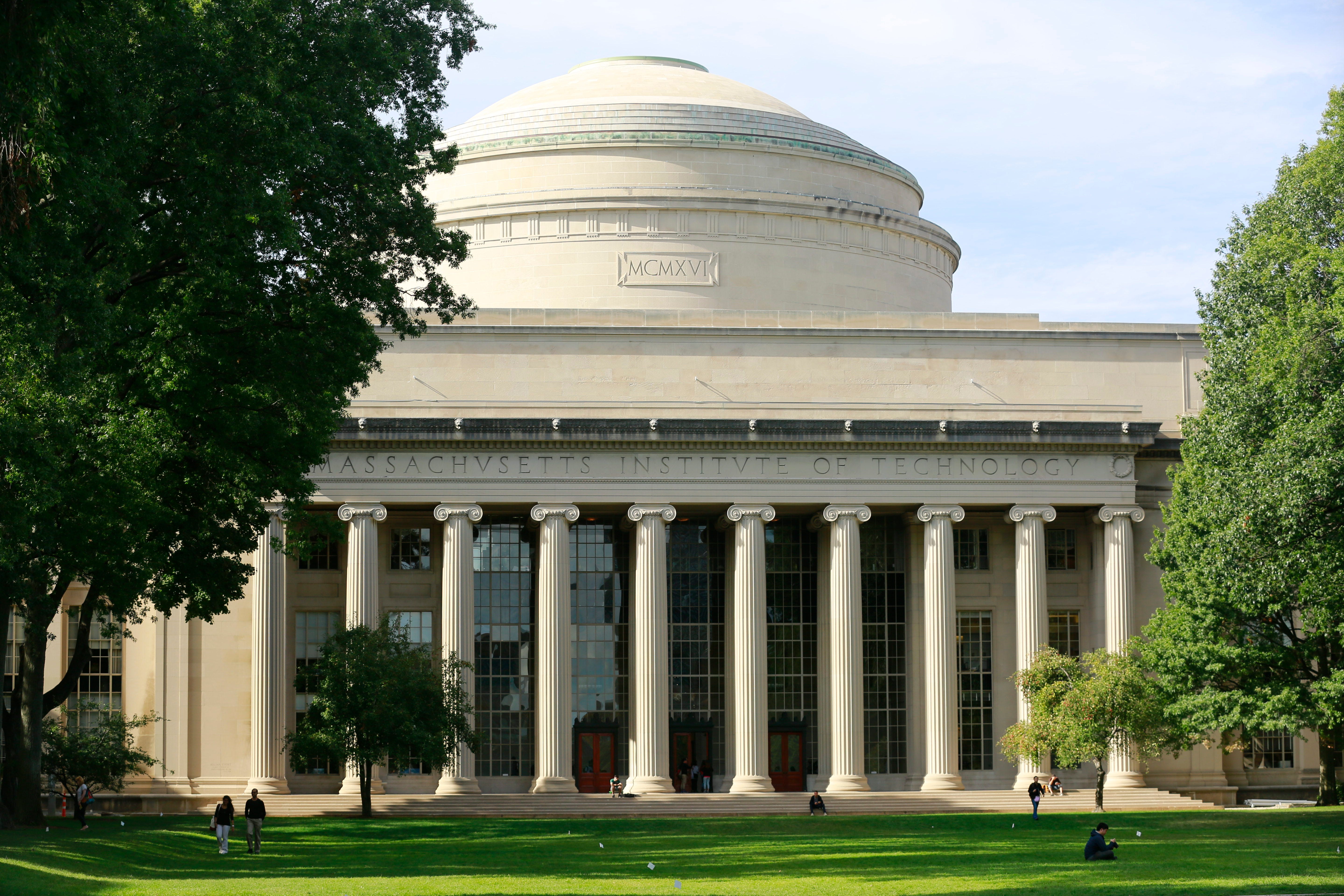
Last month, the Massachusetts Institute of Technology published its committee report on “A.I. use in teaching, learning, and research training,” which is arguably the most exhaustive institutional self-examination on the subject to this point. M.I.T., a leader in both A.I. development and use, has produced a master key that, far beyond acting as a single elite institution’s one-size-fits-all prescription for all educators, is a thorough accounting of every value an educational institution could be organized around and the ways A.I.’s integration can advance or undermine the stated goal.
A.I. is not creating new purposes for institutions or for education on the whole. Instead, A.I. is forcing every institution at every level of education to confront the question of what its purpose actually is.
The breaking point
Before 2022, which, with the release of ChatGPT, is the year M.I.T. pinpoints as the birth of generative A.I., an institution’s purpose could be implicit, avoiding much scrutiny. Lectures, problem sets, and exams all served multiple purposes, such as transmitting content, building discipline, developing judgment, performing effort, and producing a grade.
Generative A.I. explodes that bundle of purposes. Students can produce passable assignments — essays, proofs, pieces of code — without actually doing the assignment and certainly without fulfilling the assignment’s theoretical purpose. In other words, it is now possible for students to produce a product without learning. Today, educators are forced to answer not whether students should use A.I., but what the point of this assignment — this education — is and whether A.I. helps or negates that purpose.
M.I.T.’s report calls this question “backward design.” Educators, the university argues, ought to start with a clear view of what they want students to know or become and then work out whether A.I. supports or undermines that goal.
The report is useful for educators across the spectrum (from elementary school through graduate school) as a reference frame for thinking through the issue of A.I. in education because M.I.T. is not a single kind of institution. It combines several major functions of higher education within a single university. Like other elite private schools, it is a residential college built around mentorship and the campus experience. But it is also a pre-professional training ground where students learn hard skills. It is a research university whose apprenticeship model is meant to produce future generations of researchers, and it is, not incidentally, a leader in both building and assessing the technology in question.
M.I.T. has the task of evaluating how to preserve several competing value systems at once. The report’s eight guiding principles — humility, boldness, centering humanity, leaning into learning, teaching with intentionality, rejecting a one-size-fits-all approach, “augmentation not automation,” and thinking beyond the classroom and the campus — are broad enough to map onto educational institutions across a wide spectrum of purposes, such as professional preparation or community. Other institutions do not have to approach their valuation as holistically, as their choices can be read as narrower applications of M.I.T.’s report. They are special cases under the umbrella of purposes that M.I.T. defines.
The special cases
Public K-12 systems are designed to produce in students the basic cognitive capacity to read, think, reason, and work through problems independently. That purpose is the exact thing that unsupervised A.I. use is best at overriding in a young person’s development. It takes away the struggle necessary to grow both intelligence and confidence. New York City’s response, then, is an attempt to preserve the identified purpose of a child’s foundational education.
It is also why this restrictive approach to A.I. is totally different from M.I.T.’s nuanced, course-by-course philosophy. But the N.Y.C. approach still answers the underlying question about purpose in the way that M.I.T. would if it taught eight-year-olds: One of the university’s guiding principles, “leaning into learning,” asserts that “the process of education is necessarily a productive struggle and that the most important product of [students’] education is not a G.P.A. or a diploma but themselves: their personal growth and intellectual maturity and the development of their own imagination, insight, and judgment.” For a child, developing the ability to struggle productively is the entire point of school, making A.I., by M.I.T.’s estimate, a threat to the purpose.
Community college and vocational programs sit at the opposite end of the A.I.-use spectrum from K-8 education. Their credentials are meant to certify competency in a particular occupation, likely one that itself will be transformed by technology. Miami Dade College, which is primarily a two-year public community college that awards associate degrees and technical credentials, offers a slate of A.I. certificates, including AI Awareness, AI Practitioner, and a B.S. in Applied Artificial Intelligence. Maricopa Community Colleges offers a B.S. in Artificial Intelligence and Machine Learning “designed to prepare you for a career in the booming industry of A.I.”
These colleges are not approaching A.I. through a prioritization of the “productive struggle” of learning. They are valuing the skill of A.I. fluency as necessary to prepare for a postgraduate career, which is the very point of this kind of institution. Enrollment data shows that students are pursuing their coursework accordingly, as majors in engineering, mechanics, and health care are rising while computer science enrollment declines. This approach maps onto M.I.T.’s framework through its focus on practical application and its total disregard of everything to do with residential experience or research apprenticeship.
Large public universities occupy a position similar to M.I.T.’s: Their broad curricula and varied student experiences combine elements of liberal-arts education and career preparation. Arizona State’s push toward A.I.-integrated, work-based curriculum is functionally similar to M.I.T.’s recommendation to expand experimental and project-based learning. Both schools want A.I. to enable students to be more ambitious in their work by cutting out the need to learn foundational technical skills that A.I. is good at, allowing students to focus instead on high-level experimentation and real-world application that would previously have been impossible within an undergraduate schedule.
The framing by each school, though, is different: A.S.U.’s is an almost entirely economic reaction to data that shows college-educated young adults are facing high rates of unemployment, while M.I.T.’s frame is human flourishing and intellectual maturity, with employability — while important — secondary.
At what point is the attempt moot?
It would be so simple if this whole issue could be solved by institutions optimizing their approaches to A.I. policy around whatever they determine they are selling. But each of the many versions of education requires its own approach. While a student working in an engineering lab at M.I.T. probably should use A.I. to expand the possibilities of their studies and contributions to the world, my time as an English major at a liberal-arts college might have been utterly useless if A.I. had been a part of it. A former professor of mine has the same view, and she is approaching her course on writers Herman Melville and Nathaniel Hawthorne by making all assignments handwritten, focusing less on the output and more on process. My sister, a community-college history professor, is allowing her students to use A.I. but requires them to be transparent about their use. She is not giving quizzes or tests and is more heavily weighting their in-class conversations and primary-source analysis.
I write this with some feeling of hope that A.I. will make schools confront the mess that education has become, especially in the wake of Covid, as students report higher rates of dissatisfaction and isolation. M.I.T.’s report writes that A.I. “is imposing new pressures on a community still working to restore the foundational habits and attitudes that residential education depends on … A.I. could accelerate this erosion. Or it could be the impetus for a deliberate rebuilding.”
If all schools, especially higher education institutions, followed M.I.T.’s prescription to identify their own purposes and design their A.I. policies accordingly, the outcome could be a clear distinction between the kinds of schools that value productive struggle — where those who want to philosophize can go to think and read and discuss — and those that are designed to prepare students for tangible jobs in an evolving workforce. But none of this discussion of A.I. education policy arrives in a vacuum. I imagine that A.I. technology is accelerating more quickly than schools will be able to reach a stable equilibrium. As M.I.T.’s report acknowledges, “A.I. is progressing across almost every domain and on a timescale too compressed for society to properly observe and analyze its impacts and then gradually adapt.”
But insofar as the immediate issue is how institutions should approach A.I. in education, this moment begs a welcome re-evaluation of purpose for institutions at every level.
Weekend letter of recommendation:
I’ve been recommended the crime thriller TV series “Furious” no less than three times this week. I may begin that soon.
I finally got around to finishing the book “Circe” by Madeline Miller, which I thought was excellent.
Last weekend I saw “Teenage Sex and Death at Camp Miasma.” It was a strange movie, no doubt, but I thought that both Hannah Einbinder and Gillian Anderson were great, and the meta-slasher concept was fun.
Please join us at our D.C. Slow Boring happy hour on Wednesday, September 9 at 6 p.m. at Barrel House.
Because I work in higher education and am also presently pursuing a master's degree, I find the topic of integrating AI into the experience to be fascinating. The key point is: the generative AI genie is out of the lamp and, as the story of Aladdin (or, to cite another story, the Monkey's Paw) teaches us, one must be careful what one wishes for. The same is even more true for AI.
As an administrator, I find ChatGPT useful for mundane tasks such as writing emails I don't want to waste time on and preparing rough drafts of executive summaries for proposals I want to pitch to higher-ups. As a student, I find ChatGPT useful as a research assistant. I tell it to find me five open source articles on the "hidden curriculum," for example; it does that, I read and compare them, and then integrate the ones I want to use into my writing. It's also decent at formatting bibliographic citations, but I advise always checking its work.
Critically, generative AI is going to change the nature of assessment in education, and that is in my estimate a desirable thing. Any student can use ChatGPT to write a decent paper, but the paper itself, while an output of learning, is not evidentiary of it. The ability to explain the output—how it was generated, what it means, and why it matters—is what matters most. ChatGPT cannot help you at a dissertation or thesis defense, oral comprehensive examination, or classroom presentation. You have to know your stuff, and while the machine can assist you to do that, it cannot know your stuff for you.
I remember when DeBlasio ended the cell phone ban in NYC schools and touted it as proof that government is responsive to the needs of parents and citizens. Parents wanted phones in schools and he delivered. That’s the difficulty, I think, with this kind of reflexively service-oriented style of governance.
Yeah, it’s great that someone made a TikTok, tagged Mamdani, and that got a pothole filled in the same day. That’s clearly popular and is one reason Mamdani has become such a beloved figure so quickly. But at some point the urge to immediately respond to popular demands requires making large policy decisions with uncertain outcomes. Parents wanted phones in schools, got them, and nobody liked how that turned out. Responsive government made a bad call and probably harmed kids’ education for a decade.
It’s in vogue to hate on AI, data centers, EdTech, etc. I get it! I have a deep skepticism of EdTech because it consistently failed to deliver. That doesn’t entail wholesale rejection of the industry so much as a need for better models of design and delivery. Bans don’t get us there. Bans don’t allow us to research the best ways to deploy AI in the classroom. People want bans right now but as time goes on is that the policy that will actually get us somewhere productive? Reacting to what’s popular right now, which seems to be what Mamdani is doing here, may prove counterproductive. That said, it’s only a year and it’s for younger kids which seems like the right call. Who knows? I have my doubts on both ends of this continuum.