

Of all the takes on the rising clout of Democratic Socialists of America candidates in many American cities, the one that I most strongly disagree with comes not from the D.S.A. camp itself but from Josh Marshall, who responded to the party’s recent primary victories with the quip that “‘centrists,’ this is on you.”
I was prepared to agree after reading the headline.
Because I do think the sharp leftward swerve is in some sense very much the Democratic Party establishment reaping what it sowed by losing in 2024. The Biden administration alienated a lot of voters by governing far to the left on domestic issues and, while Kamala Harris did turn things around from her dire starting position, it was unwise of Democrats to pick a candidate so closely associated with Joe Biden and doubly unwise of that candidate to do so little to distance herself from Biden on any domestic issues. A repeated pattern in American politics is that when a party loses by being too extreme, their initial reaction is to become even more extreme. Democrats ought to move to the center in 2028, but they probably won’t and that’s bad.
But that’s not Marshall’s argument.
Instead, he’s arguing that the center is getting what it deserves for being insufficiently committed to the fight against Donald Trump and MAGA. And I think that this is wrong.
Rather, it’s the hard left that is taking advantage of the Democratic Party’s current weakened state to advance all-out factional warfare as their top priority, above fighting Trump. Every dollar spent and every volunteer hour consumed in the battle to replace Adriano Espaillat with Darializa Avila Chevalier is money and time not spent trying to defeat Republicans in G.O.P.-held seats in the suburbs.
Left-factionalists have made a clear choice: Winning primaries in safe blue states is an incredibly high priority for them, worthy of diverting resources away from defending frontline seats or trying to beat G.O.P. incumbents.
And note that the people they’re challenging are not particularly milquetoast moderates. They’re challenging progressive Democrats who give no quarter to Trump but who have a significant policy disagreement with the D.S.A. about Israel and who (perhaps most of all) are not part of the D.S.A.
A party is certainly allowed to have priorities other than beating Trump and MAGA and securing American democracy, but it’s ridiculous for people like Marshall, whose priority is beating Trump, to become apologists for it. Which is just to say, by all means, you should endorse the expenditure of time and attention and resources needed to fight safe-seat primary battles against incumbents who are way too left-wing to win races in Iowa and Texas and Ohio if you actually agree with the candidates challenging them. But if your focus is on beating Trump, then admit to yourself that you hold an uncool and somewhat unfashionable set of political priorities and simply disagree with the hottest youth movement in America. Don’t run cover for people who have a different worldview from yours and hope for the best.
Do you want to fight or do you want to win?
In the TV show “Andor” — the best recent art about politics — Diego Luna as the lead character observes, “We’re in a war. You wanna fight, or do you wanna win?”
And I think that this is a question I am constantly asking my “Politix” Co-Host Brian Beutler to look into his heart and ponder. Because for the last few years, it really seems to me that for many Democrats, the answer is that they want to fight.
Or, rather, that politics is primarily expressive behavior and their priority in politics is expressing their strong dislike of Donald Trump.
That’s understandable. The United States of America is a nation of individualists. We are also a wealthy society in which most people are living very far from subsistence levels. Most American college graduates, in particular, enjoy a level of material comfort that is inconceivable to most people around the world or throughout human history. Most of us choose jobs and careers that give us not just money but also a sense of self-actualization and value. Politics is becoming more post-material in almost every affluent country.
The United States is unusual, though, in maintaining a strong two-party system. You’re seeing fragmentation in lots of foreign countries, where voters increasingly prioritize the idea of voting for a political party that they feel really speaks for them rather than one that tries to speak for the median voter even if the ultimate outcome is just going to be a coalition deal.
I don’t want to claim to be above expressive politics. I really love Green Day, and I think there’s something exhilarating about being in a crowd of people chanting, “no Trump, no K.K.K., no fascist U.S.A.”
Wouldn’t it feel awesome if I could watch a politician who I feel as good about as I feel about Green Day? A speech that gave me the vibes of a great concert. That would be awesome.
But I have to temper myself and remember that Mary Peltola, James Talarico, Josh Turek, Sherrod Brown, and Roy Cooper have a weighty responsibility on their shoulders. They need to persuade voters in Trump / Trump / Trump states to vote blue in 2026 so Democrats can hold a majority in the Senate.
“You voted for Trump because of legitimate concerns about Biden’s failures on immigration and inflation, and I hear and acknowledge those concerns, but Trump has betrayed his affordability promises and I can help” is a plausible message for winning over disillusioned Trump voters. “You and the majority of your friends and family voted for a racist, K.K.K.-like fascist movement and now you need to repent” is really not. What’s more, Green Day borrowed the slogan from a more obscure punk band called MDC, an acronym whose meaning has changed over the years but has often stood for Millions of Dead Cops, which is not a great electoral message.
It’s fun for Graham Platner to campaign with the Dropkick Murphys, but that’s just another way of saying that expressive politics in blue states is more fun than winning over swing voters. Meanwhile, it turns out that the unfun people wringing their hands about his bad judgement were on to something important. I get why the deeply idiosyncratic people who believe that the benefits of living in New York City exceed the financial costs find it more joyful to participate in Zohran Mamdani’s campaign against Andrew Cuomo than to care about Cait Conley beating an incumbent Republican in the suburbs.
But it drives me crazy when I see professional political operatives, staffers, and media personalities who happen to be college-educated urbanites treating things like “excitement” and “attention” as if they are wholly exogenous rather than things influential people construct.
If you work in these fields and are choosing to be more excited about and pay more attention to politicians who appeal to your social peers than to politicians who appeal to the older, less-credentialed, and dramatically less-urbanized population of swing voters, then that is a decision you are making about what’s important in American life today.
I think that defeating the MAGA movement is important. I also think that providing health insurance to low-income people by winning power in red states and expanding Medicaid is important. So even though Cooper and Andy Beshear and John Bel Edwards in some sense do not speak directly to my personal tastes, I choose in my capacity as a professional political pundit to treat their work as important and interesting and exciting. Because it is important, and because if you can’t find it within yourself to be excited by and interested in the people doing important work, then I don’t understand why you’re in these fields at all.
Know when to walk away and know when to run
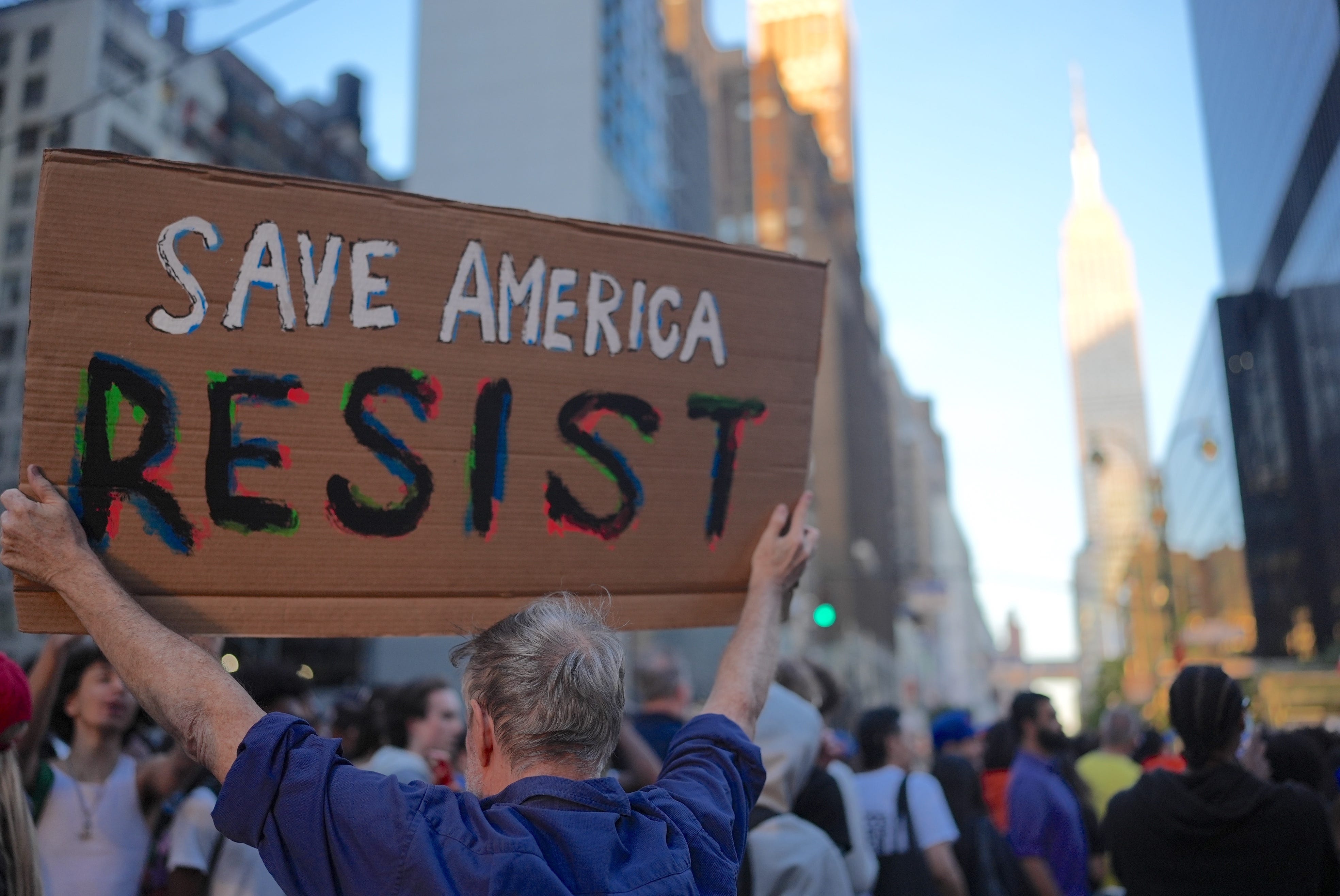
Progressive candidates waging factional battles in safe-seat primaries have defined themselves as the true heroes of the Resistance by the sleight of hand of engaging in maximalist anti-Trump position-taking.
For example, Trump has done bad, cruel things on immigration policy. Democrats should (and largely do) oppose that. But leftists argue that the way to maximally oppose Trump on immigration is to refuse to own up to any problems with Biden-era admissions, say that we should “abolish ICE,” or perhaps agree with Avila Chevalier that “all deportations are wrong.”
Brad Lander recently won a primary against an incumbent House Democrat in Manhattan. By my lights, whatever the substantive differences between Lander and Dan Goldman, the whole idea of spending time and money and resources on something like that is very different from spending time and money and resources on fighting Trump. But Lander’s argument was that the primary was in fact part of a larger battle between “fighters and folders.” That’s a clever way of getting normal resistance-oriented Democrats to ignore the fact that Lander’s whole campaign was a diversion of resources away from anti-Trump politics and into ideological rigorism.
Because, by definition, if you are dogmatically left-wing, you will be opposed to anything Trump proposes even if it’s extremely popular or makes sense on the merits.
I used to play regularly in a friendly poker game, and I was never very good at it. The reason is that I’d get bored and play way too many hands. I was aware that this was bad strategy and would sporadically resolve to do better, but after a beer or two I’d be feeling loose and happy. My discipline would collapse and I’d be playing expressive poker rather than smart poker.
Which is just to say that if you’re trying to win then, as the song says, “You got to know when to hold ’em and know when to fold ’em.”
From my perspective as someone who wants to win, the big problem with establishment Democrats is that they’re not folding enough hands. When you insist on fighting Trump on questions like who should play on women’s sports teams or whether you should need an ID to vote, you are not playing to win. It’s the establishment that owns that mistake, not the left, but the left does keep them pinned down by demanding even more losing fights on questions like ICE. From the left’s viewpoint, this is at least rational because they are sincerely not focused on beating Republicans — that’s why they’re pouring so much energy into beating Democratic incumbents in primaries. And they are enabled in this internecine extravagance and waste by resistance-minded people like Marshall who prioritize “fighting” over playing to win.
1) most people have a shockingly low belief in their ability to change things, seeing themselves as victims of circumstances. Think the term is agency. This may be an alien concept to many slow boring readers, but that seems like the human default these days.
2) this is compounded by the elite overproduction thing, which once you see you cannot unsee. Most people would rather jockey for status within group as opposed to being the agents of change they want to see.
I think those two things explain most of the infuriating behavior that Matt writes about.
Yes, “you can just do things”. But deep down, most people don’t believe they can, so look to the next best way to win the status game.
I wish the Socialists would have started their own party rather than trying to take over the Democratic Party. We may look back at the decision to welcome Bernie into the caucus even though he ran as an independent as a poor choice. Fox, hen house, etc...