

Jonathan Last at The Bulwark published three good posts last week, all of which I recommend. One asks “What if it’s already too late?”, one has the thesis “Is Trump getting weaker, or is the authoritarian danger increasing? Yes.”, and one examines Trump’s success in getting larger swathes of the media into the hands of regime-aligned oligarchs.
Last’s articles offer something of a counterpoint to takes I’ve seen elsewhere about the apparent lame-duckification of Trump.
And I’m sharing this now to set the table for what seems like the biggest, most obvious, most under-discussed known unknown of the Trump era: What happens in 2028 when Trump is, in fact, a lame duck?
One possibility, of course, is that he attempts to run again. I don’t want to be one of these “he’s never leaving” alarmists, but I do think it’s important to remember the lessons of Stop the Steal, January 6, and his pardoning of the rioters: This is genuinely not someone who respects the rule of law or constitutional government.
Across the history of Latin America, it’s common for constitutions to count on term limits as a bulwark against authoritarianism and then for autocratically minded leaders to subvert those term limits. Critics of El Salvador’s Nayib Bukele have often treated his anti-crime policies as inextricably linked to the authoritarian aspects of his rule — something many of his supporters are also happy to do in order to rationalize the authoritarianism. But the actual authoritarian thing Bukele did was purge the Supreme Court, after which the Court allowed him to run for re-election in contravention of the plain text of the Constitution. In a well-functioning democracy, he would have passed the torch to a successor figure who simply pledged to continue his successful anti-crime policies.
That’s hardly unique to El Salvador; it’s a common failure mode of Western Hemisphere presidentialism. I would put the odds of it happening here at below 50 percent but likely enough (10 percent perhaps?) to be worth taking seriously.
One reason I take it seriously as a possibility is that even though there are plenty of cracks and fissures in MAGA, they aren’t really cracks or fissures about Donald Trump.
Bari Weiss and Tucker Carlson, for example, are currently engaged in a ferocious discourse war. Lots of House Republicans are complaining about Mike Johnson. There’s apparently significant tension between Kristi Noem and Tom Homan. I see a decent number of conservative voices who are critical of “big tech” and the AI industry.
But none of these people are criticizing Donald Trump.
It’s all undertaken on the basis of good czar / bad boyars, with the unstated premise being that the point of these arguments is to persuade Trump to change course. That’s because Trump remains quite strong within his own political coalition, surrounded by something of a personality cult. This dynamic is not unique to Trump, but it certainly differentiates him from the last three Democratic Party nominees and in his case it’s unusually strong. This cult not only protects him from what would be crippling scandals for other politicians; it also gives him a lot of tactical and strategic flexibility that helps Republicans win elections.
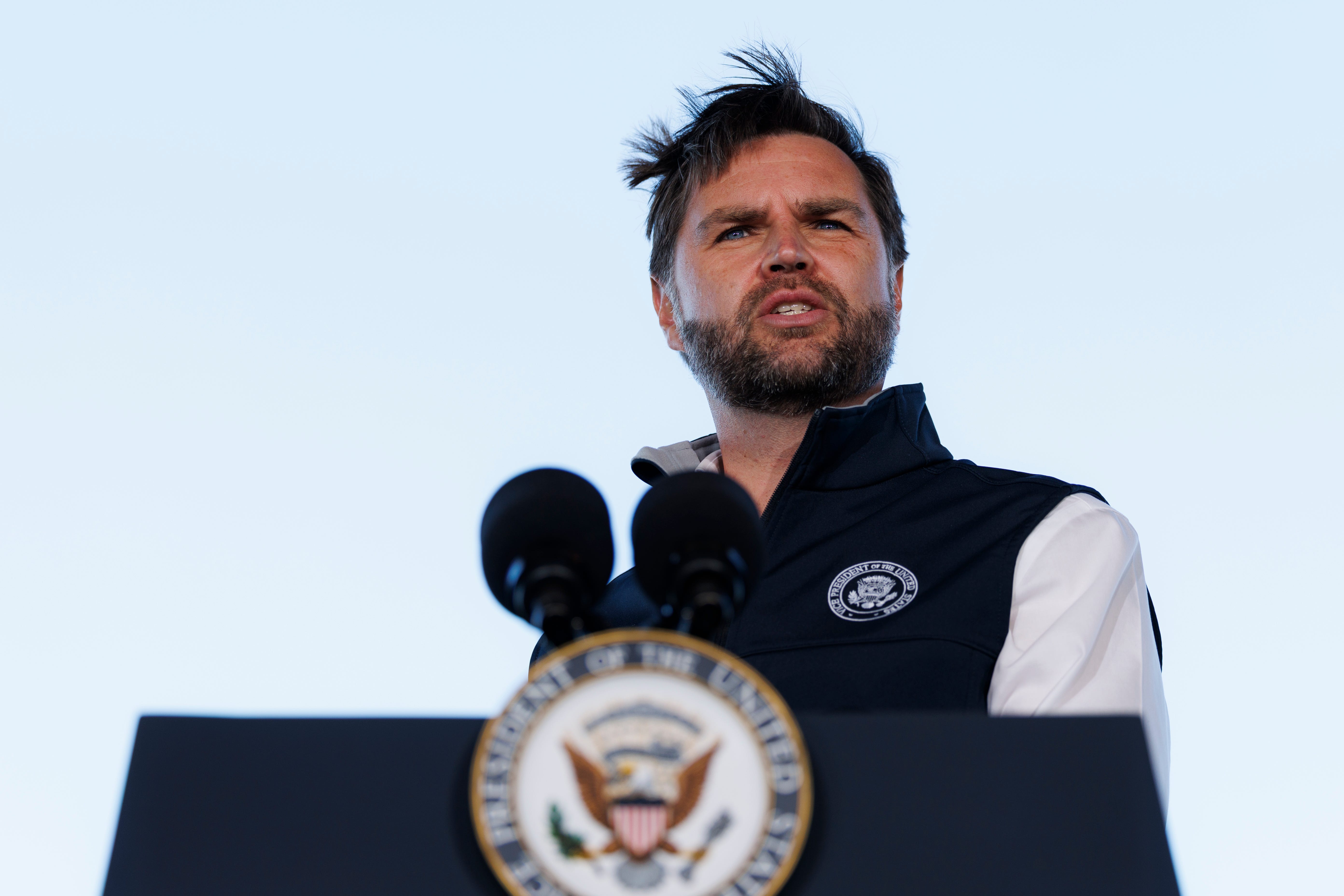
And a major question going forward is whether that cult of personality can be transferred to JD Vance, or some other successor figure. Or will 2028 end up being a more “normal” open primary in which conservative interest groups contend for power and influence?
Weak leaders, strong groups
The recent figure I think is most comparable to Trump is Barack Obama. Like Trump, Obama has a compelling stage presence and also did well with voters who don’t consume the news and aren’t especially engaged with or interested in politics. A charismatic leader who is also well-liked by the most fickle group of voters is a powerful asset for a political party and, in principle, everyone wants to find good leaders like that.
But strong leaders are also a danger to the party’s interest group coalitions.