

Most of us don’t think much about Memorial Day as anything other than the unofficial beginning of summer, but the holiday originates in a commemoration of the Union war dead in the wake of the Civil War.
“Decoration Day” commemorations — when communities would come together to decorate the graves of fallen soldiers — began as a somewhat grassroots movement almost immediately after the war.
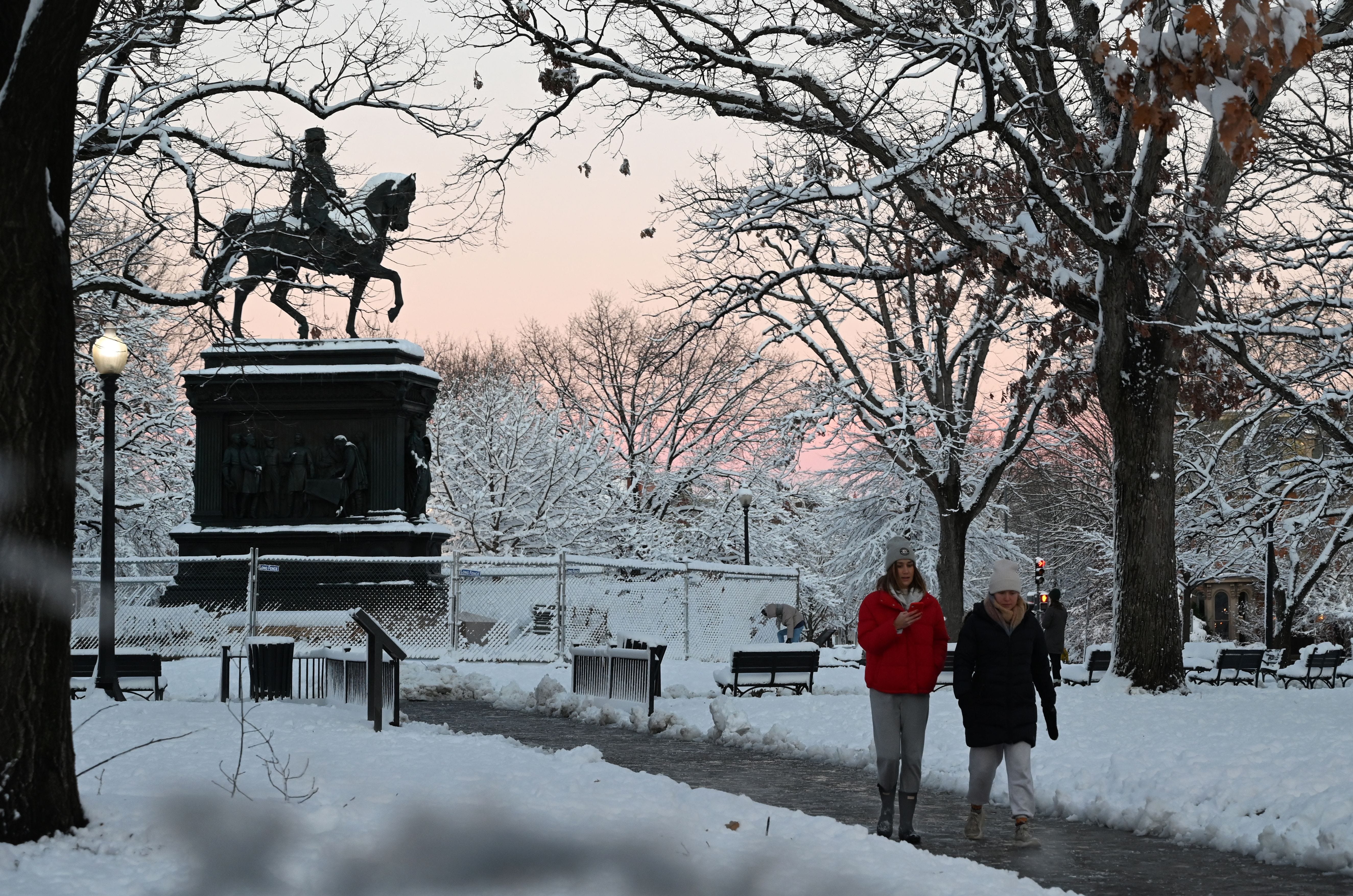
But in writing my earlier post calling for the erection of more statues in American cities, I learned that a key figure in creating a national movement for an official Decoration Day was John Logan, a now-obscure Civil War general who happens to have a giant equestrian statue near my house.
Logan was a pro-war Democratic member of Congress who became a colonel at the start of the war and was swiftly elevated to general as the Union armies grew. The Lincoln administration was plagued by “political generals” of this type who were generally incompetent as battlefield leaders. Logan was far from the finest general in the Union Army, but he stood head and shoulders above most of the politicals and became a reliable commander under Ulysses Grant and later William Sherman in the western theater. His troops were the first to enter Vicksburg, and he commanded the Army of the Tennessee during the Battle of Atlanta.
After the war, he re-entered electoral politics, this time as a Radical Republican — becoming one of the House prosecutors of Andrew Johnson during his impeachment trial. He later became a senator and was the Republican nominee for vice president in 1884.
He also led the Grand Army of the Republic, a leading Union veterans’ organization and essentially an adjunct of the Republican Party. It was in his capacity as the GAR’s “commander in chief” that he led the charge for Decoration Day.
Logan was a big deal during the Gilded Age, which is why there are neighborhoods named after him in Chicago and D.C. and San Diego, plus Logan counties in Oklahoma, Colorado, North Dakota, and other states. He faded into obscurity because there was a historical reinterpretation of people like him who were advocates for African Americans’ voting rights as cynical partisans and apologists for corruption. More recently, of course, people have been re-rethinking this approach to history and taking the Radicals more seriously and seeing the failure of the Reconstruction project as a major tragedy.
Frederick Douglass said “of John A. Logan it is only needed to say that he was the dread of traitors, the defender of loyal soldiers, and the true friend of the newly made citizens of the Republic.”
I hope everyone has fun at their barbecues, and also takes a minute to remember both the history of the day and the history of the people behind it.
Around 1990 I went to work for an engineering firm that had started in construction testing and branched into environmental assessment. This was in NC.
Memorial Day was not a company holiday at the time, but the office manager made sure we had a nice company provided picnic lunch in observance.
And so I learned Memorial Day was a Northern holiday and there was still contention over it's observance. Within a couple of years it did become a paid day off.
The last Monday in May is a traditional holiday in England too (English and Scottish public holidays are very different because of the religious divide between Anglican and Presbyterian).
It was originally the day following Whit Sunday (ie Pentecost), seven weeks after Easter, but was fixed as the last Monday in May in 1972. The shared date with Memorial Day is purely coincidental.
Very few perceive it as a religious observance (Christians who observe Whitsun do so on the Easter-related date) and it's origins are mostly forgotten.
It's main significance is as the beginning of Summer (which the present heatwave here is emphasising) and also as the start of the end-of-(high)-school examinations season, with GCSEs and A levels generally starting tomorrow.
A typical GCSE student (at the end of Year 11, ie 10th Grade) may take 25-30 exams, typically around two to two and a half hours, while an A level student Y13 / 12th Grade) will take fewer, perhaps 10, but they will be three hours each. These will be long hard weeks of work sitting in uncooled sports halls, answering challenging questions on which university entry will depend. For most educated English people these are an experience burned deep into the psyche.