


We typically run a Mailbag post on Fridays with answers to questions from our paid subscribers. Just like last week, that’s still coming — it’ll be in your inboxes tomorrow morning. But today I wanted to break from our normal schedule to talk about the British state pension system.
As I wrote in January, there is a pattern in American politics where per capita benefits for elderly people have gotten consistently more generous in the 21st century even as the ratio of retired people to working-age people has risen.
This keeps happening because it’s evidently what the voters want. Making public policy more generous to senior citizens enjoys both broad support among the mass public and it’s something that elites in the two parties find acceptable even if neither side is particularly enthusiastic about it. But what makes it a dark pattern in my view is that voters seem incredibly grumpy about the results.
Nobody’s saying things have been going great in America over the past quarter century.
Instead, the right is obsessed with the idea that mysterious forces of fraud have run off with all the money, while the left has convinced itself that billionaires aren’t paying any taxes.
But it’s not some huge secret why it seems like the government keeps spending and spending without us getting any amazing new public services — it’s transfers to the elderly.
This is, as best I can tell, a fully international problem. And maybe the most severe version of it is happening in the United Kingdom, where both of the country’s long-dominant political parties are collapsing in the face of mass voter outrage at the status quo.
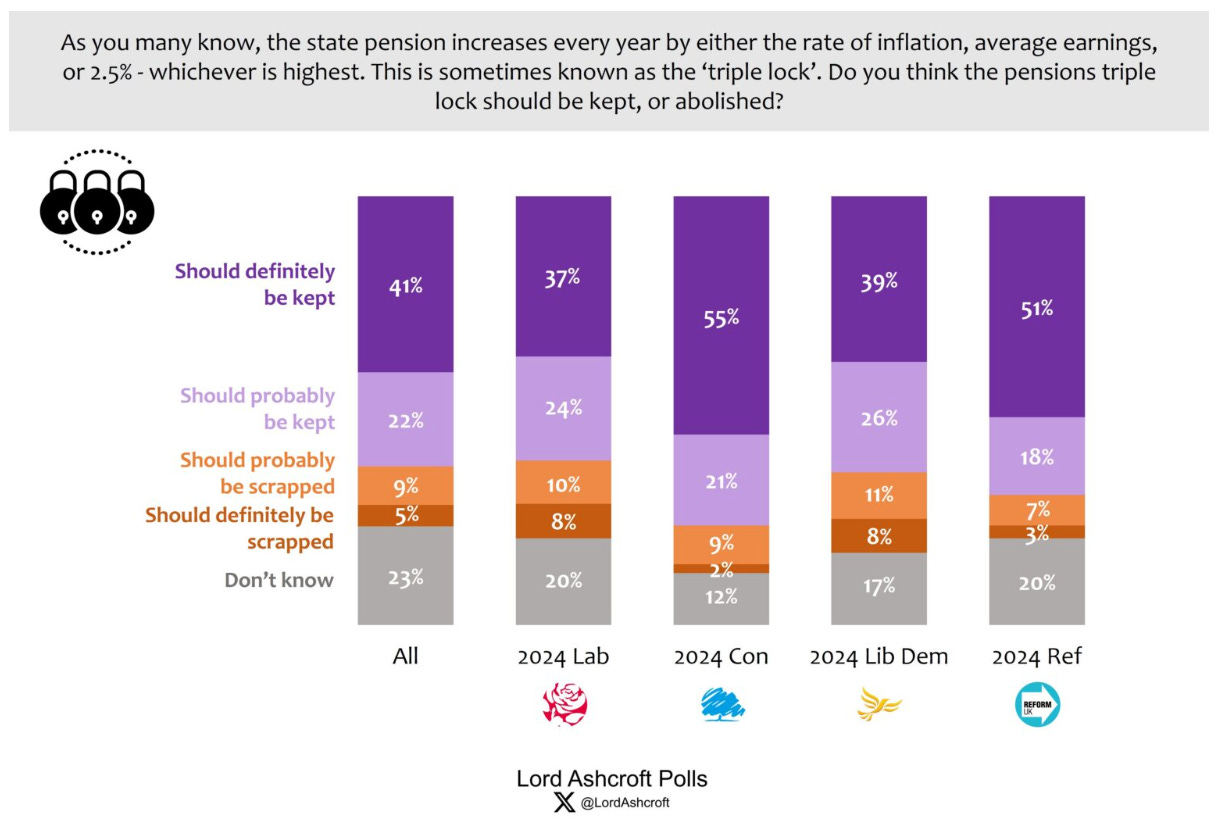
Yet one thing voters there do not seem outraged by is a truly demonic piece of public policy: a “triple lock” on pensions that guarantees that no matter what happens, old-age pensions will always grow faster than wages. This policy essentially guarantees every sector of the U.K. economy that isn’t pensions for the elderly will be squeezed automatically every single year. This policy seems completely untenable to me and I don’t understand how any British government could possibly succeed against this backdrop. And it’s also wildly popular with the electoral base of all the parties.
At the risk of tanking the business by writing about something that isn’t in the news, or particularly exciting, or related to American politics, I am sort of obsessed with this.
In part because it’s an example of a dynamic that is implicit in the American political and policy framework being made extremely explicit in a way that makes it a lot easier to explain exactly what the problem is.
But also because it underscores the reality that actually governing a country is a lot harder than having bullshit debates about messaging and electoral strategy. It’s easy to say you win more votes if you take popular positions on highly salient, easy-to-understand issues. What’s hard is to know what to do when the public’s sincere views on a complicated technical policy issue are leading to outcomes they hate.