

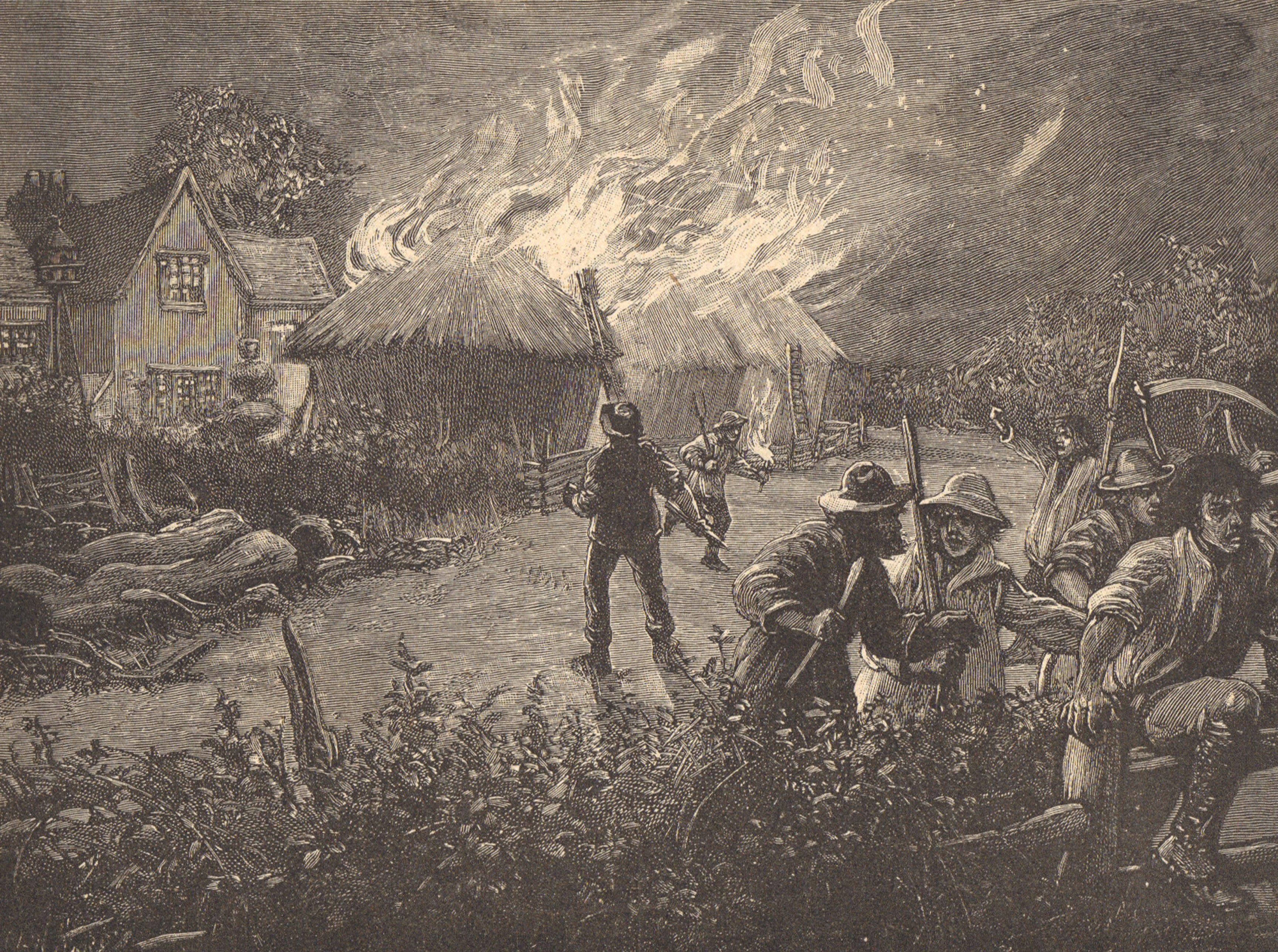
If there’s one thing that everyone knows about human history, it’s that new technology always generates fear and anxiety but, after the initial disruption, it always turns out for the best.
It’s easy to muster some amount of human sympathy for the skilled artisans who became the machine-smashers of the Luddite movement. But the fact is that we all ended up better off for the use of productivity-enhancing technology. And that’s life! People lose jobs and face displacement as a result of innovation but, on average, it leaves people better off. And over the long term, everyone benefits from technology and progress.
Of course, when I say everyone knows this, tons of people obviously don’t “know it,” and that’s why techno-optimists restate the basic point over and over again.
And in the vast majority of cases, the optimists are correct.
It’s certainly possible to make an individual better off by blocking any productivity-enhancing technology that happens to be bad for his income. But you cannot make society better off that way. What makes society better off is the rising tide of broad-based technological improvement.
But the optimistic take is only correct because the vast majority of disputes that people have in mind when making this argument are specific to the dynamics of the past 250 years and to the internal disagreements of specific political communities.
The Industrial Revolution was a massive disruption with a lot of stresses and downsides, but it also made people better off, and since then the process of technological change in industrializing and industrialized societies has been basically the same.
If you widen the lens, though, you can find plenty of counterexamples. The invention of boats capable of sailing across the Atlantic, for example, was only bad for the Inca and many other groups. There’s no “in the long run it all worked out” because their entire societies and cultures were destroyed. Of course, there also isn’t some moment in time when Inca Luddites had the opportunity to prevent the emergence of transatlantic sailing vessels, so it’s not like there’s a group of Inca techno-pessimists who were vindicated by history.
That still doesn’t change the fact that it would be correct for an Inca to be extremely pessimistic about the advent of the Age of Sail.
The paradox of agriculture
For the vast majority of humanity’s existence, people lived as hunter-gatherers who extracted resources from the land in a manner that was low-productivity on a per-acre basis. This low productivity meant that population density had to stay low, and also that most1 human groups had to be mobile. High mobility led to lots of intergroup conflict and warfare. It also suppressed birthrates, because it’s hard to maintain mobility with closely spaced children — an adult can carry one baby, but most children needed to be able to handle long walks by themselves. Needless to say, the medical care was also bad.

Farming produces way more food on a given parcel of land, allowing for higher population density, and it ameliorates some of the impediments to population growth.
Societies that adopt agriculture can also grow enough food to support a specialized caste of full-time warriors along with craftspeople who make things like weapons. This bundle of technologies is useful for pushing hunter-gatherers off of desirable land by killing or enslaving anyone who wants to stay in places that are suitable to growing crops. Nomadic lifestyles remained dominant for a long time in places where crops won’t grow — the desert, the Arctic, and notably the Eurasian Steppe — but agriculture won everywhere else.
In some sense, though, while agriculture “created jobs” far in excess of the hunter-gatherer jobs it destroyed, the associated outcomes were overwhelmingly worse.