

I’m a little bored with the Twitter “moderation wars” in which people debate whether more centrist candidates are better at winning elections.
But I have noticed a funny thing recently where, as anti-moderation advocates start articulating their vision of what winning candidates look like, they appear to be reinventing moderation from first principles.
On the other side, every time I sit down with a group of moderates who want to chart a course for promoting moderate politics and moderate politicians, the one thing they absolutely agree on is that we should not use the word “moderate” to describe what we’re aiming for.
Moderation sounds boring, blah, uncool, and everyone hates it, including moderates.
So here’s an idea that I think may solve all our problems:
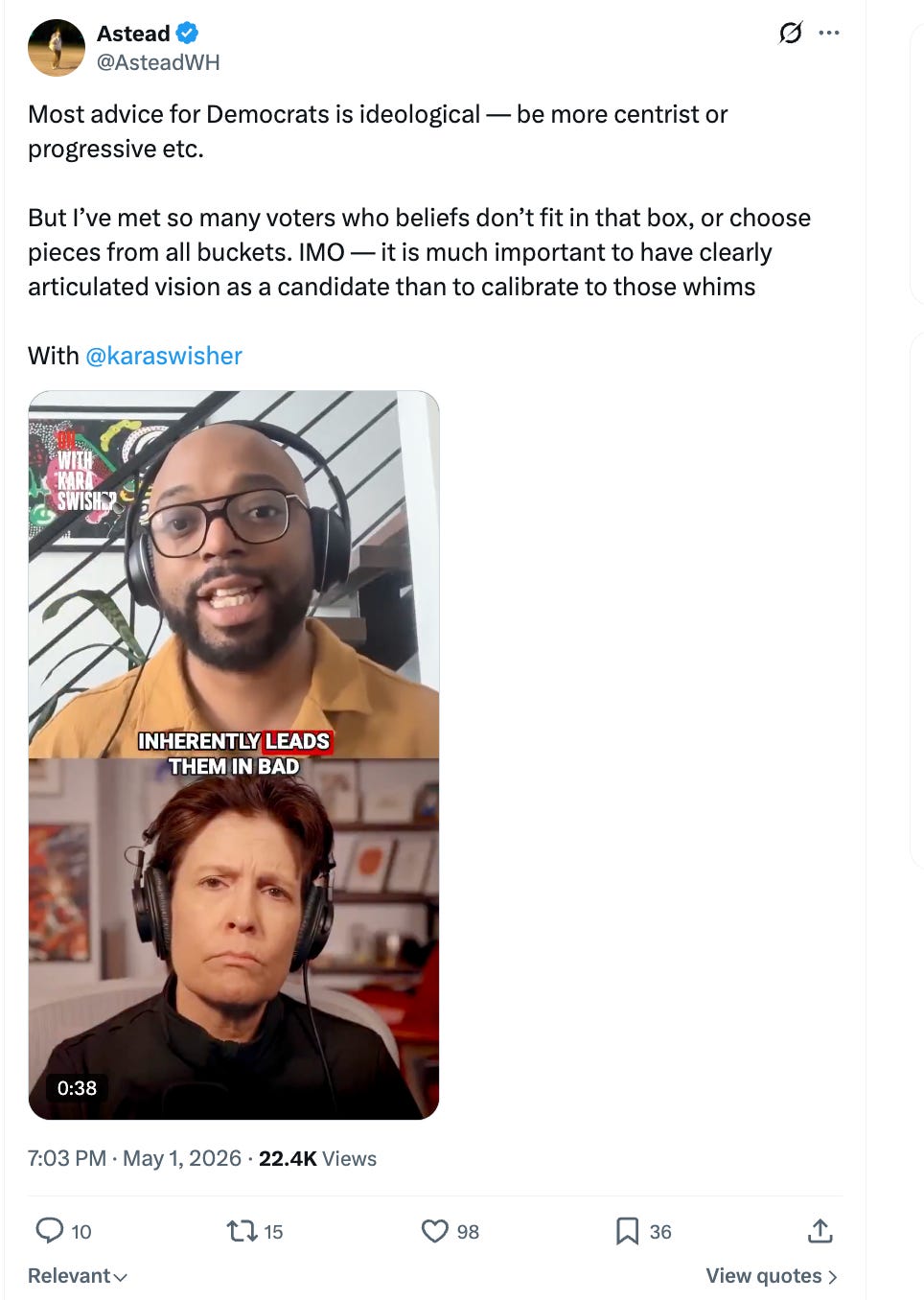
Forget about moderates and moderation. That’s lame. Let’s instead listen to Astead Herndon, who points out that lots of voters have eclectic beliefs that don’t fit into tidy boxes, with some views coming more from the progressive bucket and others that are more conservative.
What would we call this kind of eclectic, outside-the-box, bucket-mixing person?
Well, not moderate, that’s for sure. Let’s call him shmoderate.
The problem solvers’ caucus
What do shmoderates want? Well, they are distinct from both progressives and conservatives in that they don’t particularly want elected officials to pursue a dogmatic policy agenda. As Amanda Litman says, these voters “do not have cohesive ideologies.” They have real problems that they want solved.


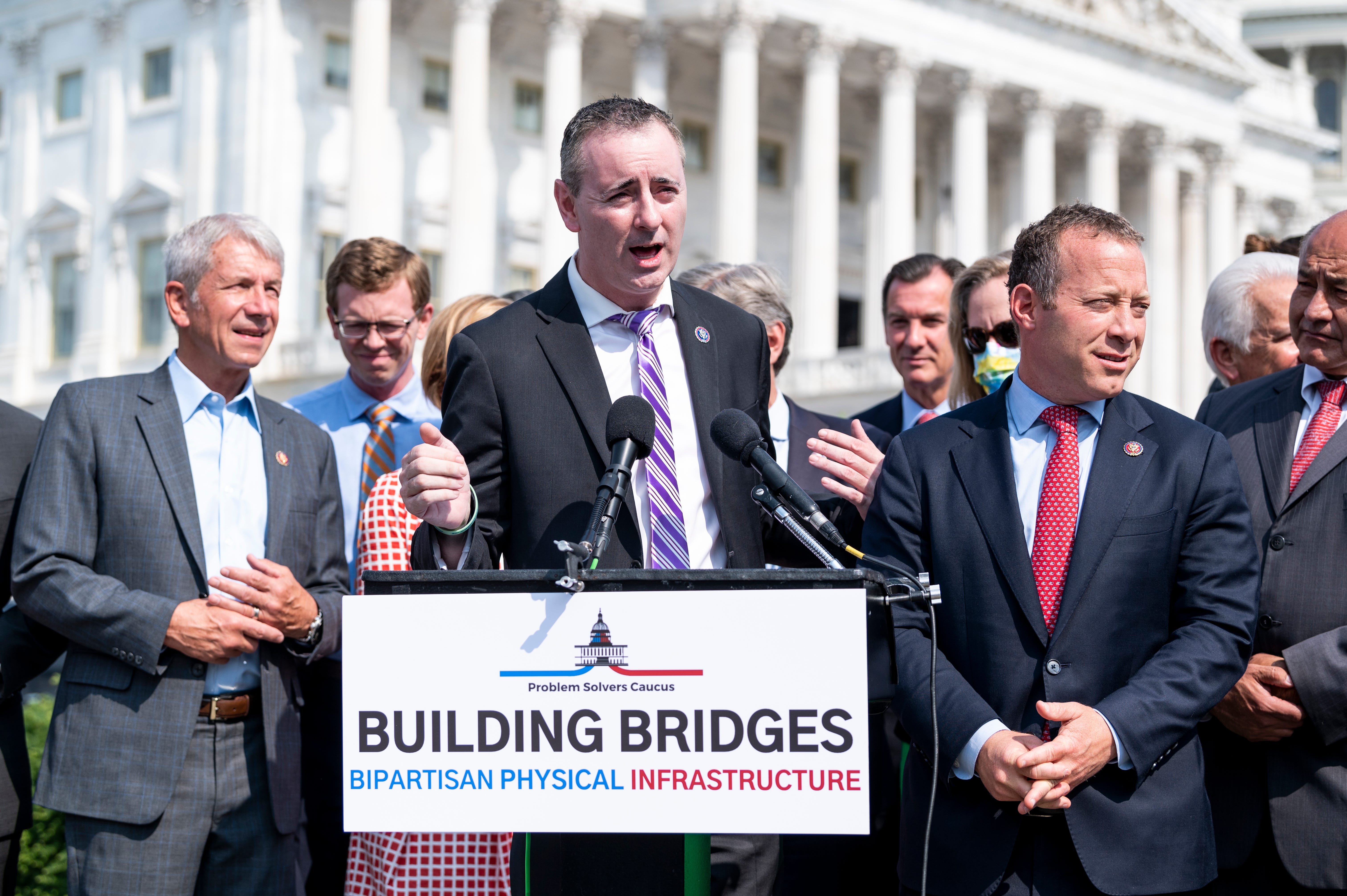
So to that end, shmoderate politicians should probably reject ideas like “centrism” and instead form something like a problem solvers’ caucus. In fact, one such caucus already exists in the House of Representatives, and is co-chaired by Representative Brian Fitzpatrick on the Republican side and Representative Tom Suozzi on the Democratic side. Both of these shmoderate problem solvers are strong electoral performers who’ve won tough seats.
What does a problem-solving shmoderate like Suozzi do?
Well, he’s eclectic. He votes with Democrats most of the time, but he has also criticized the party’s take on the use of gender self-identification for assignment to school sports teams, and he voted for the Laken Riley Act. And of course, as a guy who’s focused on solving problems, he does things like respond to Trump’s election by calling on Democrats to find ways to cooperate with him rather than engage in root-and-branch opposition. And faced with a politician like Zohran Mamdani who does identify himself in strident ideological terms, Suozzi says thanks, but no thanks.
When people diss moderation and dismiss the relevance of ideology, it’s candidates like this — strong shmoderates — they mean to elevate, right?
Shmoderation everywhere you look
One of the favorite voices of the moderation skeptics is G. Elliott Morris, who recently wrote an insightful piece about how Republican members of Congress decline to break with Trump over anything even though he’s become deeply unpopular. As he points out, this badly jeopardizes the G.O.P.’s ability to hold the House. But it can still be rational for individual members of Congress, because they need to be able to win primaries. Breaking with the pack would jeopardize their ability to do that.
I might add that even if a Republican member does break with Trump and overperforms, they still might lose. And if they lose as a party loyalist, they can get other gigs. But if they lose as a shmoderate who assembles an eclectic voting record and demonstrates independence from the party’s unpopular leader, they might not.
Lakshya Jain recently wrote a piece noting that the share of the public that says they will vote for Democrats in the midterms is a lot lower than the share of the public that says they disapprove of Trump.
His interpretation is that Democrats are being weighed down by unpopular left-wing views. Morris disagrees and says no one should expect Democrats to do well with these voters, because “Two-thirds of the Trump disapprovers who aren’t supporting Democrats for the midterms are actually just closeted Republicans.”
But what distinguishes a closeted, Trump-disapproving Republican from a normal one?
Well, it’s probably that in a political party that’s increasingly defined by conformity to Trump’s will, these closeted Republicans have more eclectic preferences. You can’t stick them in a box, and most of their views are probably in line with normal Republican ideas (that’s why they’re Republicans), but they clearly have some other views that cut the other way.
They are, in other words, shmoderates. And they’d probably be more likely to vote for a shmoderate Democratic candidate, especially if the party had an overall more shmoderate image thanks to having recruited and supported a broad array of shmoderate figures.
What are we talking about here?
Of course policy positions and ideology aren’t the only things in politics that matter. Jared Golden and Vicente Gonzalez are both strong electoral performers, but if you dropped Golden into South Texas and Gonzalez into northern Maine, neither would play very well.
That said, I often see people downplaying the role of ideology in favor of emphasizing candidates’ vibes or their authenticity or how they’re outsiders and want to fight the gerontocracy, but in practice this praise is only directed toward more left-wing candidates.
They’re supporting Graham Platner, in other words, but they’re not backing Seth Moulton or Matt Mahan as younger candidates who are taking on the party establishment. It’s not that the candidates they’re supporting are all exactly the same. Platner and Abdul El-Sayed are very different kinds of candidates on a vibes level, just like Golden and Gonzalez.
But it’s not confusing or mysterious that there are Platner/Sayed crossover fans who also really like billionaire investor Tom Steyer’s progressive rebrand. These are people who care about ideology.
But if you, as a progressive, care about issues and ideology, I’d encourage you to open your heart to the possibility that other people do too; they just have different issue priorities or ideological views.
It’s true that most people don’t have a “cohesive” ideology and that most cross-pressured voters hold a kind of mishmash of views. But the mishmashes aren’t random or totally unpredictable. There are way more people who align with Democrats on health care and Republicans on crime than vice versa. There’s almost nobody who wants to ban abortion but is fine letting trans women self-identify into women’s sports leagues, while there are lots of people who have the opposite view. Ballot initiatives to raise the minimum wage routinely win in red states while affirmative action initiatives fail in California.
If people want to call this brand of politics shmoderate rather than moderate, I don’t really care. But it seems kind of obfuscatory to me.
My suspicion is that the sticky wicket here is in fact authenticity, which does matter in politics.
A lot of sincerely left-wing progressives do see the tactical case for shmoderation. But they wouldn’t want a political party full of authentic shmoderates with lots of staffers who sincerely rate Golden and Gonzalez and Suozzi and Marie Gluesenkamp Perez as their favorite politicians and media figures who celebrate them with Mamdani/A.O.C.-scale coverage.
So to prevent that outcome, it’s helpful to discuss the electoral dynamics in a somewhat obfuscatory way: as if there’s nothing anyone can really clearly say about what voters think or what kinds of politicians are good at winning their votes or what specific moves to the center would be more efficacious.
I'm really not convinced moderation is the meaningful frame of reference. What we need is to find a way to elevate liberals over authoritarians and leaders over demagogues.
The cornerstone of appealing to broad swaths of heterodox voters has to be authentic, principled commitments to pluralism. Leadership is about demonstrating to the voters that doing what's right for the country is going to benefit all of us.
Matt has talked about Trump's appeal being about "moderating" on issues like social security or abortion, but Trump is no moderate. Trump is a heterodox demagogue. The Dems seem to think "moderation" is responding with their own brands of populist heterodox demagogues. Maybe that's moderation maybe it's not. Maybe it wins closely contested elections. What it doesn't do is produce a functional federal government or a free and successful economy.
We're not going to dig our way out of this by simply optimizing how to tell as many voters as possible the things they like to hear.
I don't know man. I feel like this article is just saying, "I'm right in my intra-party social media feuds". I get that Matt is hopelessly obsessed with the people he argues with on Twitter all day but I don't see why any of us should care about that. These feuds seem to occupy his mind day and night. It's sort of pathetic.
"What did you do during Trump's reign grandpa? When they were putting people in camps and shooting protestors in the street?" "Well child, I spent 10 hours a day arguing with the same 5 people on Twitter about neobrandeisim and moderation. But sometimes I called it 'schmoderation' to own them."