

Before the New York Times culture section dropped their strange microlooting podcast episode, I’d been thinking (as one does) about urban planning in Los Angeles.
L.A. is a funny city. It sits by the coast and is home to a major port, but its downtown is surprisingly far away from the ocean, apparently because the original Spanish settlers chose a segment of the Los Angeles River that was sufficiently inland as to be safe from pirates.
Pirates are not a major concern in contemporary California, though, and the odd location lends the city a genuinely uncanny urban form.
I was wondering how history might have played out if the city had been established near where Ballona Creek joins the Pacific. In that case, downtown might be roughly where LAX is. What’s currently Marina del Rey might have been developed (as the Army Corps of Engineers once proposed) as Southern California’s main port. L.A. would be a much more conventional city, with the most desirable residential neighborhoods on the beach near downtown.
Alternatively, if the original settlement had been at the mouth of the Los Angeles River (as is the case for most coastal cities), the whole conurbation would be centered around what is today Long Beach and San Pedro, with balanced coastal development going both up toward Santa Monica and down to Newport Beach.
This is the kind of stuff I like to think about. I loved SimCity as a kid, and if contemporary Los Angeles were a saved game of mine, I would delete it and start over again with the same map.
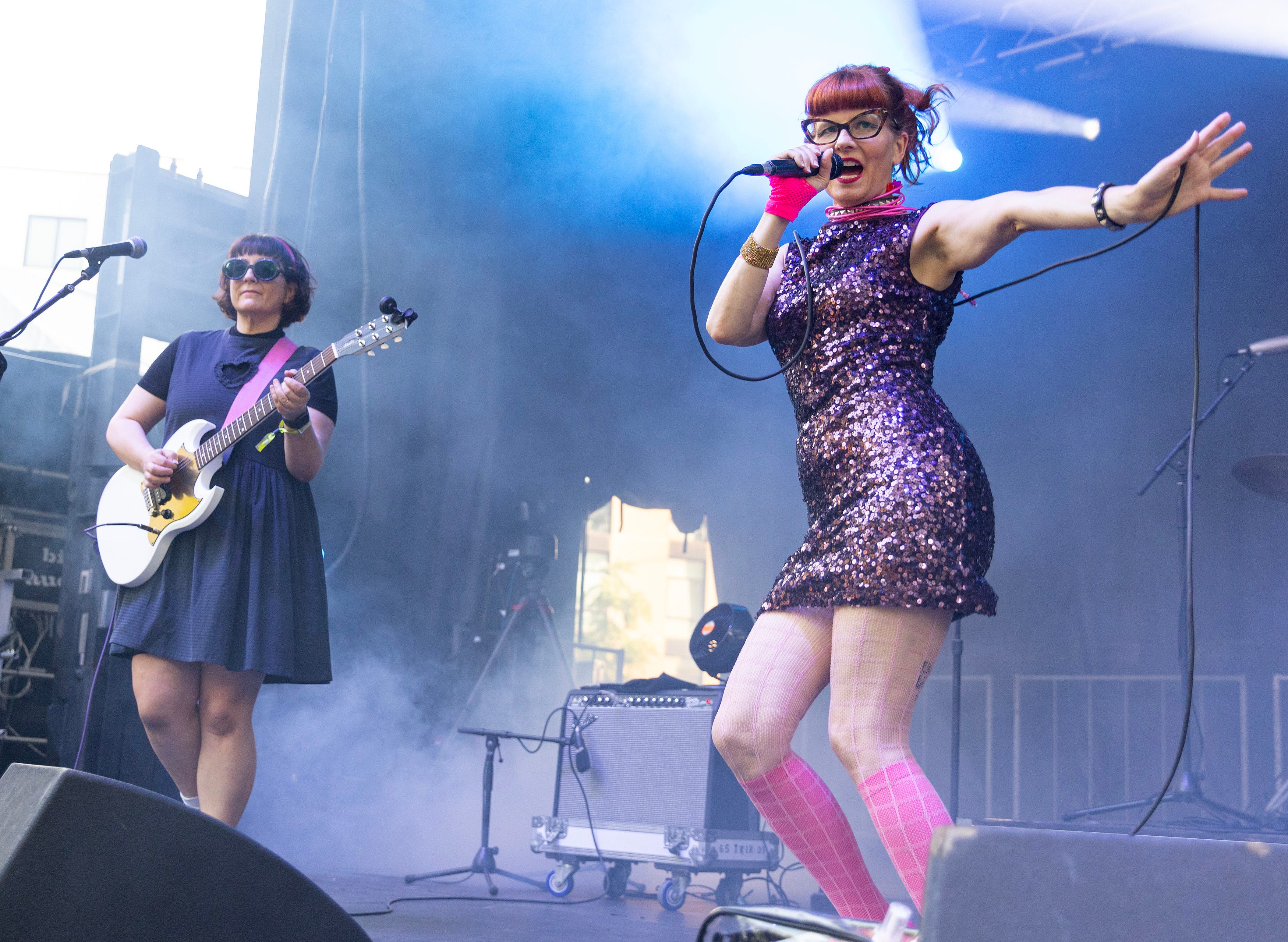
Which put me in the mind of a Bratmobile song that I loved in high school “Polaroid Baby” off their 1993 album, “Pottymouth.” The lyrics consist of the repeated incantation “burn to the fucking ground L.A. / whitey’s gonna pay / whitey’s gonna pay.” The text is racial hatred, but the eerie tone of the singing sounds bored and the voice clearly belongs to a young white woman. I find the effect sort of entrancing (my 11-year-old says it’s “creepy”).
I also think the song is basically funny even though the subject matter is incredibly serious.
They’re singing, of course, not about my urban planning fantasies, but about the riots that came in the wake of the acquittal of the L.A.P.D. officers who beat Rodney King.
Needless to say, I do not in fact think that rioting is a constructive, useful, or moral political response, even to a genuinely outrageous1 turn of events. And yet I happily consumed pro-rioting and anti-police music, even at a time when the overall tenor of politics was far more culturally conservative. I just felt there was a vast difference between politics-flavored entertainment and time spent actually learning about political issues by reading The Economist or The Nation.
But a signature development of our time is that the lines that traditionally separated these things are blurred, and it’s increasingly difficult for anyone to tell what’s meant to be taken seriously and what’s just people mouthing off.
Oh, you thought this was going to be a classic Slow Boring piece about urban planning? Sorry kids, not today.