


The first time I ever heard a land acknowledgment, I was on a panel at a nonprofit conference in Colorado. A Native woman stood up in the audience and started shouting and demanding the floor. Most people were confused, but a few were cheering her on. When the moderator let her speak, she asked to do a “land acknowledgment.” I didn’t know what that was, but she was granted permission and said something about the land to scattered applause before we moved on.
As far as activist tactics go, it was pretty good.
It was much easier for a progressive moderator at a conference with mostly progressive attendees to just say yes than to try to have the woman forcibly removed. It’s a small-bore example of the strategic logic of nonviolent protest, and it succeeded in getting large swathes of progressive America to preemptively start doing land acknowledgments.
The 2024 Democratic platform, for example, commences with a fairly innocuous land acknowledgment, stating that they were gathering on “lands that have been stewarded through many centuries by the ancestors and descendants of Tribal Nations who have been here since time immemorial.” But the Native Governance Center’s guide to Indigenous land acknowledgments tells us, “Don’t sugarcoat the past. Use terms like genocide, ethnic cleansing, stolen land, and forced removal to reflect actions taken by colonizers.”
I think it’s worthwhile to consider the distinction here.
The Democratic platform land acknowledgment is a symptom of a party that is more focused on internal coalition management than on winning elections. What it says in your platform almost certainly doesn’t matter, but a disciplined political party focused on winning would not be making this sort of concession to activist demands. That being said, if hailing the stewardship of those who came before us became a widely adopted ritual in American life, that seems unobjectionable on the merits to me. It’s a bit cringe, but so is singing the national anthem at the start of a youth sports event. There’s never going to be a cringeless set of national rituals, and rituals are important.
But the stolen land claim is an ideological provocation that I think needs to be rejected. National Students for Justice in Palestine describes its mission as “supporting over 400 Palestine solidarity organizations across occupied Turtle Island (so-called North America).” I think both friends and foes of the anti-Zionist movement understand that they are sincere in their desire to delegitimize the Israeli state, and it’s worth taking seriously the fact that there is a parallel (albeit more far-fetched) movement to delegitimize the United States of America and that this needs to be contested by American liberals in a real way rather than appeased. Not least because it’s hard to explain what’s wrong with the increasingly deranged tenor of the Trump administration’s anti-immigration rhetoric unless you’re able to articulate the values of traditional American civic nationalism.
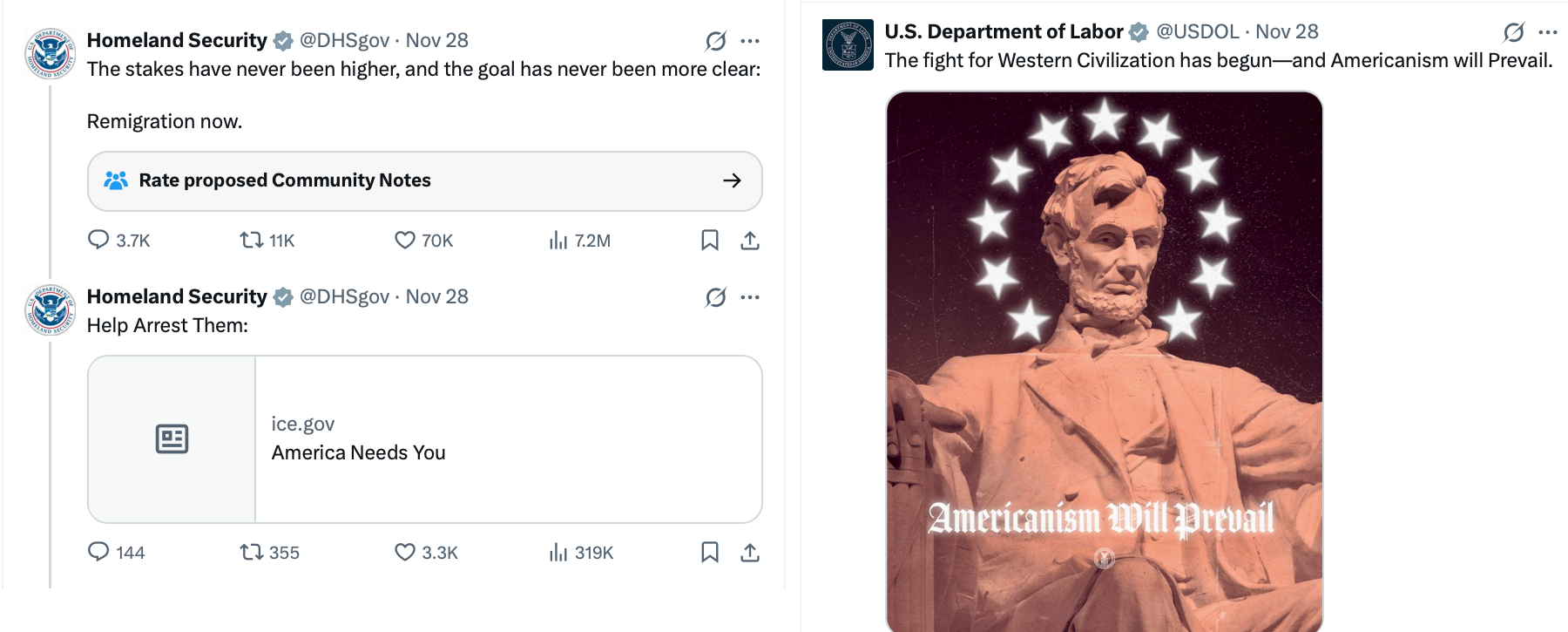
Abraham Lincoln, of course, understood Americanism far better than whatever groyper creeps are running the Labor Department. He wrote to Joshua Speed about the anti-immigration agitators of his time:
As a nation, we began by declaring that “all men are created equal.” We now practically read it “all men are created equal, except negroes.” When the Know-Nothings get control, it will read “all men are created equal, except negroes, and foreigners, and catholics.” When it comes to this I should prefer emigrating to some country where they make no pretence of loving liberty — to Russia, for instance, where despotism can be taken pure, and without the base alloy of hypocrisy.
Lincoln isn’t the last word on the details of immigration policy, which is complicated and admits of a lot of nuance. But he should be the first word. America is a country whose institutions are committed to the noble principles of human freedom and equality, and we need to be able to say in both directions that those institutions are legitimate.