

As Zohran Mamdani inches forward with his plan to introduce low-cost government-run grocery stores in New York City, I think it’s worth noting that he’s far from the first person to have noticed that the city’s supermarkets are unusually expensive or to have thought it might be a good idea to try to bring in some lower-cost options.
The most prominent attempt to do this was not by a democratic socialist or even a mayor, but rather a businessman working out of the obscure town of Bentonville, Ark.
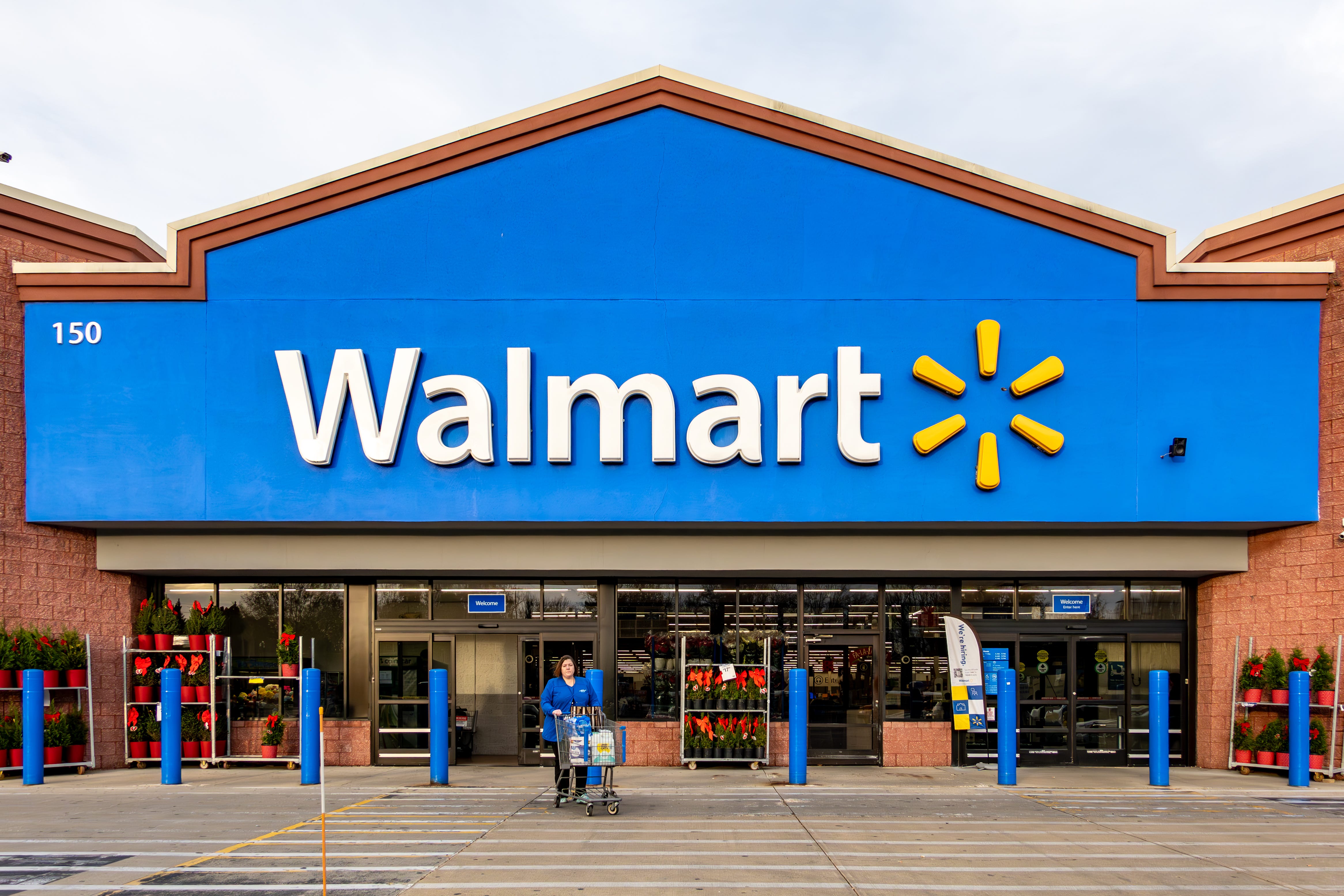
His name was H. Lee Scott, and he was the chief executive officer of Walmart back in 2004 when they announced the opening of their first New York City location in Rego Park in Queens.
Rego Park is suburban-ish by New York City standards — in true Real America style, it’s right by a freeway exit — but very dense by U.S. standards, and it’s also got a subway line. So it was a logical spot for an urban Walmart experiment. And Walmart, by all accounts, had ambitions beyond this one neighborhood in Queens. New York City is an enormous market, and a number of significantly smaller cities share N.Y.C.’s traditional urban layout. So if Walmart could make it work in Rego Park, they’d expand to other N.Y.C. locations, and that would offer proof of concept for a broader urban strategy.
This wasn’t a totally natural fit for Walmart’s existing business, but when you’re already the largest retailer in the country, you take your opportunities where you find them.
Their logic essentially tracks what Mamdani is trying to do.
Scholars Stefano DellaVigna and Matthew Gentzkow have found that chain retailers very rarely practice location-specific price variation. So while groceries in N.Y.C. are more expensive than the national average, the dominant cause is that the mix of stores operating in the city is different from what you see on average nationally.
Thus the Mamdani strategy of trying to open cheaper stores makes sense. Emek Basker found in 2005 that when Walmart enters a new market, average retail prices of grocery-type products fall by between 6 and 12 percent. Basker’s later research with Michael Noel finds that this is due to a small impact of competition (existing stores drop prices by maybe 1 percent) and a large direct impact of Walmart being cheap (its prices are 10 percent lower on average). A separate paper looking at Walmart’s entry into Mexico has a similar finding: large welfare gains driven mostly by Walmart itself being cheap with a small secondary effect from competition.
This is especially important for low-income New Yorkers because, as Jessie Handbury’s research finds, poor people in affluent cities can experience significant welfare loss from being exposed to a retail mix that’s optimized for rich customers.
Bringing in a store like Walmart, which is broad in its offerings but really does specialize in serving a thrifty client base, could be a huge help.
So what happened?
The long war on Walmart
This Queens episode played out during the heyday of a national coordinated campaign against Walmart, led by labor unions but especially by the United Food and Commercial Workers union, which represents employees of many supermarkets.
The goal of this campaign was to somehow coerce Walmart into becoming less hostile to union organizing or else (more realistically) halt the expansion of Walmart and thus protect U.F.C.W.-represented stores.
In my experience, the coordinated campaign concept is not very well understood, and this led to a lot of Walmart-related confusion in the early 21st century.