

I live on one of the many blocks of what in D.C. are called rowhouses but are more commonly termed “townhouses” in American real-estate nomenclature.
This type of building appeals to developers because it’s a cheap way to create housing. Buyers get much of what they want from single-family housing, and there’s no need to waste space on lobbies or corridors or other non-dwelling square footage. It’s also highly efficient in its use of land, and can be built using the same basic construction methods and materials as detached homes.
But there’s kind of a paradox around townhouse construction: In a new-build context, they’re, for the most part, relatively low-end products because they’re cheaper to build than detached houses. Yet if you look at actually existing American cities, older townhouses are often very desirable (i.e., expensive).
That’s because in cities, even though each individual rowhouse is something of a compromise, at a neighborhood scale rowhouses typically offer a net positive.
New developments, though, often look like this one in Alexandria, Va., just outside of D.C.
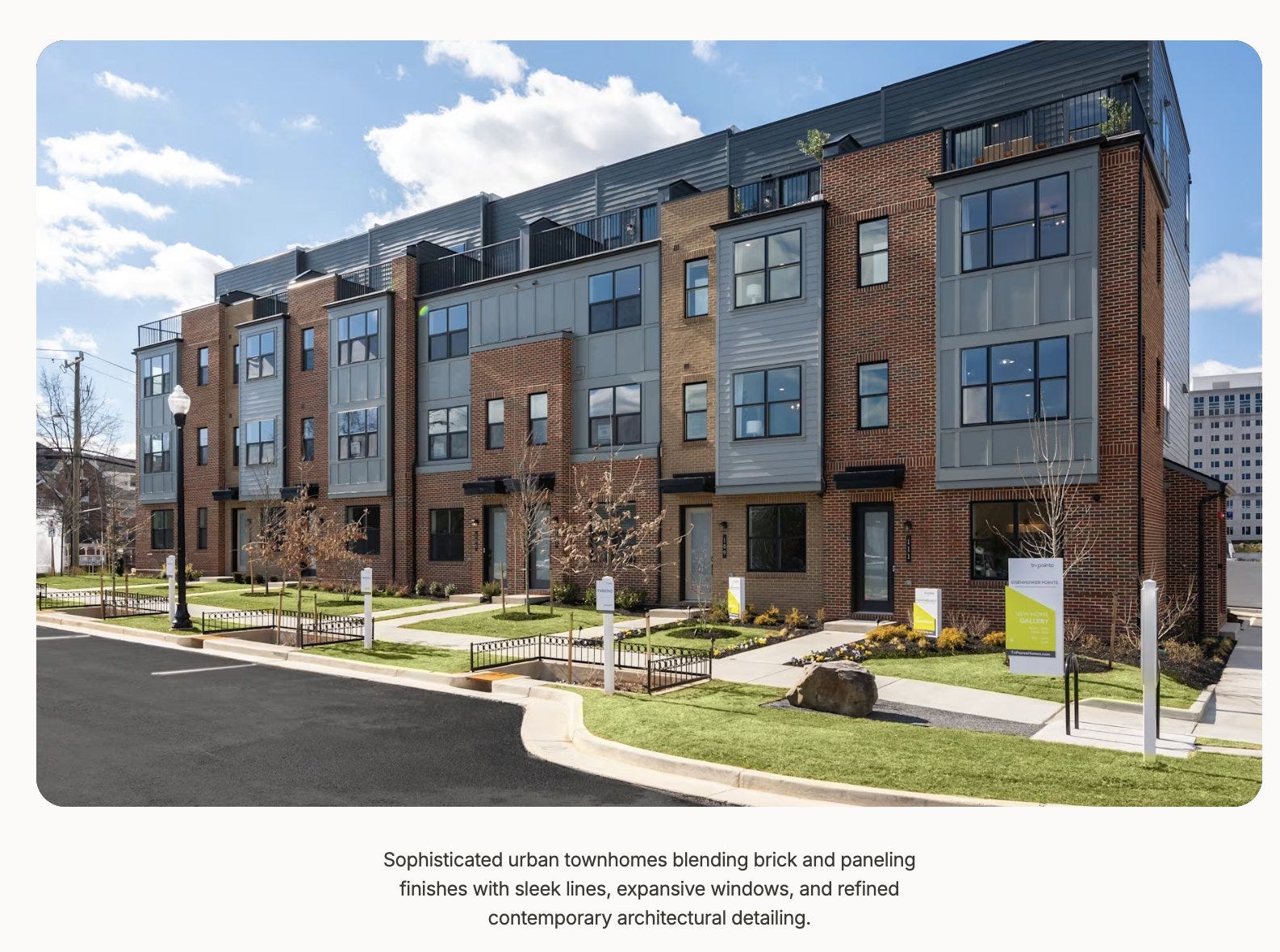
Not only is the architecture lacking compared to a traditional rowhouse neighborhood (a lot of people are doing architecture takes lately), the neighborhood does not have remotely the layout or vibe of a city rowhouse neighborhood. The streets are suburban style cul-de-sacs rather than connected grids, and there’s no shopping street to walk to. You have the built environment that urbanists dislike about the suburbs, but then you also don’t have the large yards that make suburbs appealing.
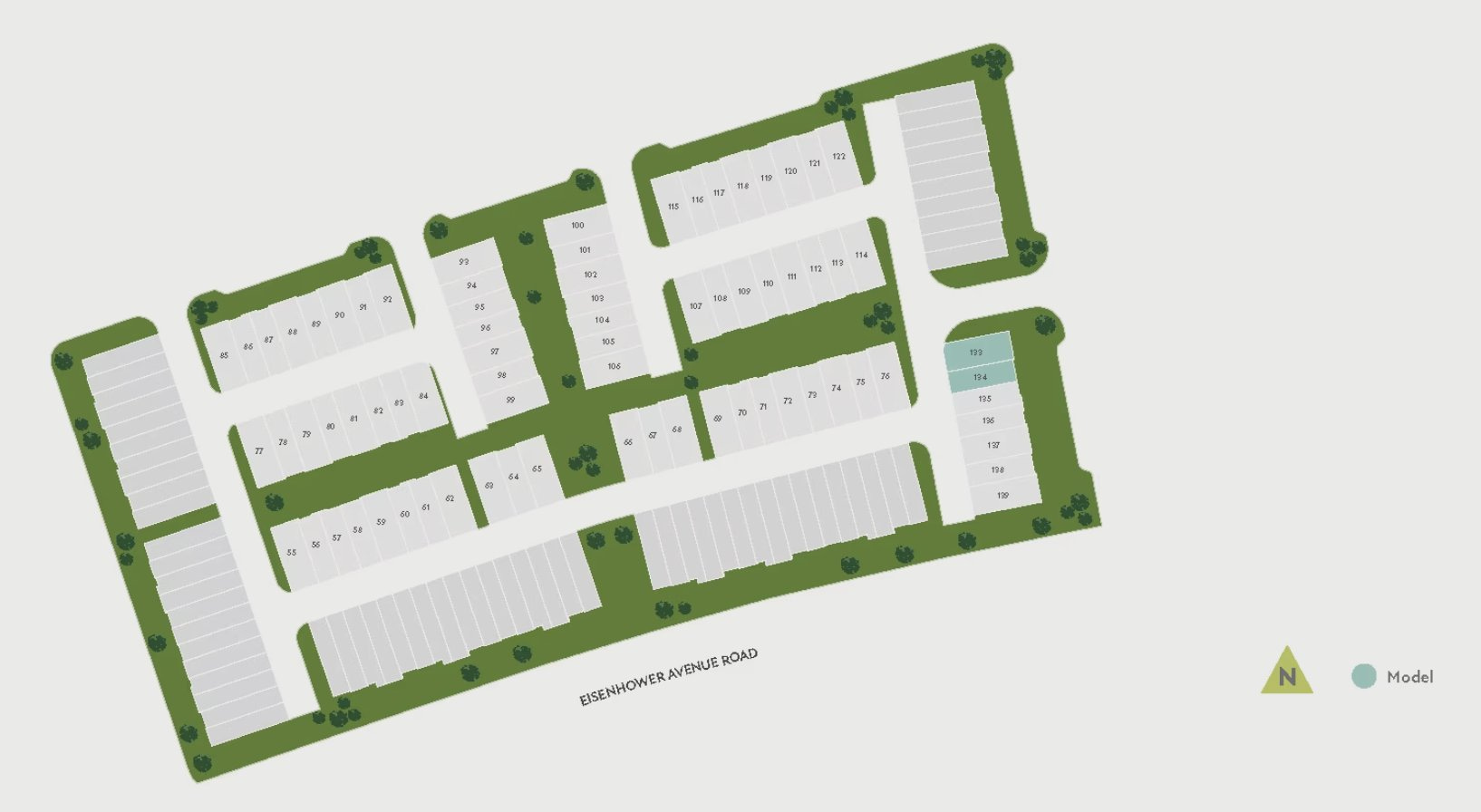
You sometimes see townhouse developments thrown up in very low-density areas, and that just kind of is what it is. But in this case, Alexandria is actually a pretty dense area and the location technically scores as decent on walkability and transit access. Part of Alexandria is an old, traditional rowhouse neighborhood, and you might think new rowhouses would extend that. Similarly, one idea currently kicking around D.C. politics is that rowhouse development should be allowed throughout the city rather than (as is currently the case) banned on half the residential land. Legalizing rowhouses also seems like the most natural way to further densify pricey inner-ring suburbs. Or if you look at something like the ambitious proposal to create a whole new city in Solano County in California, they seem to be counting on rowhouses to deliver a lot of the dwellings.
And how this plays out, both politically and substantively, is going to really hinge on whether “new townhouses” mean something nice like the desirable rowhouse neighborhoods of Philadelphia, Brooklyn, and D.C. or the kind of townhouse slop we’re seeing go up in Alexandria.