

It’s not widely acknowledged as such, but America is experiencing a surge in anti-tax politics.
You see this of course on the right, which has always been skeptical of taxation. But we’re also starting to see a version of this on the left.
The growing progressive interest in exotic new tax-policy ideas — like Bernie Sanders and Ro Khanna saying they can raise trillions in revenue from a base of around 1,000 billionaires — shows a left that has lost faith in the idea of asking Americans to pay higher taxes in exchange for more and better public services.
And whatever you think of the Sanders/Khanna proposal,1 it’s important to understand that this kind of plan doesn’t scale well to small states or to cities and counties since it can be relatively easy for people to leave to avoid the taxes.
So, especially when it comes to local services, you really have to ask questions like “Can we make people feel that it’s worth paying more for this?” and “Can we get more value for the money that we are already spending?” Unlike with the federal government, where DOGE failed in part because it was based on wildly false premises, local governments actually spend a huge share of their budget on direct provision of labor-intensive public services.
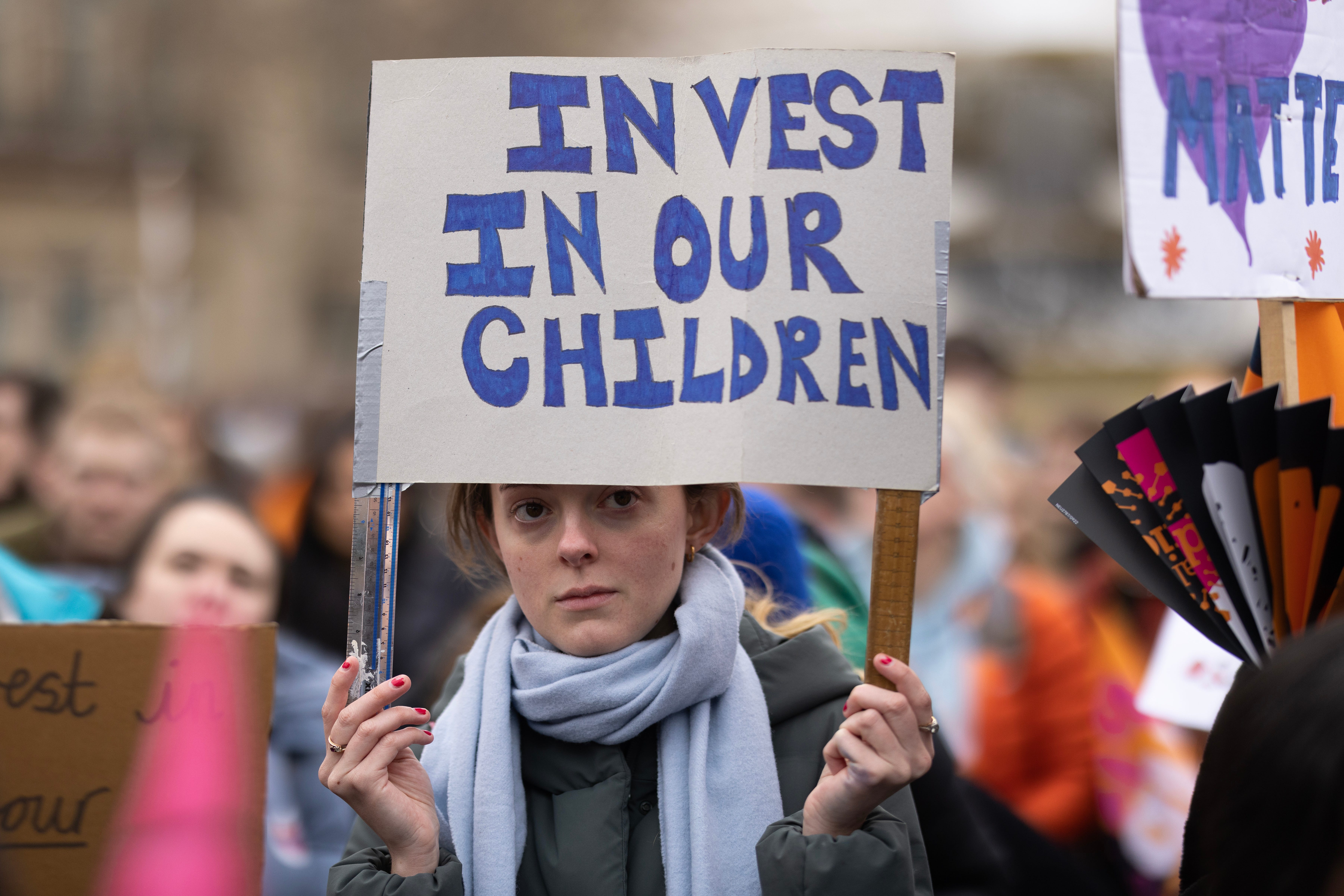
The most expensive of these line items is public school systems.
Education spending presents us with something of a paradox. We know from small-scale studies that marginal increases in school spending produce positive results for children. In particular, fairly boring things like improving school HVAC systems are effective at promoting student learning, especially in low-socioeconomic-status schools.
So it seems to be the case that for a lot of schools there’s low-hanging fruit that could be addressed at least somewhat effectively with an influx of money.
On the other hand, if you look at large-scale cross-sections of American schools, it’s just not the case that higher levels of spending are strongly related to student outcomes.
The Urban Institute’s demographically adjusted NAEP-score data shows that the top-performing state for eighth grade reading is Massachusetts. That’s a relatively high-spending blue state, but not the highest-spending state. Number two is Louisiana. On eighth grade math, Massachusetts is number two and Louisiana is number three (Mississippi is number one).
The highest-spending system, New York, gets above-average results (I’ve seen a lot of people express excessive negativity about this), but they’re not dramatically above-average in the manner of either lower-spending Massachusetts or dramatically lower-spending Mississippi and Louisiana.
Which is all just to say that even though there do appear to be useful opportunities to spend more money on schooling — lots of Louisiana schools don’t have air conditioning, for example — it seems like just looking at the average expenditure in high-spending systems is not very useful.
And those of us who think there are things the government should probably spend more money on ought to confront the reality that in many states the government is already spending a lot of money, some of it on things that are not very useful.