

Things have been a little chaotic lately. Last week, the whole family was down with the flu for several days. Just as I was feeling better, it was time to head up to New Haven for the excellent Law of Abundance Conference (where Slow Boring’s own Milan Singh was one of the presenters). I got back to D.C. just in time for the city to shut down all week with ice and snow. On Wednesday, Kate and I took part in a parent volunteer effort to shovel paths and play areas around our elementary school so it would be functional when schools reopened today (sort of — hours are still quite limited). So it’s been a little hard to focus on work, even though this has been a dramatic week in American politics.
Hopefully things will be back to normal in my daily life soon; I have no such hope for the political world.
Nicholas: I was traveling on Sunday and surprised to see Amtrak had pre-emptively canceled most trains between Boston and New York. Is this just an extension of pandemic-era malaise leading Amtrak to say “let’s just not do it?” Is there a technical reason they can’t run the trains in the snow? This probably sounds like a dumb question, but I’m curious what the actual limitations are and chatgpt is not giving satisfactory answers. The MBTA was still operating on a normal schedule between Boston and Providence and Southern RI. As far as I can tell, so was Metro North between New Haven and New York.
Very large volumes of snow can prevent trains from operating, but, generally speaking, heavy rail is one of the modes of transportation that is most resilient to snow, as seen in the continued operation of Boston’s M.B.T.A. commuter rail. Here in D.C., the metro system has been running even as almost everything else in the area is paralyzed.
My understanding is that Amtrak behaves more conservatively than a commuter railroad with this kind of thing because the potential failure mode of an intercity train getting stuck in a remote location is a lot worse. If you start running the trains and the snow is worse than expected and then you end up with a train full of people stuck outside of Elkton, Md., you have a big problem on your hands. Shorter-range services have an easier time getting everyone to a station in case of emergency. Is that a good reason in overall cost-benefit terms? I don’t really know. But unlike some stuff Amtrak does, it doesn’t strike me as unreasonable on its face.
Connecticut YIMBY: Would a mandatory federal e-verify law reduce/deter illegal immigration without requiring the kind of brutal internal immigration enforcement that there is such a strong backlash towards?
Adopting that seems like the easiest path for Democrats to enact our “abolish ICE” dreams without a surge in migration that causes a backlash. But a few states, like Arizona, already do have mandatory e-verify, and it seems like they still have a substantial amount of illegal immigrants. So would mandatory e-verify actually work?
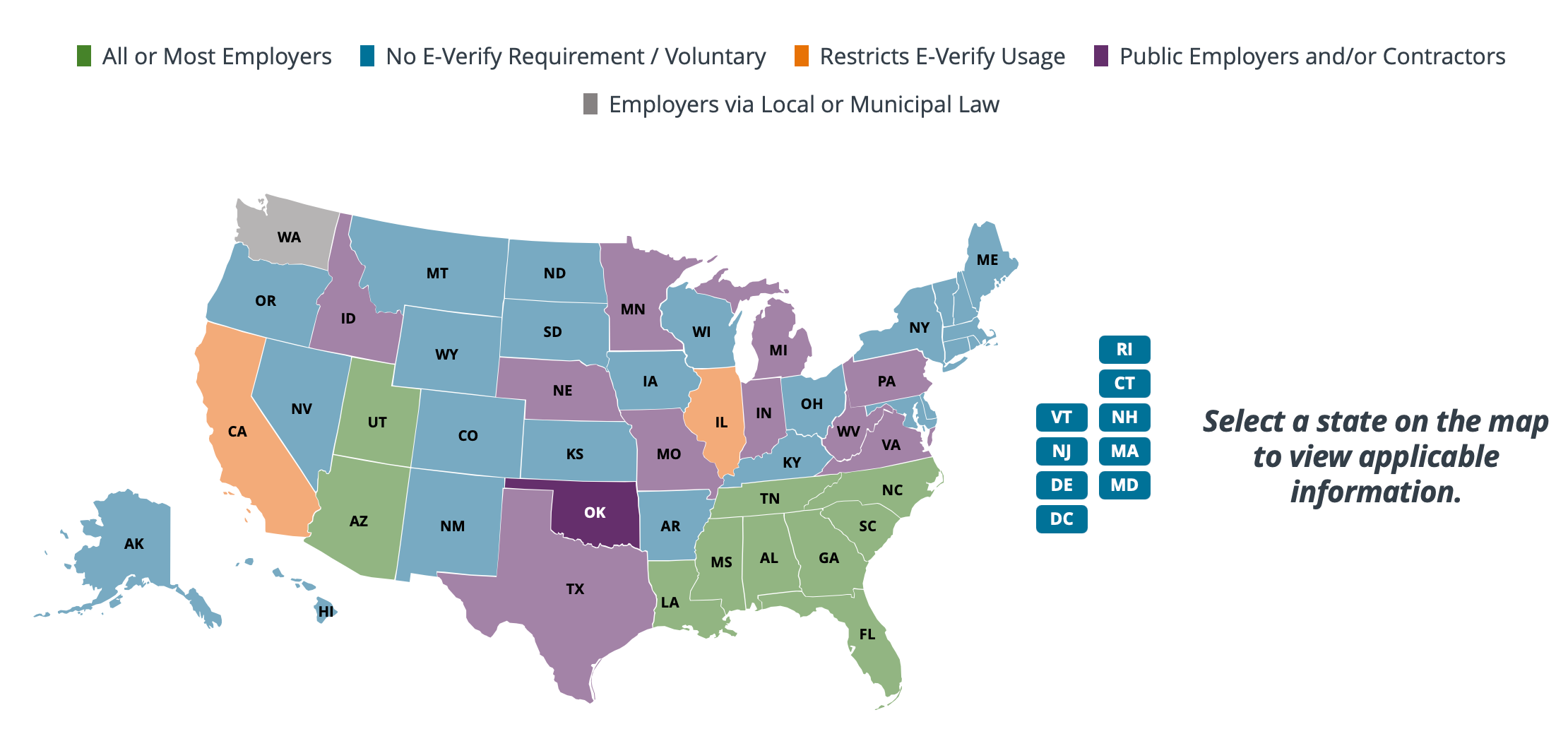
Universal mandatory E-Verify policies are in place in many states (among conservative states, notable exceptions are Texas, West Virginia, and Ohio), and I don’t believe this has caused the undocumented population to migrate en masse to the states with weaker laws.
The biggest weakness of E-Verify, as I understand it, is that the system basically confirms that the identifying documents a worker presents represent the identity of an authorized worker. It does not confirm that the person presenting the documents is in fact the person who the documents say they are. I wrote about this when covering the bogus Trump/Musk theory that Social Security is paying out benefits to dead people. The actual situation is not that people fraudulently use Social Security numbers to collect benefits (you’d get caught if you tried this); it’s that they fraudulently use Social Security numbers that aren’t theirs to work and pay taxes.
The other thing is that there are a dozen ways to work under the table.
A classic one is cleaning houses or doing some type of gardening work for cash wages. A more modern example is that a lawful resident signs up to do DoorDash deliveries or drive an Uber or another gig-economy task, but then the work is actually done by someone else, and that person splits the earnings with the account holder of record.
What’s more, especially if you think about this in a small business context, the fact is that no matter how “mandatory” you make E-Verify, it’s hard to enforce this. Let’s say I’m running a restaurant in Florida. My brother-in-law says his cousin who’s here from Venezuela without papers needs a job. I hire him to wash dishes and sweep up and pay him a modest wage in cash. Who’s going to stop me? I can’t claim him as an employee on my tax documents, but then again I can probably get a great deal on his pay.
The issue with all of these things is that E-Verify or no E-Verify, we’re talking about mutually beneficial transactions between private parties. It’s challenging to enforce laws against something like that in all kinds of contexts.
Which is not to say that legality makes no difference.