

After you’ve finished reading today’s post, I hope you’ll check out the latest episode of “The Argument” podcast, where Jerusalem and I are joined by Jordan Schneider of ChinaTalk for a wide-ranging conversation. Paid subscribers can watch or listen ad free and read the transcript and show notes here. Free subscribers can watch the episode on YouTube here or listen wherever you get your podcasts.
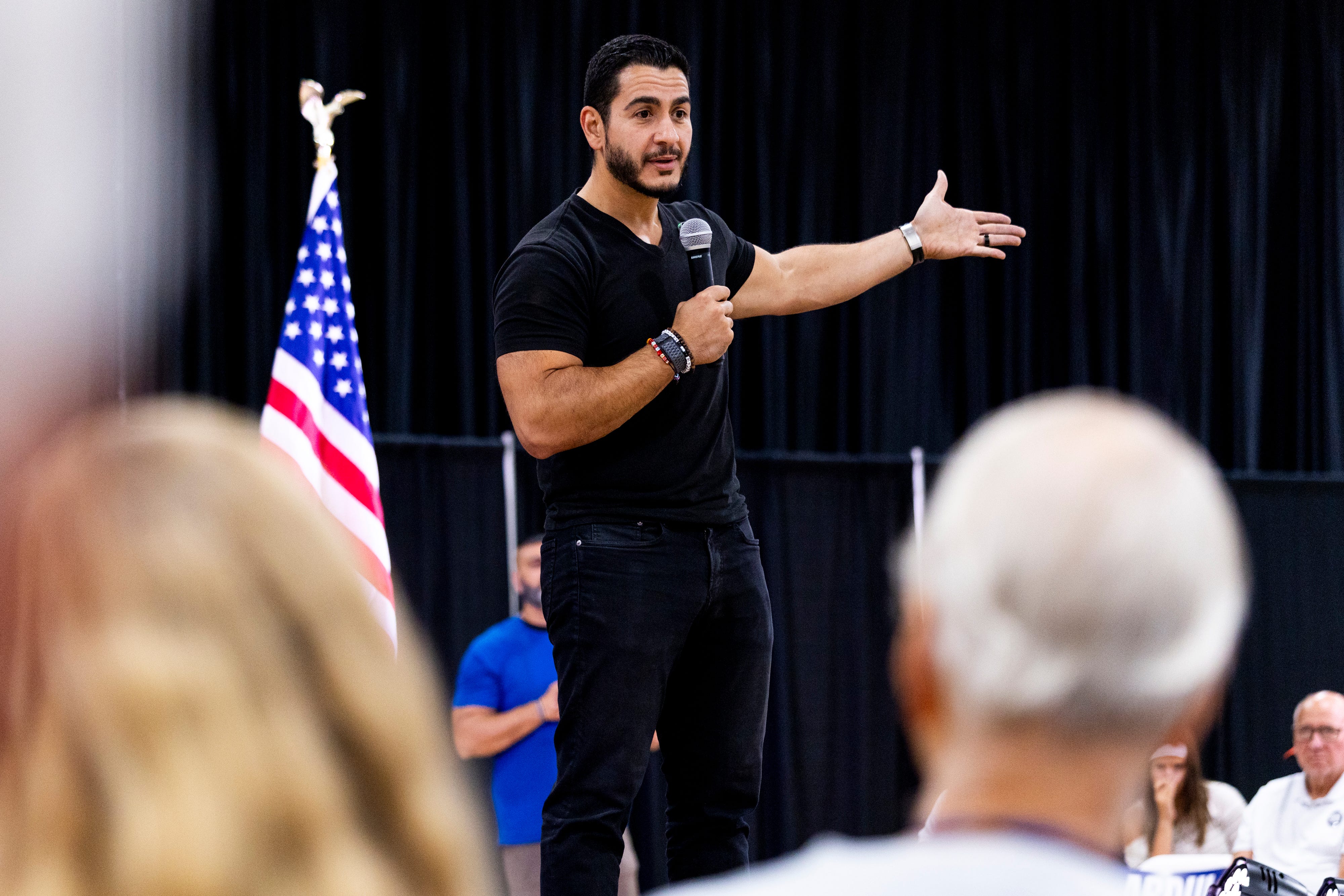
Speaking at a fundraiser for Abdul El-Sayed in New York earlier this week, Alexandria Ocasio-Cortez reportedly said that the Michigan Senate race will “break open the entire political calculus in America” because “if Abdul can win in Michigan, anybody can win anywhere.”
I and other moderate Democrats have often been accused of secretly wanting to see El-Sayed lose. For my part, that is very much not the case. But I am extremely worried about precisely this scenario: an El-Sayed victory followed by stakeholders on the left arguing, as they have been signaling for months that they intend to, that electability concerns about their style of politics are misguided.
I don’t particularly mind A.O.C. saying something wild and untrue in the context of a fundraiser. But I do worry that every time I see this discourse shoot around, I don’t see any intellectuals or thought leaders on the left engaging in honest discourse policing around this subject.
The truth is that right now, El-Sayed’s campaign is struggling somewhat. He’s up in the polls but only narrowly. A tight Senate race in Michigan is what you’d expect in a neutral national political environment — it’s a classic swing state — but Democrats are up by more than eight points in the national generic ballot. Elissa Slotkin very narrowly beat Mike Rogers in a Michigan Senate race two years ago when Democrats lost the national popular vote for both the House and the presidency. A hypothetical generic Democrat (like, say, Mallory McMorrow) should be easily winning Michigan right now. A Democrat who’s as effective at vote-getting as Slotkin should be crushing Rogers in this environment.
I’m hung up on Michigan because that race plays a unique role in factional politics and also because Republicans are running the guy who lost last time, so we can be sure the difference between 2024 and 2026 is about the Democratic nominee rather than the Republican.
Beyond Michigan or the specifics of that race, though, it’s just a lot easier to run against the backdrop of an unpopular Trump presidency than an unpopular Biden presidency.
Nonetheless, if we’re disciplined about it, we can discern specific candidate effects — they are real and they’re important. Democrats have several nominees who are winning races that would be lost by a generic Democrat, and an A.E.S.-scale underperformance in Alaska or even North Carolina would turn victory to defeat even in a strong national environment.
Of course, there’s no way to know which candidates and which campaigns are actually doing well until we see the vote counts. But it makes sense to use the currently available polling to pre-register some theories about what would and would not count as an impressive performance.