

When I was a kid, I loved to play the game SimCity (and its sequels SimCity 2000 and SimCity 3000), where you got to play urban planner.
What “urban planning” meant in this context was mainly that you planned infrastructure — the road and possibly rail networks needed to be laid out, electrical transmission needed rights-of-way, and you had to build stuff like parks and police stations and schools and fire stations.
Of course, there was also zoning.
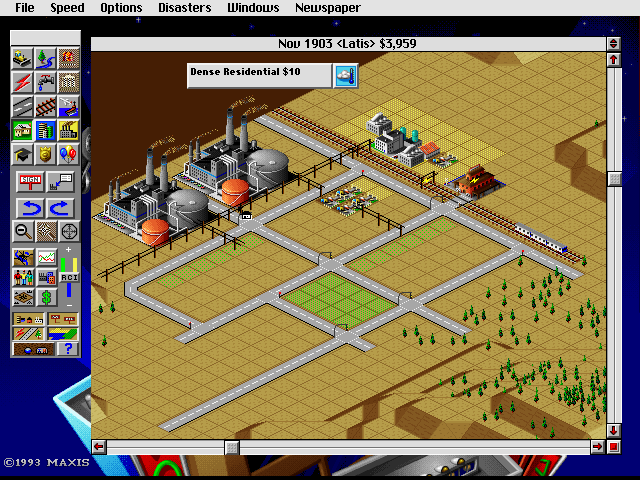
But zoning in SimCity worked basically like this:
A city needs to have electricity to grow, which means it needs power plants. But power plants cause pollution and people don’t want to live in their shadow, so you can zone industrial land near your power plant, because industrial users won’t mind the pollution. But of course those industrial areas generate their own pollution!
And you want to zone for residences far away from pollution or other undesirable land uses (like the garbage dumps introduced in SimCity 3000). You probably want to put your residential land near nice amenities such as water. You also want to make sure that things like parks and schools are located near residential zoning so people can use them. Commercial zones make a nice buffer between residential and industrial, but it’s also good to sprinkle some commerce around so you don’t end up with homes that are located a million miles away from anywhere to shop.
When I was in college, I got the chance to take a non-credit seminar about urban planning led by a former mayor. One of the conceits was that we were going to play SimCity 3000, and she was going to use it as a model to discuss planning issues.
One of the first things I learned was that real-world urban planning is much more complicated than it’s portrayed in the game.
But strikingly, it’s much more complicated overwhelmingly in bad ways.
It’s not that the game, with its emphasis on linear infrastructure and separating homes from pollution nuisances, is an oversimplification of urban life. It’s that real-world urban planning is a massive over-complication of what actually needs to be planned.
You had one job
Relative to totally chaotic city growth, I would say urban planning as a profession brought basically one good idea to the table.